/
Sudan's aid warehouses are empty, UN agencies warn, with 15.4 million in need of shelter and winter coming
IOM and UNHCR warned on 6 November that emergency stocks in Sudan are nearly gone: 15.4 million people need shelter, but agencies can help about one in 10. IOM says its last 16 trucks have reached Darfur. Sudan's $2.9 billion plan is only 47% funded. Access has improved as supplies ran out.
A
5 min
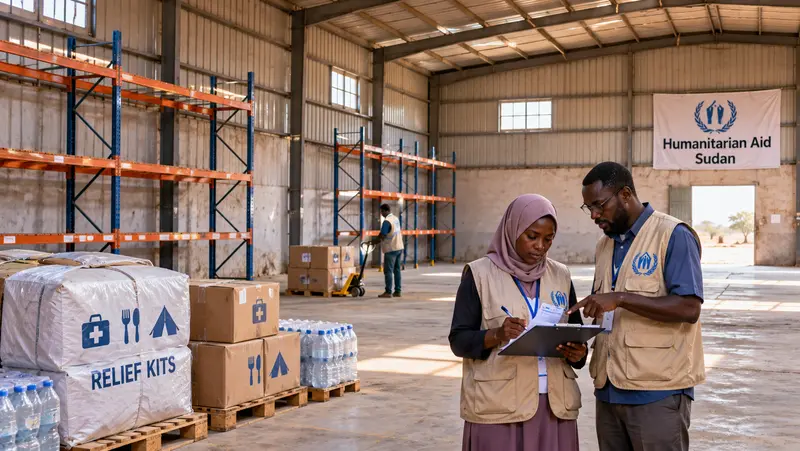
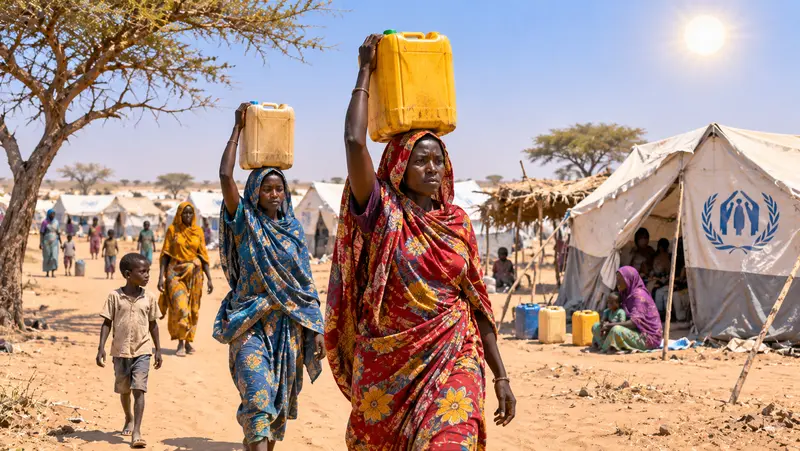
Aid agencies in Sudan appealed for help on 6 November 2026 as emergency stocks ran down, with 15.4 million people urgently needing shelter across the country. In a joint statement, the UN refugee agency, UNHCR, and the International Organization for Migration said that humanitarian agencies can reach only around one in 10 of those in need because of funding shortages.
"Just yesterday, we had 16 trucks arriving in Darfur, but they were just the last that we had in our stocks," said Mohamed Refaat, IOM's chief of mission in Sudan, speaking from Khartoum. "We are facing serious problems. Our supplies are running out."
The war that broke out in April 2023 between former allies turned rival military forces has produced what the UN calls the world's largest displacement crisis. The new warning is about something simple and physical: the shelves are bare.
Better access, and nothing to deliver
The cruel twist in this appeal is that the problem has shifted. For much of the war, the main obstacle was reaching people at all. Mr Refaat said access to displaced and returning people is better than it was, meaning that "we can reach more people". But with that comes the knowledge of what those people need. "We cannot say that we don't know," he said.
This year, he said, IOM was able to distribute more than 40,000 tonnes of relief assistance. "But our warehouses are completely empty now."
| Sudan, November 2026 | Figure |
|---|---|
| People urgently needing shelter | 15.4 million |
| Share of those in need agencies can reach | About one in 10 |
| 2026 response plan | $2.9 billion |
| Funded so far | 47% |
| People returned to areas of origin | More than 5.2 million |
| Internally displaced who are women and children | Three in four |
The plan's funding gap of more than half comes with less than two months of the year left. The agencies warn that, unless flexible funding arrives quickly, more families will face the coming winter months without protection from harsh weather, insecurity and the risks of violence and exploitation.
Abubakarr Jalloh, UNHCR's Deputy Representative in Sudan, explained what these abstract numbers mean. Shifting front lines continue to force families out, he said, often with nowhere safe to sleep or even a blanket. A tent gives a woman who has lost everything privacy and safety. A solar lamp lets her reach a latrine at night without walking in darkness. A kitchen set means she can cook for her children without taking extra risks.
Hunger and weather add to the strain
The war is not the only pressure. Mr Jalloh said El Niño-related conditions had brought significantly below-average rainfall across Sudan this year, damaging harvests in Darfur, Kordofan and other areas already devastated by fighting. Food prices would normally ease after the harvest. Instead they remain "painfully high", he said, so that every Sudanese pound spent on food is money that cannot go on a blanket or on materials for shelter.
Those who have gone home are not safe either. More than 5.2 million people have returned to their areas of origin, but many cannot get back into their houses, which have been destroyed or looted. Health care, electricity and water are largely unavailable in many places, so people may be forced to leave again, "without any hope of returning".
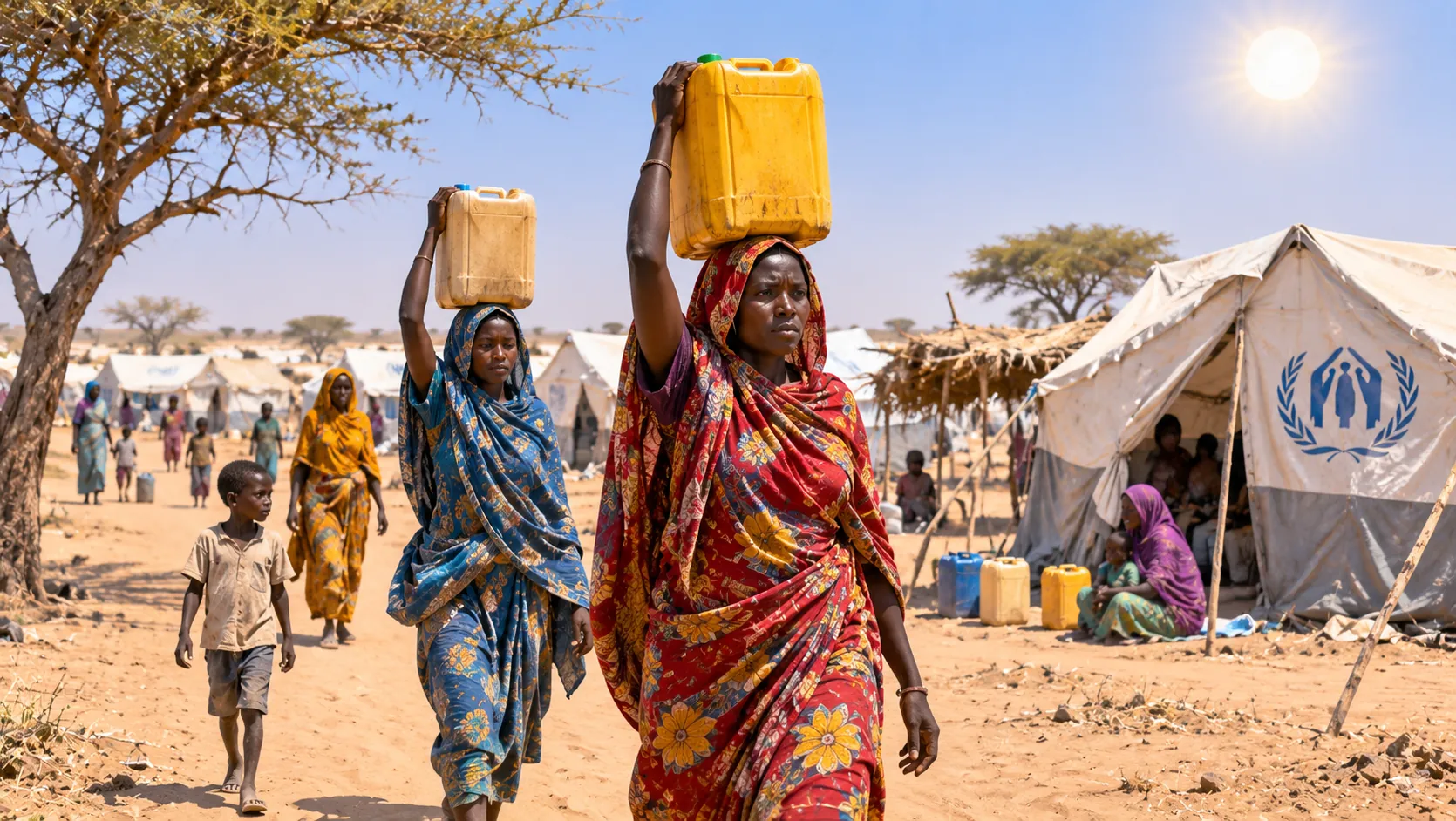
Other UN reports this week fill out the picture. UNICEF's Water Under Fire report recorded that by March 2024 only one of Khartoum State's 13 water treatment plants was still working. The UN's peacekeeping chief told the Security Council that drone strikes on 19 October killed at least 30 people in Abyei, on the border with South Sudan, and that more than 49,000 refugees and returnees fleeing Sudan's war now pass through a market there. UNHCR's climate report describes refugees from Darfur struggling with drought in eastern Chad.
Why it matters
The human case needs no argument. There is also a harder, practical one, which Mr Refaat made directly. Sudanese nationals now make up the largest nationality arriving in Europe via the so-called Eastern Mediterranean route. "If we are not able to provide aid in Sudan at scale, it means neighbouring countries will be impacted, other countries will be impacted," he said.
Chad, South Sudan, Egypt, Ethiopia and Libya are already under strain. Every family that gives up on staying in Sudan adds to that burden, and to the pressure on routes that can kill.
Donors face real limits. Aid budgets have been cut in several wealthy countries, and crises in Gaza, Ukraine and Afghanistan compete for what remains. Critics also say that aid cannot be a substitute for ending the war, and that money for relief can end up easing the pressure on the warring sides to stop. However, the agencies' reply is that families facing winter this month cannot wait for a peace process that has repeatedly stalled. As Mr Refaat put it, they cannot undo what people have endured, but they can make sure they have a safe place to sleep tonight.
The immediate test is funding. The agencies are asking for flexible money that can be used quickly, because goods must be bought, transported and distributed before winter. With warehouses empty, even a new pledge will take weeks to become a tent in Darfur.
The second test is whether the improved access lasts. Front lines continue to shift, and a gain in reach can be lost with one offensive. The third is the political track, where efforts to bring the warring parties to a ceasefire have so far produced no lasting result.
For now, the record is stark: more people can be reached than before, and there is less to give them. If the money does not come, the agencies say, the trucks that reached Darfur on Thursday will have been the last of their kind for some time.
Sources
- Sudan's suffering is plain for all to see say aid teams, as brutal war continues (UN News)2026-11-06
- Abyei: Deadly drone strikes mark 'new and concerning' threat, UN peacekeeping chief warns (UN News)2026-11-05
- Reported attacks damaging water systems in conflict triple as children lose access to safe water (UNICEF)2026-11-05
About the Author
A
Amita Sahani
Staff Writer
Amita Sahani writes for Wirony. Every story under this byline is reviewed and approved by an editor before it is published, and corrections are made openly.
A
5 min
What did you think?