/
WHO's mid-term check on neglected diseases: 63 countries eliminated one, but most 2030 targets are off track
WHO's Global report on neglected tropical diseases 2026, released on 4 November, says 1.41 billion people needed interventions in 2024, 36% fewer than in 2010, and 63 countries had eliminated at least one disease by June. Most indicators remain below 2030 targets, and external funding has shrunk.
P
5 min
The World Health Organization published its mid-term review of the global plan against neglected tropical diseases on 4 November 2026, and the verdict is mixed. By June 2026, 63 countries had eliminated at least one such disease. The number of people needing interventions fell to 1.41 billion in 2024, which WHO says is 36% fewer than in 2010. But most indicators remain below the 2030 targets, neither of the two eradication programmes is on track, and external financing has contracted sharply.
The 298-page Global report on neglected tropical diseases 2026 covers 2021 to 2025 and evaluates the 2021–2030 road map, which sets control, elimination and eradication targets for 21 diseases and disease groups, including dengue, leprosy, rabies, snakebite envenoming, trachoma, kala-azar and lymphatic filariasis. It rests on 71 global indicators reported by member states and an assessment informed by more than 350 experts, programme managers and partners.
What has improved
These diseases mainly affect people who are poor and far from health services, which is why they are called neglected. Progress against them has usually been slow and quiet, so the headline numbers are significant.
| Measure | Figure |
|---|---|
| People requiring interventions, 2024 | 1.41 billion |
| Fall since 2010 | 36% |
| Fall since 2020 (WHO Director-General) | 19% |
| Countries that have eliminated at least one disease, June 2026 | 63 |
| Road map target for such countries by 2030 | 100 |
| Guinea worm cases last year | 10 |
| Countries with integrated skin disease strategies | 43 (above the 2030 target) |
WHO's South-East Asia Region, which includes India, accounts for eight of the countries that have eliminated at least one such disease. Trachoma, the leading infectious cause of blindness, shows what a sustained campaign can do; Timor-Leste became the 33rd country validated for its elimination in September. WHO validated more countries for its elimination in 2026 alone, including Australia, Tunisia, El Salvador and Timor-Leste, and in January said the population needing interventions had fallen below 100 million for the first time. India was validated for trachoma elimination in 2024. Guinea worm, down to 10 cases, is close to becoming the second human disease after smallpox to be eradicated, though WHO counts its programme among those still off track for the target.
Why it matters
The road map is at its halfway point, and this is the moment when a plan either speeds up or quietly slips. WHO's own executive summary says most indicators remain below the 2030 targets. The goal of 100 countries with at least one disease eliminated needs 37 more in about four years. WHO acknowledged six countries in 2023, seven in 2024 and nine in 2025, so the pace has been rising, but it would need to rise further.
Funding is the main danger. The executive summary says external financing has contracted sharply and sets a greater role for domestic financing among the priorities for 2026–2030. WHO's World NTD Day material records a 41% fall in aid for these diseases between 2018 and 2023. Dr Tedros Adhanom Ghebreyesus said at the launch that progress is uneven, funding is fragile and recent cuts have disrupted services.
Unlike a pandemic, these diseases do not create the kind of emergency that draws sudden funding. A halted mass drug round or a closed surveillance programme can undo gains slowly and invisibly. When interruptions happen, infections can return, and work already paid for is lost. The report sets out, disease by disease, the remaining gaps against the 2020 baseline, the main risks to the 2030 targets and the priorities for the next five years.
Many of the tools are simple: donated medicines, basic surgery, clean water and health education. Their benefit shows up in children who stay in school and adults who can work.
What it means for India
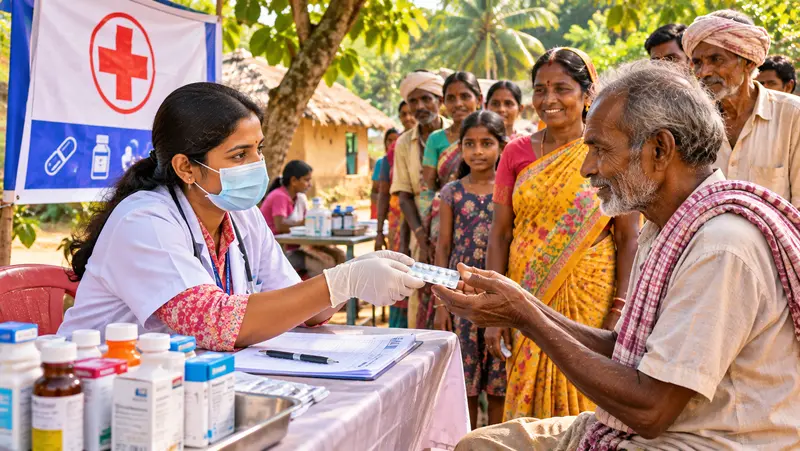
India carries a large share of several of these diseases, so the global numbers depend heavily on it. WHO's India office has said the country is close to eliminating kala-azar, and a 2025 review notes that the programme's goal of fewer than one case per 10,000 people at block level was reached in 2023, a national milestone that is separate from WHO validation. WHO's India office also reported a milestone on lymphatic filariasis in Bihar in June 2026. The publicly available summary of the new report does not give country-level figures, so India's position against each target must be checked in the full document, which covers all six WHO regions and updated summaries for each disease.
The summary's call for domestic financing is aimed at countries like India, where the risk is attention fading as case numbers fall. Elimination is hardest in its last stage, when cases are rare and surveillance must continue anyway.
WHO sets strategic priorities for 2026–2030, including more domestic financing. Three things will show whether the second half goes better than the first. The first is the number of countries validated each year against the 100 target. The second is what happens to donor budgets for mass drug administration. The third is whether countries fold these programmes into routine primary health care, so that they survive when special funding ends.
The review's value is that it refuses a simple story. The world has shown it can eliminate these diseases country by country. It has not yet shown that it will pay to finish the job. This article is for information and is not medical advice.
#Neglected Tropical Diseases#World Health Organization#Global Health Funding#Disease Elimination#Trachoma
Sources
About the Author
P
Prateek Rawat
Staff Writer
Prateek Rawat is a contributor to Wirony. All articles published under this byline undergo editorial review and approval before publication, with any necessary corrections handled…
P
5 min
What did you think?