/
Israel: Herzog tasks Eisenkot with forming government, 28 days after 67 of 120 backed him
President Isaac Herzog formally tasked Yashar leader Gadi Eisenkot on 8 November with forming Israel's government after 67 of 120 members recommended him and 46 backed Benjamin Netanyahu. He has 28 days, extendable by 14; his bloc holds 48 seats against the 61 needed.
R
4 min
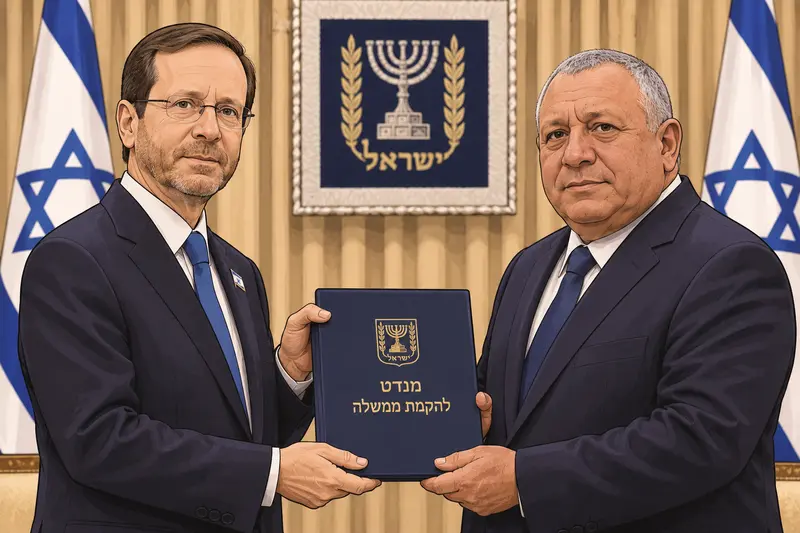
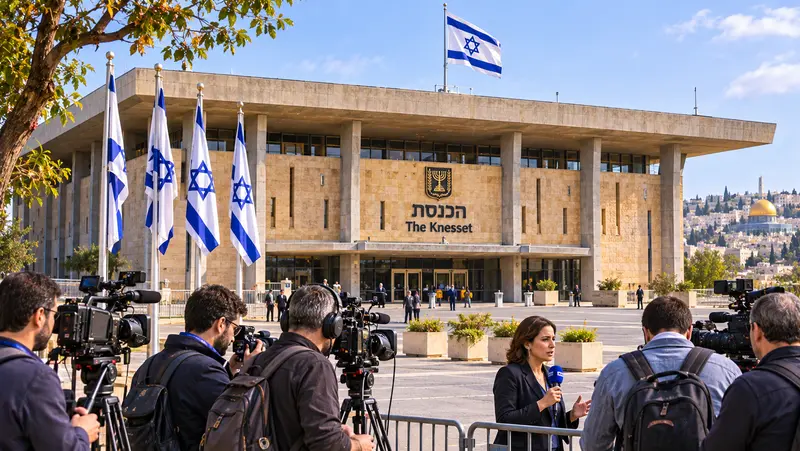
Israel's President, Isaac Herzog, formally tasked Gadi Eisenkot, the leader of the Yashar party, with forming the country's next government on Sunday, 8 November 2026, at the President's Residence in Jerusalem. Mr Eisenkot, a former chief of the Israel Defence Forces, now has 28 days to put together a coalition that can win a Knesset vote of confidence, and Mr Herzog can extend that by up to 14 days. The handover followed an election on 27 October that gave no bloc a majority.
Mr Eisenkot received recommendations from 67 of the 120 Knesset members, according to the Office of the President of Israel. Benjamin Netanyahu received 46. This article explains how the mandate works and what stands between Mr Eisenkot and the 61 seats he needs.
How the mandate works
Under Israel's Basic Law on the government, the President decides which member of the Knesset has the best chance of forming a government, after consulting every faction. Mr Herzog held those consultations at the President's Residence on 4 and 5 November, with more talks over the weekend. On 5 November he said he meant to task a member the following Sunday and acknowledged that the blocs' vetoes on one another made the result uncertain. On the evening of 7 November he told Mr Eisenkot of his decision, and the formal ceremony followed at 5 pm on 8 November.
The clock starts at the handover. Counting 28 days from 8 November gives about 6 December, and a full 14-day extension would run to about 20 December; those dates are this report's own arithmetic, not an announced deadline. If Mr Eisenkot fails, the President can assign the task to another member, and Mr Netanyahu could be given the chance next.
| Step | What the law and the record say |
|---|---|
| Consultations | President meets every faction; 4 and 5 November |
| Recommendations | Eisenkot 67, Netanyahu 46; United Torah Judaism (7 seats) recommended no one |
| Tasking | 8 November, President's Residence, Jerusalem |
| Time to form a government | 28 days |
| Extension | Up to 14 days, at the President's discretion |
| Needed for a government | 61 of 120 seats and a Knesset confidence vote |
The arithmetic behind 67 and 48
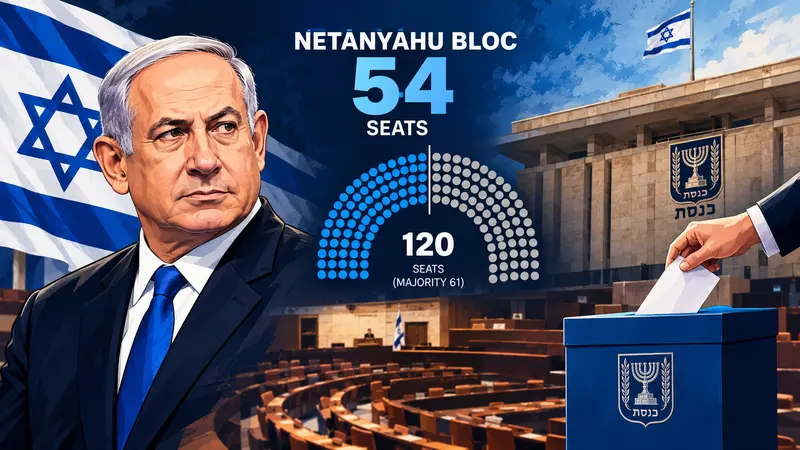
The 67 recommendations and the 48 seats are different numbers. The October election left Mr Netanyahu's bloc with 53 seats, Mr Eisenkot's change bloc with 48, and Arab-led parties with the remaining 19. The 67 recommendations for Mr Eisenkot came from his own bloc and from factions outside it, among them the Joint List and Yisrael Beytenu, according to the President's office. Mr Netanyahu's 46 is his bloc's 53 minus the seven seats of United Torah Judaism, which told the President it would not recommend anyone.
A recommendation is not a promise to join a government. To reach 61, Mr Eisenkot's 48 seats need 13 more, and the plain sum of his bloc with United Torah Judaism (7) and Shas (6) is 61, though Shas has publicly said it is part of the right-wing bloc. His party, Yashar, has set four conditions for partners: recognition of Israel as a Jewish and democratic state, acceptance of the values of the Declaration of Independence, mandatory service for all, and recognition of Hamas as a terrorist organisation committed to destroying its military and governing power. He has said he will not sit with Mr Netanyahu. In a post after the decision he wrote that "now is the time for the formation of a national emergency government".
What stands in the way
Who recommended whom is on the President's website, faction by faction. Yashar, the Democrats, the Joint List, Yisrael Beytenu and Be'Yahad recommended Mr Eisenkot, and Religious Zionism recommended Mr Netanyahu. United Torah Judaism was the only faction to name no one. Mr Eisenkot has said that he will not partner with Mr Netanyahu and that anyone who held a major position on 7 October 2023 must leave public life. Yisrael Beytenu's leader, Avigdor Liberman, has signalled some flexibility on the ultra-Orthodox enlistment question, while Yashar and the Democrats have shown less.

The obstacles are in the vetoes. Several hawkish members of Mr Eisenkot's bloc oppose relying on the Arab-led parties, and many in the bloc campaigned on keeping both Mr Netanyahu and the ultra-Orthodox parties out of power. The sharpest dispute is over military service for the ultra-Orthodox, which Mr Eisenkot insists must be mandatory.
Mr Netanyahu responded with a video calling for a national unity government that would include all his former allies, and he warned that a government backed by Arab parties would be catastrophic. Yashar called the video hysterical. For now, the formal position is simple: Mr Eisenkot holds the mandate, the clock has started, and the next steps are talks with parties whose votes he needs but whose conditions he has so far rejected.
If a government is not formed in the time allowed, the mandate can pass to another member, and Israel could face a further period of coalition talks or another election. The President's office and the Knesset will publish the next steps as they happen.
Sources
- Israeli President tasks Yashar party leader with forming Israel's next government (All India Radio)2026-11-09
- President Herzog Concludes Consultations and Announces He Will Task Gadi Eisenkot With Forming a Government (Office of the President of Israel)2026-11-07
- President Herzog Concludes Round of Consultations With Knesset Factions at the President's Residence (Office of the President of Israel)2026-11-05
About the Author
R
Reyaansh Agarawal
Staff Writer
Reyaansh Agarawal contributes to Wirony, covering stories that are carefully reviewed and approved by the editorial team before publication. Wirony is committed to maintaining tran…
R
4 min
What did you think?