/
Delhi air on Diwali: CPCB 24-hour AQI 376 is very poor, Ballabgarh worst at 398
The CPCB bulletin for Diwali, 8 November, puts Delhi's 24-hour AQI at 376, very poor, with all 59 stations reporting and PM2.5 the main pollutant. No city in the bulletin was severe. Ballabgarh, at 398, was worst; Ghaziabad, Bhiwadi and Noida were also very poor.
P
4 min
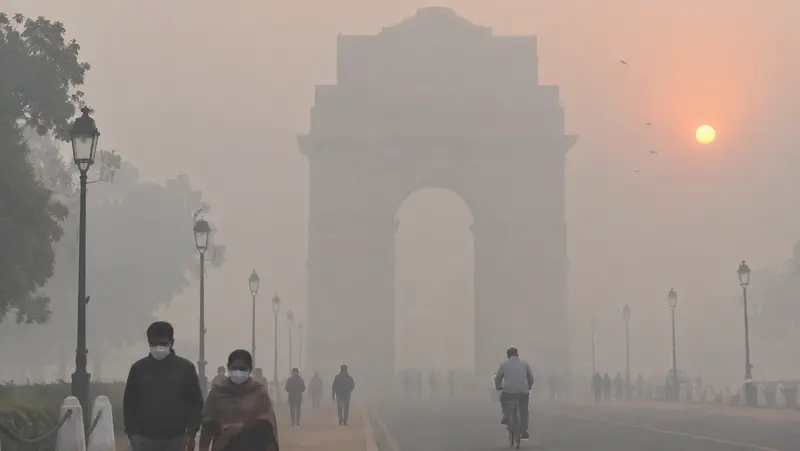
Delhi's air on Diwali was very poor by the Central Pollution Control Board's own measure, not severe. The board's bulletin for 8 November, which averages the 24 hours up to 4 pm, puts the capital at an Air Quality Index of 376, with fine particles (PM2.5) the main pollutant and all 59 monitoring stations reporting. No city in the bulletin was in the severe band, which starts at 401. The highest figure in the whole table was 398, for Ballabgarh in Haryana, and it came from a single station.
That is a different picture from the one in the morning's headlines, which quoted hourly readings above 400 at individual stations. Both are true, and they measure different things. The 24-hour average is the number the board uses to classify a city for the day.
What the 8 November bulletin shows
The board's table covers more than 250 cities. The very poor band, which the board defines as 301 to 400, held at least 21 of them. The six highest were Ballabgarh (398), Delhi (376), Bharatpur (369), Mandi Gobindgarh (366), Khora (364) and Bulandshahr (363).
The National Capital Region towns were split between very poor and poor.
| City | 24-hour AQI | Category | Stations reporting |
|---|---|---|---|
| Ballabgarh | 398 | Very poor | 1 of 1 |
| Delhi | 376 | Very poor | 59 of 59 |
| Ghaziabad | 344 | Very poor | 8 of 8 |
| Bhiwadi | 342 | Very poor | 2 of 2 |
| Bahadurgarh | 325 | Very poor | 1 of 1 |
| Noida | 318 | Very poor | 7 of 7 |
| Greater Noida | 299 | Poor | 4 of 5 |
| Faridabad | 291 | Poor | 3 of 3 |
| Gurugram | 288 | Poor | 4 of 4 |
The bulletin averages the previous 24 hours of readings from the continuous monitoring stations that report to the board, and names the prominent pollutant for each city. PM2.5 led in Delhi, Noida, Greater Noida, Faridabad, Gurugram and Bahadurgarh, while Ballabgarh's was PM10. Ballabgarh's 398 rests on one station, which is why the station count matters: Delhi's 376 rests on all 59 of its stations, and Ghaziabad's 344 on all eight. The board's bands run from good (up to 50) through satisfactory, moderate (101 to 200) and poor (201 to 300) to very poor (301 to 400) and severe (401 to 500).
Outside the region, the same day's air was far cleaner. Lucknow was at 233, Jaipur 185, Patna 186, Ahmedabad 195, Kolkata 162, Chennai 138 and Mumbai 132, all in the moderate or poor bands, while Hyderabad (84) and Bengaluru (70) were satisfactory. More than 40 cities, among them Panchkula, were left out of the bulletin because they did not have enough data.
Why 376 is not the whole story
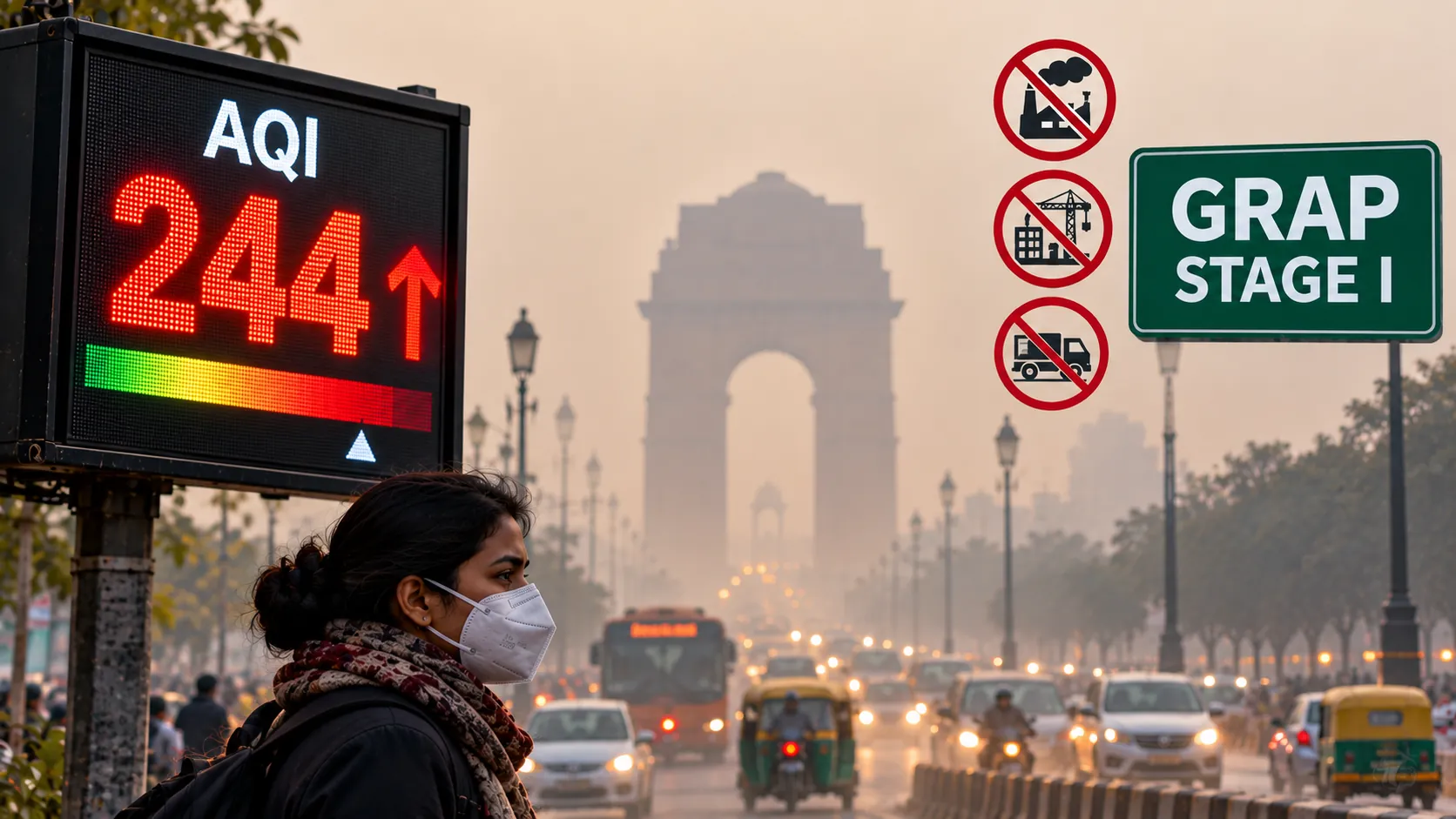
Delhi's number needs two pieces of context. The first is the trend. Earlier this week the capital's index was reported at 312 on 2 November, when it first turned very poor this season, and at 350 on 3 November, which was the worst in 287 days. The Commission for Air Quality Management then put Delhi at 380 when it invoked Stage III of its Graded Response Action Plan across the region on 6 November. Diwali's 24-hour average of 376 was therefore a little below that day's figure, not above it.
The second is the hourly picture. According to the board's real-time data as reported, the index stood at about 383 to 384 across the city at 8 am on Diwali morning, with individual stations such as Jahangirpuri and Punjabi Bagh at about 450, and the ITO station at 406 at 4.20 am on Monday. The citywide reading had eased to 366 by 6.30 am. A station touching 450 in the small hours can coexist with a 24-hour average of 376, because the average includes the cleaner afternoon.
The Graded Response Action Plan is tied to bands of the index. Stage III is meant for severe air, between 401 and 450, and Stage IV for severe plus, above 450. On 6 November the commission acted before the capital reached the severe band, citing forecasts of worse air, and the Stage III curbs on construction, demolition and older vehicles were in force over Diwali. The Indian Institute of Tropical Meteorology had forecast that air would stay in the severe range around the festival, from 7 to 9 November.
Monday's bulletin and the farm-fire factor
The board publishes a bulletin each day, and Monday's will show whether the morning-after smoke pushed the daily average into the severe band or whether the average stayed in the very poor band. Two things will decide that: wind speed, because stagnant air traps smoke, and the farm fires that the region's curbs do not reach.
For residents the health message does not depend on the label. The board says very poor air can cause respiratory illness on prolonged exposure, and severe air affects healthy people and seriously affects those who already have lung or heart disease. A very poor day is a day for sensitive groups, including children, older people and anyone with asthma, to limit time outdoors, and the board's bulletin gives no sign of relief for Delhi or for the towns around it on the day after the festival.
Sources
About the Author
P
Prateek Rawat
Staff Writer
Prateek Rawat is a contributor to Wirony. All articles published under this byline undergo editorial review and approval before publication, with any necessary corrections handled…
P
4 min
What did you think?