/
Israel's election deadlock: Netanyahu's bloc has 53 seats, Eisenkot's side 48; minority, unity talks weighed
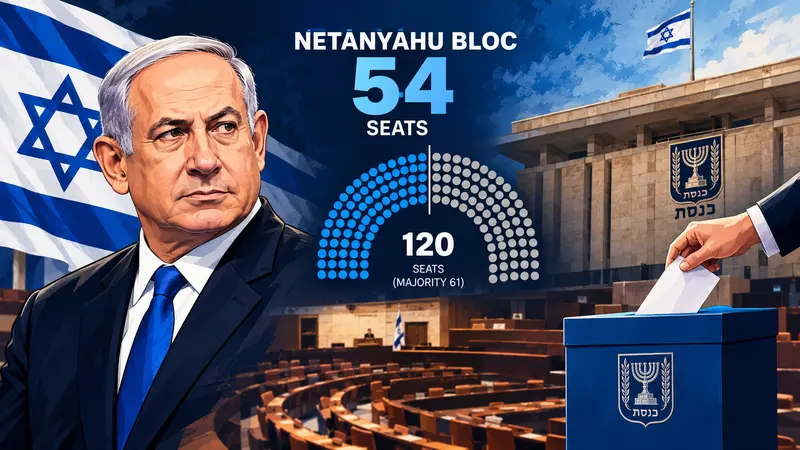
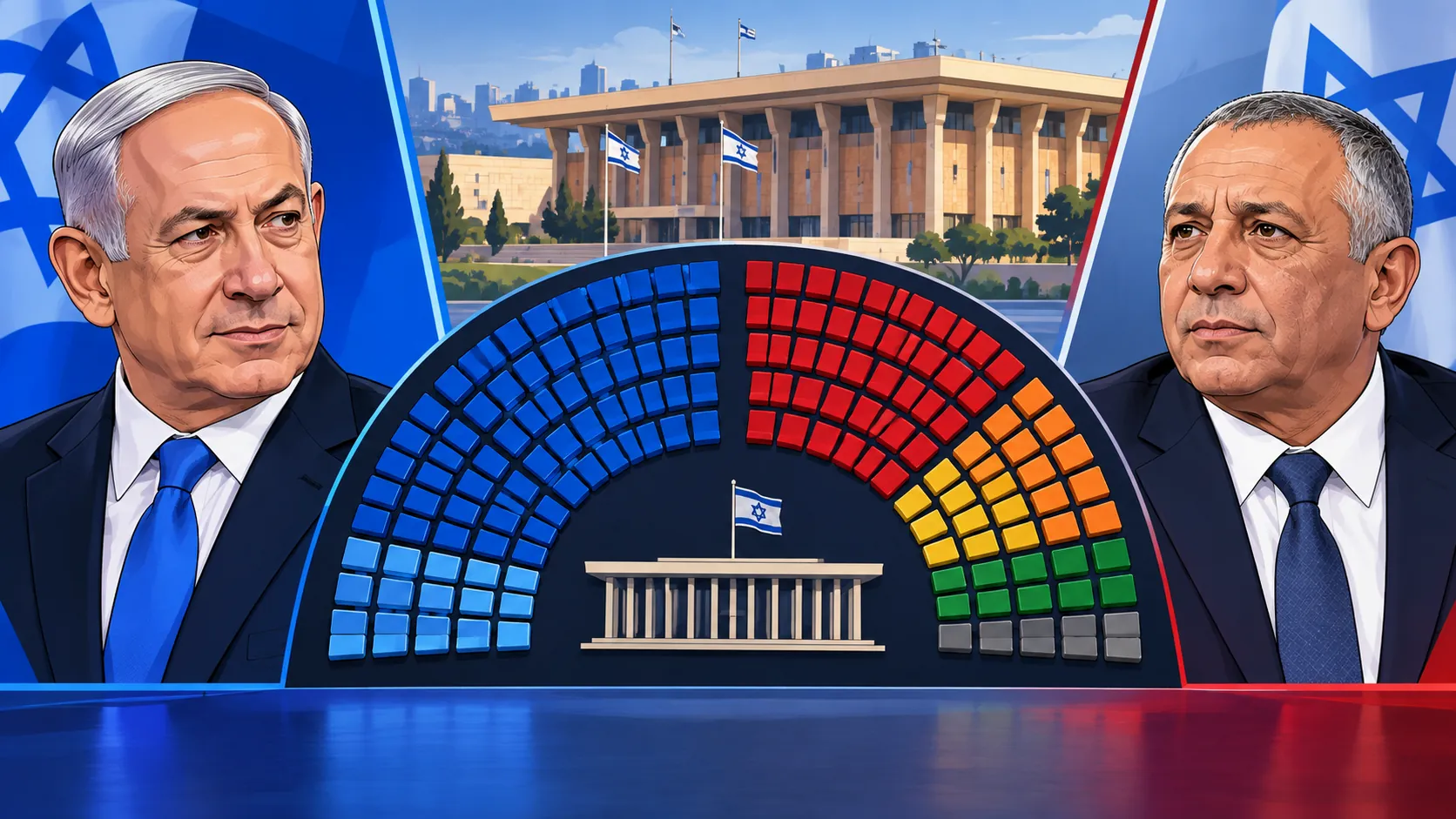
Israel's election left no bloc with the 61 seats needed: Netanyahu's outgoing bloc has 53, the opposition 48 and the Arab parties 19. Gadi Eisenkot is expected to get the first mandate and says he could form a minority government. A Likud official calls a unity government extremely unlikely.
P
4 min
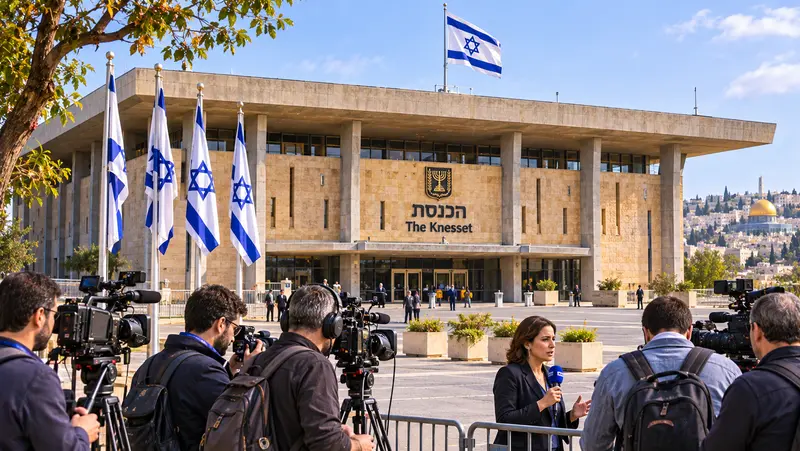
Israel's election has ended in deadlock, with neither Prime Minister Benjamin Netanyahu's bloc nor his main challenger, Gadi Eisenkot, holding the 61 seats needed in the 120-seat Knesset. Netanyahu stays prime minister and caretaker head of government while no alternative government is formed. The vote was held on 27 October, and with nearly all ordinary ballots counted the remaining votes are not expected to change the outcome.
The result
Netanyahu's outgoing bloc has 53 seats, down from the 68 that his coalition held in the outgoing Knesset: Likud 27, Otzma Yehudit 7, United Torah Judaism 7, Shas 6 and the Religious Zionist Party-Zehut 6. One count has Likud at 26. The opposition has 48, made up of Eisenkot's Yashar with 21, Naftali Bennett's B'Yachad with 12, the Democrats and Avigdor Liberman's Yisrael Beytenu with 7. The Arab parties hold 19 seats between the Joint List and Ra'am, though the reports differ on the split, with one count giving the Joint List 13 and Ra'am 6 and another 11 and 8. Ra'am gained after strong results in Rahat, where it took 83.6% of the vote. Smaller breakaway parties failed to pass the threshold. One analysis describes an Arab vote surge, and the army reported that 79.9% of military personnel voted, 6.2 points up on the previous election. More than 500,000 double-envelope ballots were still to be counted, and officials said it was too early to estimate their effect on seats, with further checks scheduled for this week. Two parties fell below the threshold, the Reservists-Economic list and Ofer Winter's Amcha Israel, which missed it by 54,888 votes. The shekel weakened as the results came in.
A government needs a majority in the confidence vote and not 61 votes in favour. If all 48 opposition members vote for a government, all 53 against and all 19 Arab members abstain, it fails, while Ra'am's support plus a Joint List abstention would give 56 for and 53 against and pass. That outcome depends on agreements that Bennett and Liberman have opposed.
The players and what they want
Eisenkot, a former chief of staff of the Israeli army, leads the opposition's bid to replace Netanyahu and is expected to receive the first mandate from President Isaac Herzog after consultations. He has said he would form a minority government if necessary, though he would prefer a new election if he cannot pass a fair military conscription law. He and Bennett have pledged not to sit in a government with Netanyahu.
The partners disagree. Yair Golan favours a government backed by or including Arab parties, while Liberman rules that out and has said that he has no desire to serve as Knesset speaker, Bennett is reluctant and Yair Lapid is more open. Eisenkot and Lapid have met to coordinate next steps. A minority government with the support or abstention of United Torah Judaism would give Eisenkot's side 55 seats against 53, but some in his bloc suspect that party is negotiating with both sides to raise its price. Bennett and Liberman might also agree to act against Netanyahu in the Knesset, for example by replacing the speaker, because such votes do not require them to support a minority government under Eisenkot.
Unity, a minority government or another election
A unity government of Likud and Yashar would have 48 seats, or 60 with B'Yachad. A senior Likud official called the chances of a unity government extremely unlikely, as it would mean Netanyahu reversing a campaign promise, breaking with traditional partners and excluding Itamar Ben-Gvir, possibly along with some ultra-Orthodox parties. Disputes over rotation, a state commission of inquiry into 7 October and military conscription remain unresolved, and the opposition parties' stance against governing with the ultra-Orthodox is partly tied to their demand for broader conscription legislation.
The third option is a fresh election, which the analysis says could return the same deadlock or give Netanyahu the seats he lacks. Herzog has urged party leaders to avoid another vote.
After consultations, the president decides whom to task with forming a government, and recommendations from newly elected members do not guarantee a majority in the confidence vote. The mandate holder has 28 days to negotiate, which can be extended by up to 14 days. If that fails, further legal procedures apply, and the outgoing government stays in office until a new one is sworn in.
Joint List chairman Yousef Jabareen has said his party would use its strength to help remove Netanyahu's government, while Golan has argued that the opposition should form a government with Arab party support. Sources told one Israeli outlet that US President Donald Trump does not want Ben-Gvir in Netanyahu's next government, though no arrangement has been agreed. A caretaker government keeps its formal powers but is expected to show restraint on major decisions.
Netanyahu can use that time. Reports say he is pressing the United States for renewed strikes on Iran after the American midterms, and that a return to war could help him form an emergency government after his bloc lost its majority. The coming days will test whether Eisenkot can assemble a minority coalition that depends on parties he cannot formally join, or whether the country heads for its next election.
P
4 min
What did you think?