/
US midterms: Democrats flip North Carolina Senate seat and lead the House race; control still undecided
Early results on election night show Democrats flipping North Carolina's Senate seat and holding Georgia and New Hampshire, while Republicans keep Florida. House control leans Democratic. Michigan, Maine, Texas, Ohio, Iowa and Alaska were uncalled. Exit polls point to prices, tariffs and Iran.
R
6 min
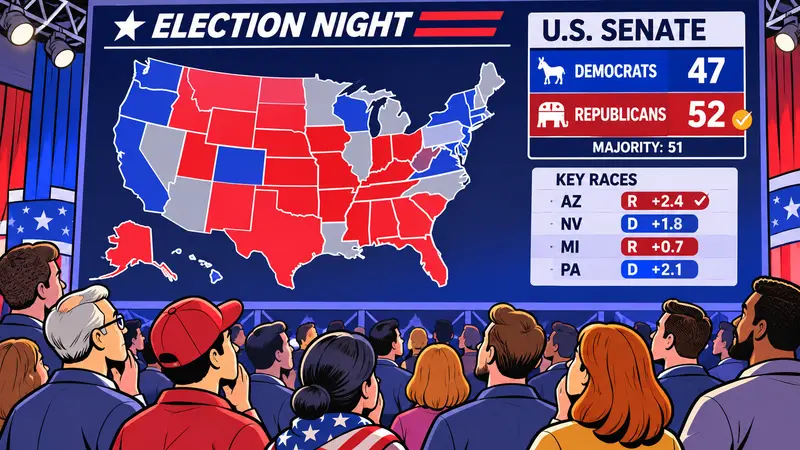
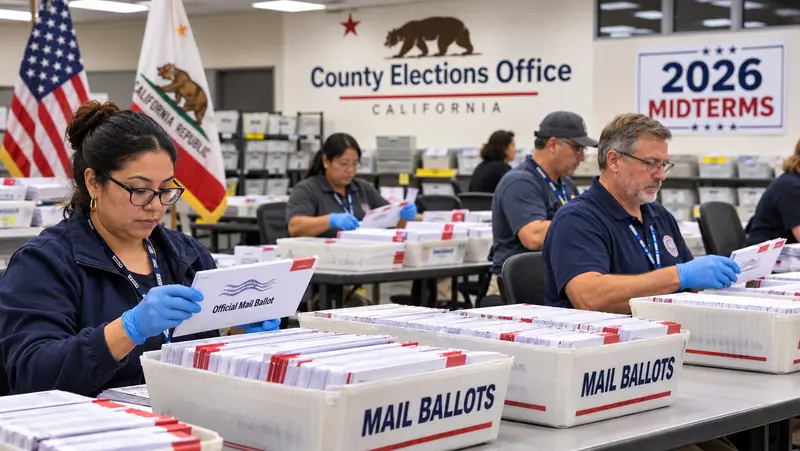
Early results from the United States midterm elections on Tuesday night show Democrats flipping one Republican-held Senate seat, holding two others they were defending, and holding the lead in the race for the House, while control of the Senate remains undecided. All 435 House seats and 35 of the Senate's 100 seats were on the ballot. These are projections made while counting continued, as of the early hours of Wednesday 4 November Indian time, and several large races had not been called. Final control of either chamber may not be clear for hours or days.
Before the vote, Republicans held the Senate 53 to 47, counting two independents who vote with the Democrats among the 47, and had a narrow House majority of about 218 to 212 or 214, depending on vacancies. For control of the Senate, Democrats needed a net gain of four seats. Republicans could afford to lose three, because a 50-50 split would let Vice President JD Vance cast the deciding vote. In the House, Democrats needed a net gain of about three.
The Senate calls so far
The first and biggest change came in North Carolina, where Democrat Roy Cooper, the former governor, defeated Republican Michael Whatley for the seat held by the retiring Senator Thom Tillis. It was the first Senate seat to change hands on the night. Counting had been delayed by about 45 minutes after technical problems led the state to extend voting hours in several counties, and the margin was still being counted when the race was called.
Democrat Jon Ossoff won a second term in Georgia, beating Republican Representative Mike Collins, who conceded. In New Hampshire, Democrat Chris Pappas won the open seat against Republican John Sununu, and becomes the first openly gay man elected to the Senate. In New Jersey, Cory Booker won a third term, and in Virginia Mark Warner was re-elected. The one Republican hold that has been called in a closely watched race is Florida, where Senator Ashley Moody defeated Democrat Angie Nixon in the special election. Her margin is projected to be well below the 13-point win Rick Scott had in the state in 2024, which Democrats will count as a sign of movement.
The uncalled races are the ones that will decide the chamber. The list includes Republican-held seats in Maine, Ohio, Texas, Iowa, Alaska, Kansas, Nebraska and South Carolina, and the Democratic-held seats in Michigan and Minnesota that the party must defend. With North Carolina flipped, Democrats need three more net gains to reach 51. Prediction markets had put the Democrats' chances of taking the Senate at about 90% and the House at about 97% before the results began, but those are expectations and not results.
The House and the governors
For the House, the network election desk that tracks the race said control "leans Democratic", projecting at least 200 Democratic seats and at least 160 Republican seats out of 435. Democrats flipped North Carolina's 11th District, where Jamie Ager is projected to beat Republican Jennifer Balkcom in a seat Donald Trump carried by about 9.5 points in 2024. In Florida, Democrats Kathy Castor and Jared Moskowitz won their districts and a third district was projected for the party. In Kentucky, Democrat Morgan McGarvey held the 3rd District and Republican Hal Rogers held the 5th. Two Republican incumbents in Florida, Anna Paulina Luna and Maria Elvira Salazar, were leading by less than a point with most votes counted. In the governors' races, Democratic incumbents JB Pritzker in Illinois, Wes Moore in Maryland, Josh Shapiro in Pennsylvania and Maura Healey in Massachusetts all won comfortably, among 36 contests.
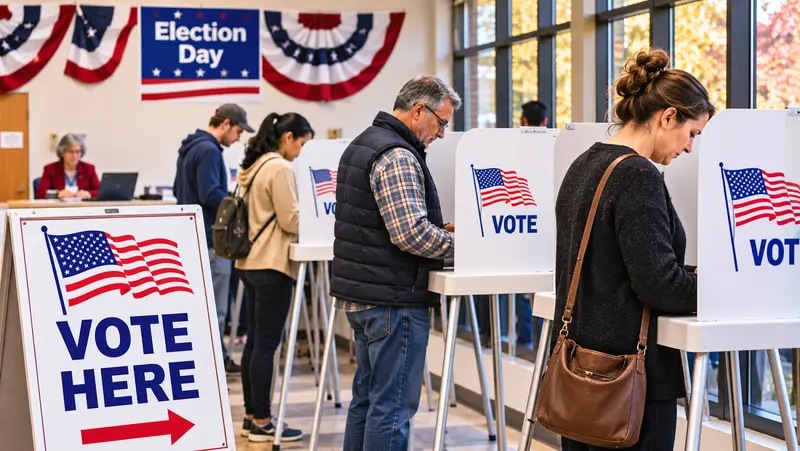
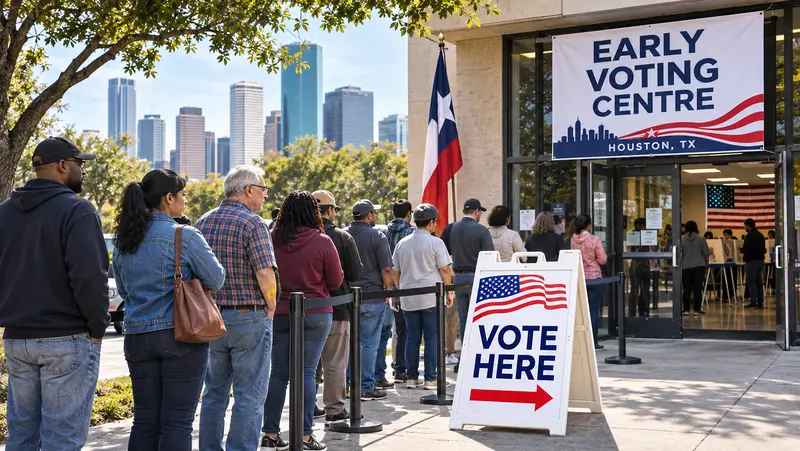
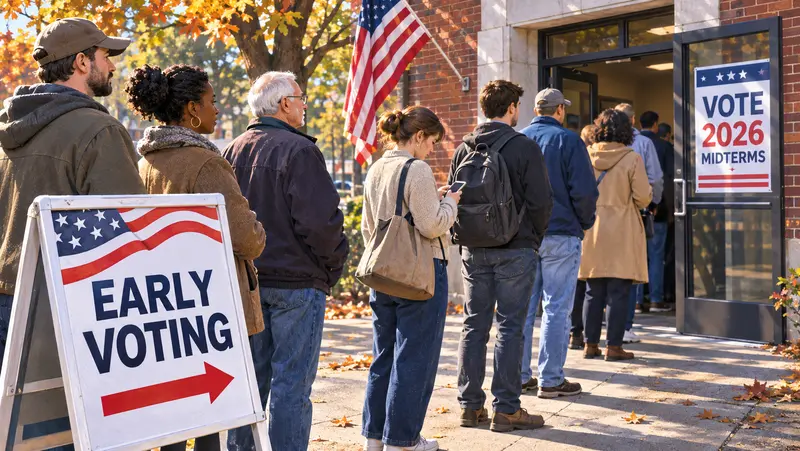
Turnout looked strong. South Carolina recorded more than 1.9 million ballots by 6 pm Eastern time, about 56% of registered voters, a record raw total for a midterm in the state. There were also problems. Some polling places in Chicago ran out of paper ballots and officials printed more, scanning problems affected sites in Westchester County in New York, and Dearborn in Michigan reported ballot shortages. Officials said that voters in line at closing time would be allowed to vote.
What voters said
The exit poll gives the clearest explanation of the mood. According to the network voter poll, 62% of voters said inflation is caused more by President Trump's policies, 79% said the cost of living caused them severe or moderate hardship, and 87% were concerned about gasoline prices. Asked about tariffs, 65% said they hurt the national economy and 22% said they helped. Three quarters rated the economy as not so good or poor. On the economy, 43% trusted Democrats more and 38% trusted Republicans.
The president was himself on the ballot in a sense. Some 59% said that expressing support or opposition to Mr Trump was a reason for their House vote; 43% said their vote was against him, 16% said it was for him, and 41% said he was not a factor. The war with Iran also weighed: 74% said it was a crucial or major factor in their vote, and 62% said the United States made the wrong decision by taking military action. On candidates, 56% said Mr Sununu was too close to Mr Trump, 58% said Senator Susan Collins of Maine was too much in line with him, and 55% said Senator Pete Ricketts of Nebraska was too close, while 49% said Democrat Abdul El-Sayed in Michigan was too extreme.
During the day, Mr Trump said the United States has no immediate plan for renewed strikes on Iran and that it was "getting everything we want", and that it will end roughly $4 billion in annual military aid to Israel by the end of the year, according to his interviews. The first claim matters for the war and the second for the region, and both will be tested by whichever party controls Congress.
What to watch next
The count will be slow in the races that matter. Watch Michigan and Minnesota, where Democrats must hold seats, and Maine, Ohio, Texas and Iowa, where they need to win. A Democratic House would give the party the power to investigate, to set the budget's direction and to block legislation, even if the Senate stays Republican. A Democratic Senate would also decide the fate of nominations. Markets will be watching as well, because some investors fear a large Democratic Senate majority could mean tighter limits on data centres. For now the safest reading is that the wave Democrats hoped for has partly arrived, that it is stronger in the House than the Senate, and that the chamber that decides the next two years may still come down to a handful of states that have not finished counting.
R
6 min
What did you think?