/
US midterms eve: over 53 million have voted early, Democrats lead polls by 8 points; what to watch on Tuesday
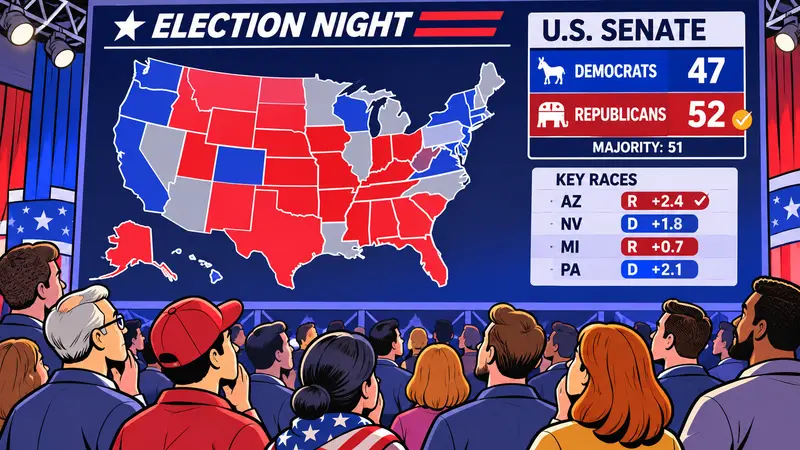
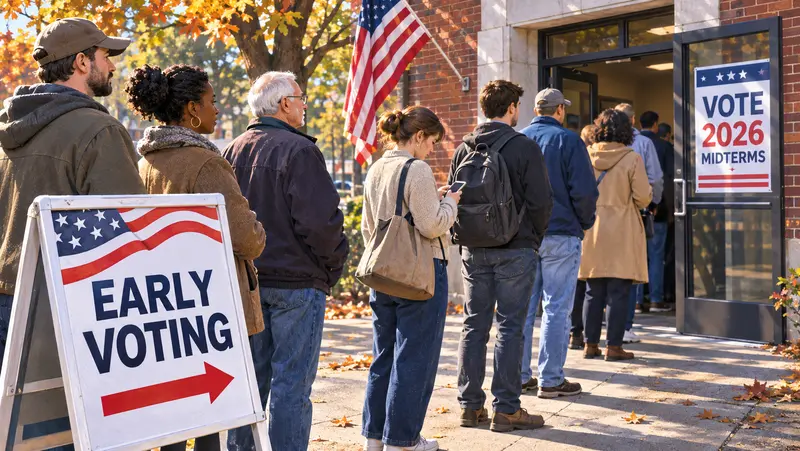
With the 3 November midterms a day away, about 53 million Americans have voted, against 46 million at this point in 2022. Democrats lead national polls by roughly 8 points and are favoured to flip the House, while the Senate is closer, with seven toss-ups. Early ballots show who voted, not how.
P
3 min
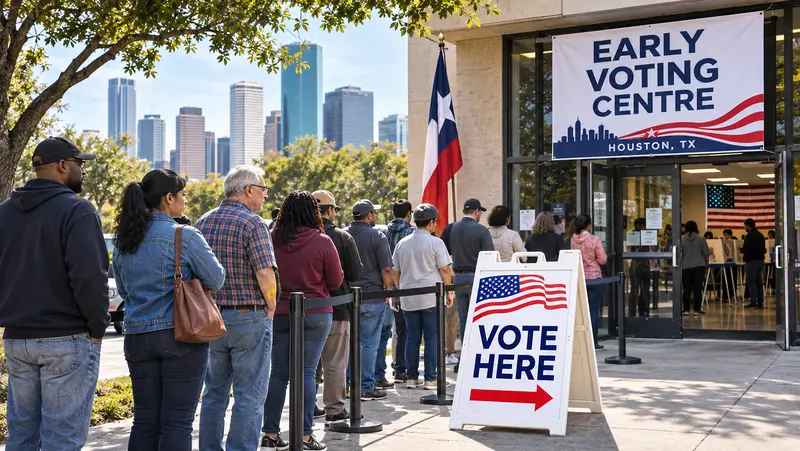
The United States votes on Tuesday, 3 November, in midterm elections that will decide control of both chambers of Congress, and more than 53 million people have already cast ballots. A University of Florida analysis puts the early vote at about 53.14 million out of roughly 210 million registered voters, made up of 29 million in-person votes and 23 million mail ballots. At the same point in the 2022 midterms the figure was 46 million.
What the early vote shows
More than 11 million registered Democrats had voted early by Sunday, against about 8 million registered Republicans. Early voting was up sharply in several states compared with 2022. In Texas more than 7 million ballots had been cast, over 1.5 million more than four years ago, and Harris County recorded 1,081,010 early voters, the most ever for a midterm there. South Carolina was up 83%, Maine 44%, Kansas 34% and Michigan 32%, or about 409,000 more ballots. A separate analysis found that Hispanic early voting is running ahead of its pace in both 2022 and 2024.
Analysts caution that these numbers do not show which candidates people chose. Party registration is not party preference, and the figures cannot say whether the Democratic lead among early voters will survive a heavy Election Day turnout.
The polls
The RealClearPolling average of national polls has Democrats ahead of Republicans by 51.4% to 43.2%, a lead of 8.2 points. In an Economist/YouGov survey, 44% of registered voters expected Democrats to win the House and 31% expected Republicans to, while on the Senate the split was 39% to 36%. Kyle Kondik of Sabato's Crystal Ball said the House is 'almost certain to flip to Democrats' but the Senate is 'much more up in the air'. The Trump administration's tariff policy and the Iran war have been blamed for a cost-of-living crisis that is hurting Republicans.
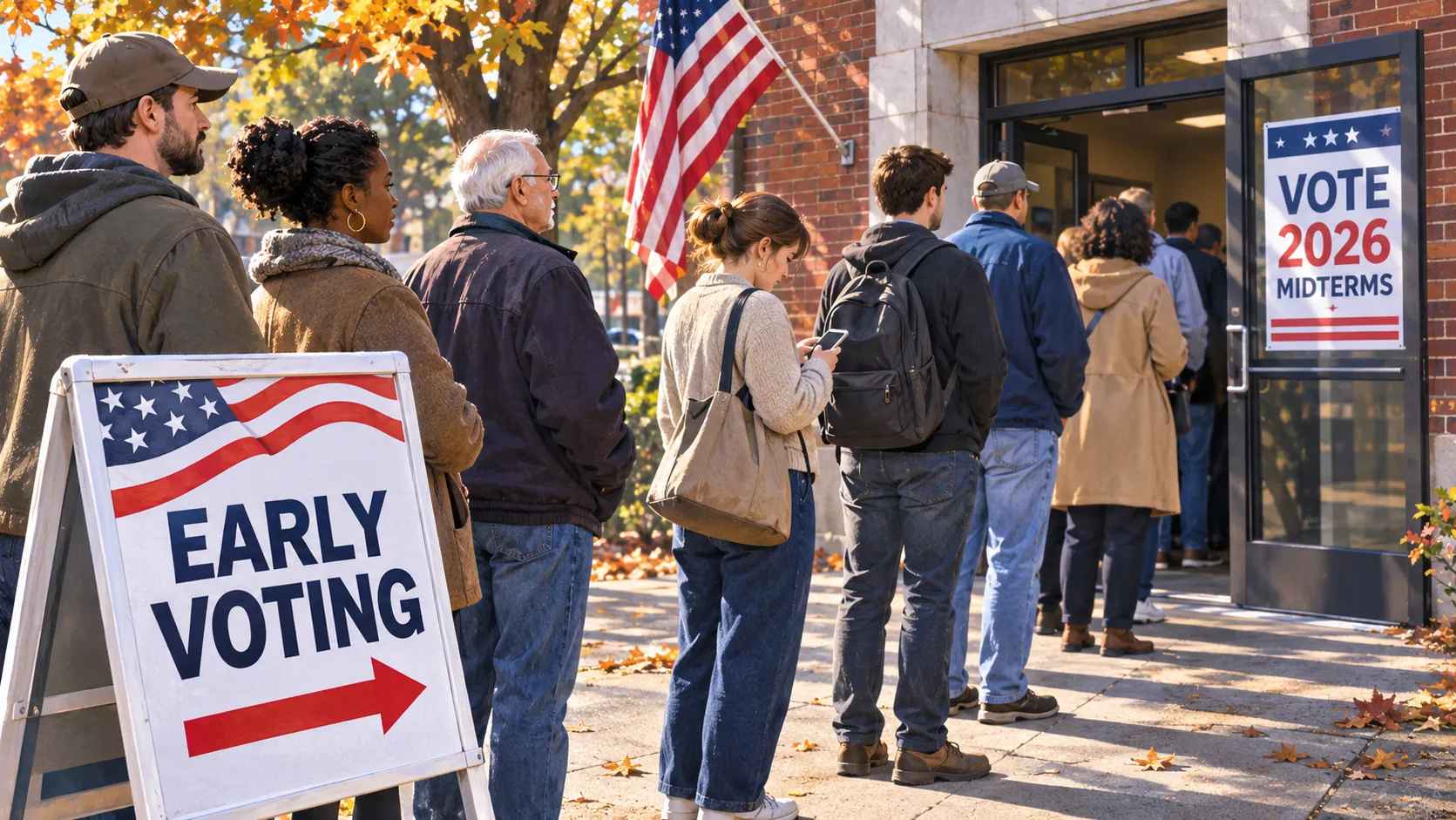
Seven Senate races are rated toss-ups and will probably decide control. In Alaska, a dispute over two candidates named Dan Sullivan has drawn legal action from the Justice Department. In Kansas, an Emerson poll has Democrat Adam Hamilton at 49% and Republican Senator Roger Marshall at 45%. In Maine, Republican Senator Susan Collins faces Democrat Troy Jackson. In Texas, Republican Ken Paxton and Democrat James Talarico are both focusing on Harris County. Republicans are defending Senate and governor seats in Florida, South Carolina has open governor and Senate races, and Ohio's governor race features Democrat Amy Acton.
Mail ballots make up about a third of all votes cast in the United States, and return deadlines differ by state: some require ballots to arrive by Election Day, while others accept ballots postmarked by that day. In September the Supreme Court rejected Trump's bid to impose mail-in voting restrictions before the midterms. A federal judge has also barred the Justice Department from threatening election officials over ballot processing, an order that expires after Election Day and that the department is appealing.
P
3 min
What did you think?