/
Trump campaigns in Alaska as midterms near; 2020 election denial resurfaces in Georgia debate
Trump campaigned in Alaska as Republicans work to defend a key Senate seat ahead of the 3 November 2026 midterms. A Georgia debate revived 2020 election denial questions, while voter forums and outreach events continued nationwide and recent India bypoll results set global context.
P
5 min
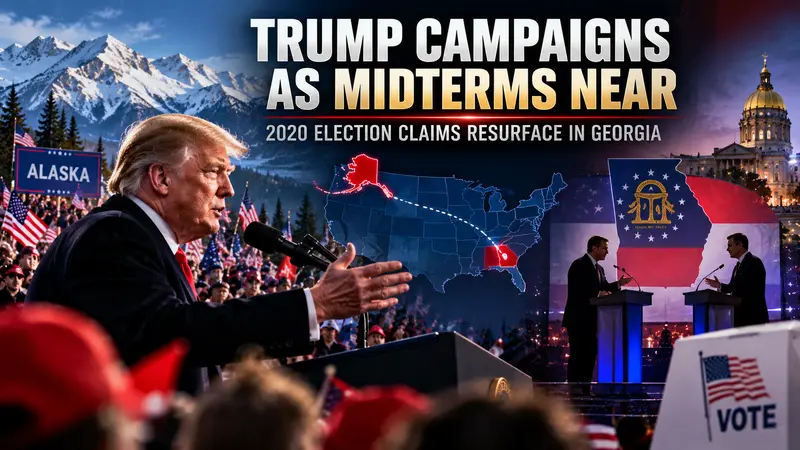
President Donald Trump headed to Alaska on Tuesday, stepping up late-campaign travel as Republicans try to protect a vulnerable Senate seat and keep their grip on Congress ahead of Tuesday, 3 November 2026 midterm elections.
The trip, framed as a push for GOP candidates in a state that can decide tight margins in Washington, came as election politics elsewhere in the country again turned on old arguments about 2020. In a Georgia Senate debate referenced in the same stream of developments, Republican Rep. Mike Collins declined to disavow his denial of the 2020 election outcome when pressed by a debate panelist and Democratic Sen. Jon Ossoff.
With three weeks left in the federal campaign, the two moments captured a familiar split screen: party leaders chasing turnout in competitive states while disputes over election legitimacy continue to surface in high-profile races.
Campaign trail turns to Alaska
Trump’s Alaska stop was presented as a bid to boost a Republican incumbent senator as party strategists weigh their path to holding Congress. Alaska’s small electorate and history of close statewide contests can magnify the impact of national money and attention, particularly in a midterm year when turnout can swing sharply between parties.
The president’s travel also signaled how the White House is choosing to spend its final stretch of campaign time: on-the-ground appearances meant to energize supporters and put pressure on opponents, rather than relying solely on advertising and surrogates.
While details of the Alaska events and the senator’s identity were not provided in the material, the political intent was clear. The president is using his office and his profile to shore up a seat Republicans view as important to their broader effort to maintain power in Washington.
2020 disputes return in debates
The Alaska trip unfolded against a backdrop of campaign debates and voter forums around the country where candidates are being pressed on policy and on their views of election integrity.
In the Georgia Senate debate cited in the same update, Collins, a Republican congressman, “won’t disavow” his 2020 election denial when questioned by a debate panelist and by Ossoff, the Democratic senator. The exchange showed how, even as candidates campaign on issues such as inflation, crime and public services, questions about accepting election outcomes remain a live test in some contests.
Local races, too, are drawing voters into the process through in-person events. In Cave City, Kentucky, residents turned out on Tuesday night for a candidate forum hosted by the local chamber of commerce and a partner organization, with mayoral and city council hopefuls taking questions from moderators and from citizens who submitted queries ahead of time. Nine candidates are running for six council seats.
Jacob Gossett, a Cave City resident, described the forum as a chance for voters to stay involved. “I’ve always been interested in politics and the country and our community would be totally different if everyone stayed engaged,” he said.
Monica Morgan, another resident, said she attended to learn about the candidates and where they stand.
Elsewhere, voter outreach has taken on a more informal tone. Flint, Michigan, held a nonpartisan “Party at the Polls” event on Monday night that mixed tacos, music and karaoke with voter information and help.
In Arkansas, a congressional debate on Monday featured Republican Rep. Bruce Westerman and Democratic challenger Carlton Russell in the 4th District, with Westerman leaning on his legislative experience.

And in California’s North Bay, Democrats competing in down-ballot races have been sparring over the role of outside money while largely agreeing on some policy positions. In a Sept. 30 online forum for the 12th Assembly District, candidates Eric Lucan and Jackie Elward aligned on issues including state funding to finish high-speed rail and opposition to Proposition 43, while arguing over the volume of outside spending in the race.
In another forum on Sept. 24 for California’s 2nd State Senate District, Democratic Assemblymember Damon Connolly and Republican Tief Gibbs clashed over taxes, housing and homelessness, and both said they would try to rein in state housing laws.
India bypoll results set context
Outside the United States, recent election results in India offered their own snapshot of voter mood and party organization, with by-elections held on 6 October and results declared on 9 October.
In West Bengal’s Nandigram Assembly seat, Hasi Rani Rath of the BJP won with 1,64,427 votes, defeating Congress candidate Milan Pradhan by 1,22,753 votes.
In Rejinagar, also in West Bengal, BJP candidate Shankharavh Sarkar won with 1,29,914 votes. One set of results listed Golam Nabi Azad of the Aam Janata Unnayan Party (AJUP) as the nearest rival with 54,098 votes, with a reported margin of 75,816 votes. Some coverage described the constituency as Muslim-majority, a factor often invoked in political readings of the outcome.
In Tamil Nadu, the Tamilaga Vettri Kazhagam (TVK) won two Assembly bypolls. K. Maragatham Kumaravel won Madurantakam with 74,048 votes, and P. Sathyabama won Dharapuram with 66,841 votes by a margin of 9,471.
In Puducherry’s Thattanchavady seat, Ashok Anand of the All India N.R. Congress won with 13,358 votes, defeating Congress candidate E. Vinayagam, who polled 4,876 votes, for a margin of 8,482. Turnout was reported as 80.81%.
One other by-election result, in Assam’s Nagaon parliamentary constituency, was flagged in the material as requiring careful verification because figures circulating during counting did not match a later results snapshot.
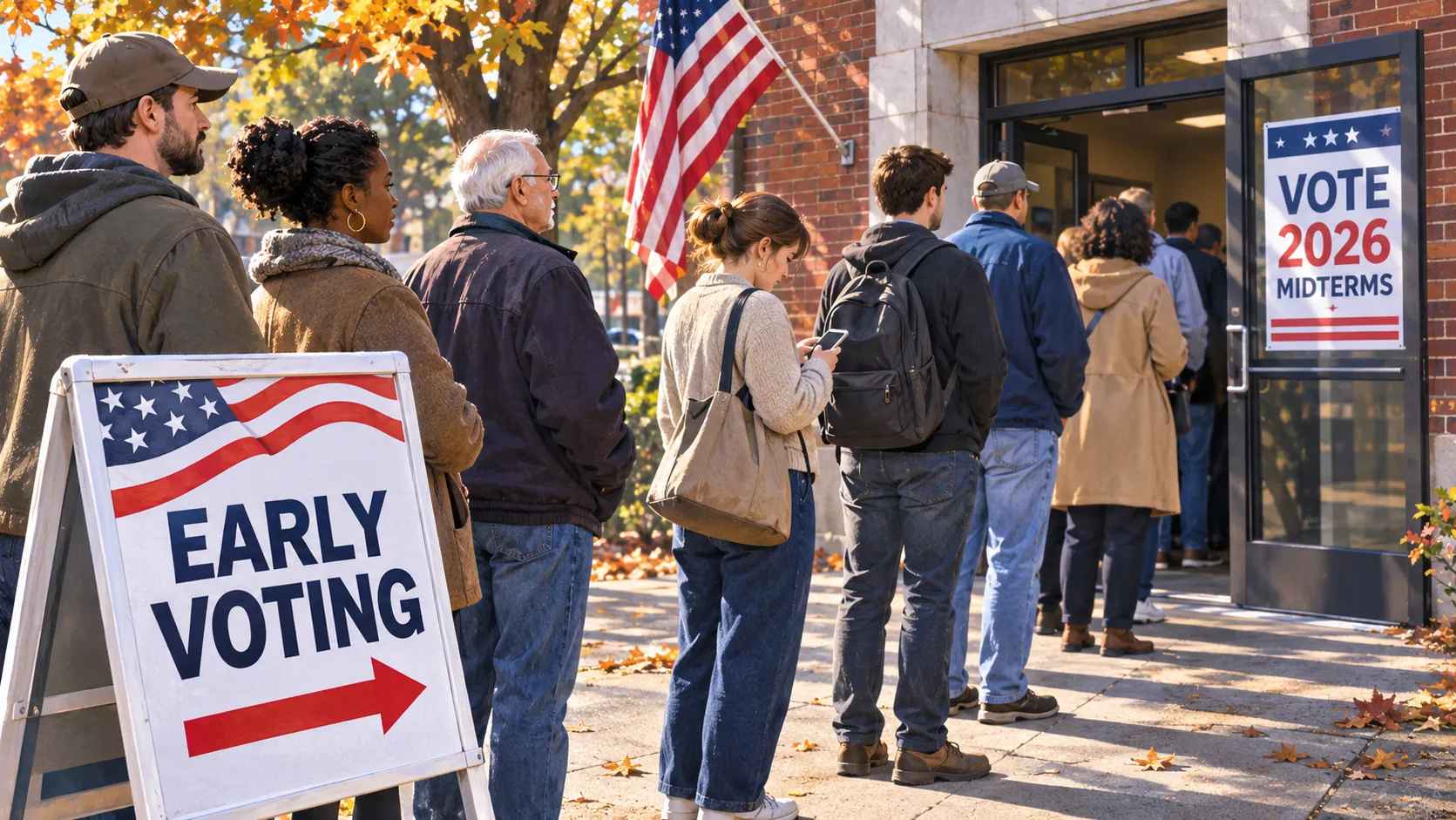
For voters in the U.S., the next fixed date is clear. Election Day is 3 November, after which states move into canvassing and certification processes that vary by jurisdiction, with recounts or post-election audits possible depending on local rules and margins.
For campaigns, the calendar is even simpler. There are three weeks left to persuade, mobilize and, in some places, answer once again whether the last election counts.
P
5 min
What did you think?