/
Russia hits Ukraine's grid with 365 missiles and drones a week before Abu Dhabi talks on 10–11 November
Russia launched 289 drones and 76 missiles at Ukraine on 3 November, taking three of DTEK's five thermal plants offline and cutting power in Kyiv and six regions. US, Russian and Ukrainian advisers are due to meet in Abu Dhabi on 10–11 November; Kyiv wants an energy truce first.
A
4 min

Russia launched one of its largest attacks of the year on Ukraine's energy system overnight on Tuesday 3 November, a week before negotiators from the United States, Russia and Ukraine are due to meet in Abu Dhabi. President Volodymyr Zelensky said Russia fired 289 drones, 17 ballistic missiles and 59 cruise missiles, which is 365 in all. The strikes hit power plants and substations from the Black Sea port of Odesa in the south to Rivne in the west. Local outlets described the attack as the biggest on Ukraine this year.
The timing was not a surprise to Kyiv. On Monday, Mr Zelensky said Ukraine had intelligence that Russia was preparing another massive attack on its energy and logistics facilities on Tuesday, "when the world will be watching the American midterms". The attack came as the United States was counting votes, and it landed on a country that is entering its fifth winter of the war.
What was hit
DTEK, Ukraine's largest private power generator, said three of its five thermal power plants were knocked offline. Electricity was cut in Kyiv and at least six other regions. Kyiv's mayor, Vitali Klitschko, called the situation in the capital "extremely difficult" and warned that "this winter is going to be very difficult." The prime minister said railways were also hit, with damage to passenger carriages, locomotives and a railway station. One report says a bridge in Kyiv was damaged, halting road traffic and suspending metro services on one line, but that detail comes from a single source.
Russia's defence ministry said its forces struck Ukrainian electricity facilities in several regions that supply power to military factories and to the army. That is the standard justification for these attacks. The practical effect is wider: power stations feed heating, water pumping, hospitals and rail traffic, and when thermal plants are lost in November, the shortfall has to be covered by imports, nuclear output and rolling blackouts through the coldest months. The attack also came as Ukraine itself hit a Russian oil refinery, in the continuing exchange of strikes on energy targets.
What the Abu Dhabi talks are
The special envoy Steve Witkoff announced on Monday that the United States, Russia and Ukraine would meet in Abu Dhabi on 10 and 11 November. The talks are at adviser or working level. The Kremlin's spokesman, Dmitry Peskov, confirmed that Russia will send a delegation, led by Vladimir Medinsky, the former culture minister who headed Russia's team in earlier rounds. Mr Peskov had said earlier that the next round would be in a trilateral format in the first half of November.
The round will be the first trilateral meeting at working level since February. The diplomatic effort lapsed after that because the United States was absorbed by its war with Iran, and a similar meeting expected earlier in the autumn did not take place. Mr Witkoff said the agenda covers post-war security arrangements, de-escalation, humanitarian efforts and next steps towards peace.
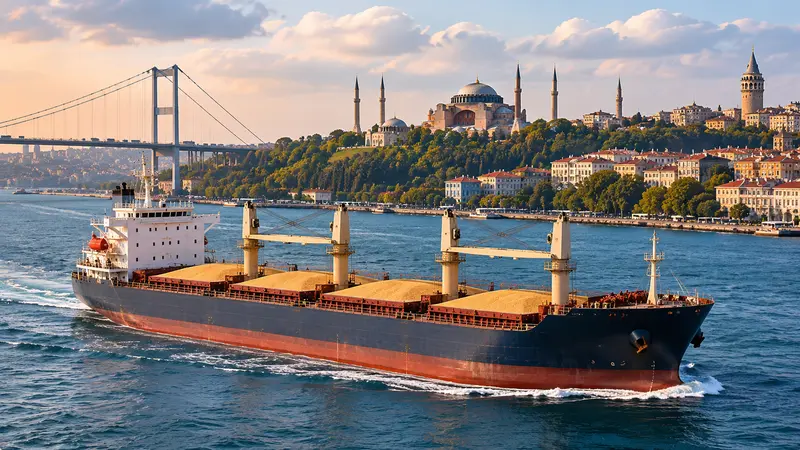
Mr Zelensky has his own list. He wants to discuss security guarantees, an "energy ceasefire" that would stop attacks on power systems, and a truce in the Black Sea to protect food exports. He also wants a meeting of leaders to follow, and said the Abu Dhabi talks could lead to a meeting with President Vladimir Putin. Any peace agreement, he has said, would need strong security guarantees and funding for ten years to maintain the Ukrainian army, with European involvement, and he cautioned against lifting sanctions on Russia before a concrete agreement.
The distance between the sides
Russia's position, as reported, is far from that. Mr Putin has said trilateral talks should focus on long-term security arrangements for a final settlement, not a "short" truce, which is a way of saying that a limited energy or Black Sea ceasefire is not what Moscow is offering. Its hardline demands reportedly include that Ukraine hand over large parts of its territory and agree not to join NATO. Germany's chancellor, Friedrich Merz, said Russia has yet to engage seriously. Moscow has not agreed to any ceasefire, and the strike on Tuesday arrived just as Kyiv was asking for an energy truce, which will make that request harder to raise at the table.
There are two ways to read the sequence. One is that Moscow is using military pressure to improve its position before talks, as it did in earlier rounds, by hitting the grid in winter so that Ukraine trades concessions for relief. The other is that the attacks and the talks run on separate tracks, with Russia content to continue the war while it keeps diplomacy open with Washington. The evidence so far does not settle which, and both can be true.
For Ukrainians, the immediate question is practical: how many hours of electricity there will be, and whether repairs outpace new strikes. For the negotiators, the measure of the Abu Dhabi round is whether the lowest-cost item on the list, an energy ceasefire that both sides would gain from before winter, can be agreed even if territory and security guarantees cannot. If the talks end without it, the next strike on the grid is likely to be discussed less as a negotiating tactic and more as a plain fact of the season.
A
4 min
What did you think?