/
US carries out limited 'defensive' strikes on Iran's Qeshm Island on eve of midterms; Tehran warns
US officials say the military struck Iran's Qeshm Island in the Strait of Hormuz on 2 November, destroying a launcher after Iran again fired at a US aircraft, in what they call limited, defensive action. Iranian media reported five explosions. Qatar-mediated talks go on.
P
5 min
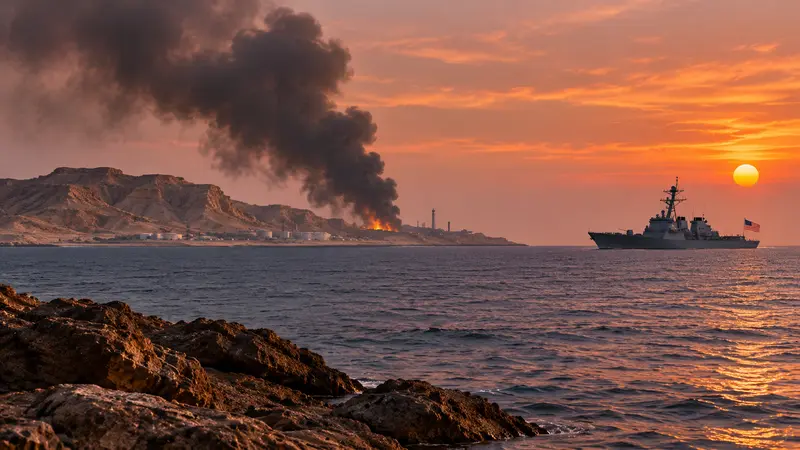
The United States carried out limited strikes on Iran's Qeshm Island, in the Strait of Hormuz, on Monday, 2 November, the day before the US midterm elections, according to US officials. They described the action as defensive and not a resumption of major combat operations. One official said a strike destroyed a launcher after Iran again tried to target a US aircraft. Iranian state media reported five explosions on the island. The strikes came after President Donald Trump had said the US would not attack Iran before the elections.
What officials say happened
Two US officials said the strikes were limited and were a response to Iranian efforts to target shipping and US forces. One said that the Islamic Revolutionary Guard Corps has routinely targeted and shot at manned and unmanned US aircraft over the strait over the past few weeks, and another said the US continues to intercept drones and missiles aimed at shipping every day. A third official called the operation 'a defensive measure for Iranians using surface-to-air missiles against US assets'. The reports do not name the weapons used or what was on the island that was hit, the Pentagon referred questions to US Central Command, which did not respond, and there is no on-record statement from either. One report describes the strike as the latest in a series of US strikes in recent weeks, while another says the administration last carried out known attacks in early September.
Trump said in a speech on Monday that 'we haven't been doing any fighting for months', and posted that Iran wants a settlement as soon as possible. Vice President JD Vance said he and Trump were optimistic and that 'we've certainly made some progress', and he sent a letter to Iran's security chief Mohsen Rezaei last week, which Trump said concerned medical supplies and other things.
Why Qeshm matters
Qeshm is Iran's largest island and lies about 14 miles from Bandar Abbas in the middle of the Strait of Hormuz, through which roughly a fifth of the world's oil and liquefied natural gas passes. It is also a free trade zone. Analysts describe it as a key base of the Revolutionary Guards, hosting radar, drone facilities, missile batteries and naval assets, and a network of underground bunkers that has been called an unsinkable aircraft carrier. When Iran began trying to control passage through the strait during the war, it directed ships through a narrow route between Larak Island and Qeshm and Hormuz islands where it could watch them. Those descriptions come from analysts and the media, and the reports on this strike do not say which facilities were targeted.
Iran's reply and the talks
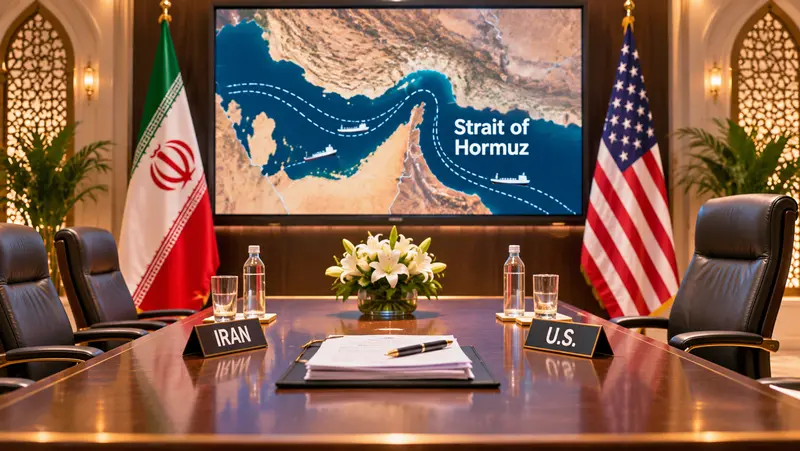
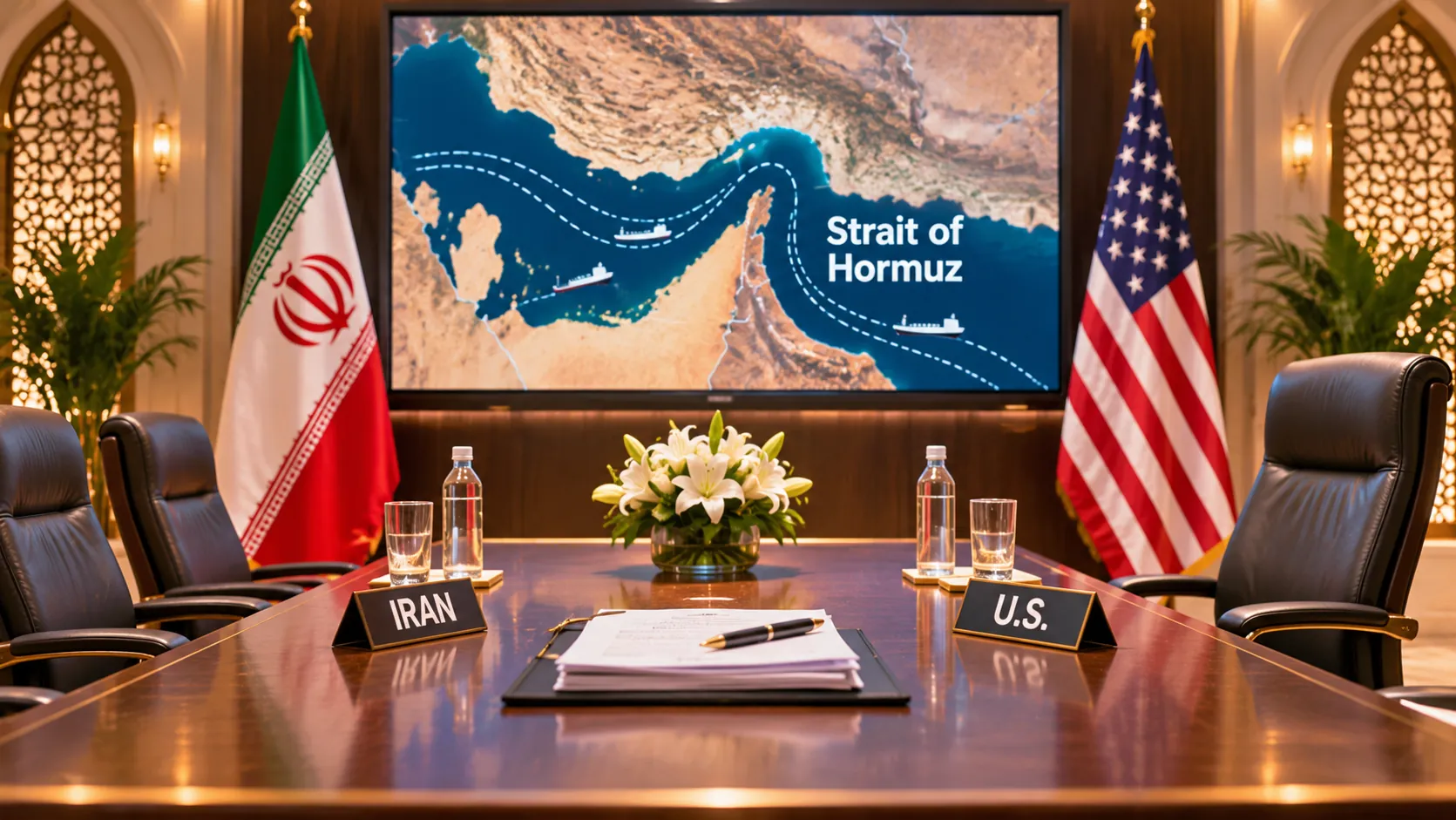
Iran's parliament speaker, Mohammad Bagher Ghalibaf, who is also Tehran's top negotiator, said that 'the ball is now in America's court to prevent a war', and said Iran is ready for war but has given Washington a rational response. Foreign Minister Abbas Araghchi said indirect talks are under way and very intensive. A senior Iranian official said the two sides remain far from a deal, and that Qatari mediators travelled to Tehran on Monday night to discuss a version of a draft deal that has been under negotiation for about eight days. The official said Tehran's conditions must be met for Hormuz to reopen, that nuclear talks would only start afterwards and that Iran would not accept excessive US demands.
Iran has said it could reopen the strait within two days if Washington accepts its long-standing demands, which include ending the war on all fronts, unfreezing assets, lifting oil sanctions and ending the counter-blockade of Iranian ports. China called for a return to diplomacy and will send a special envoy to Iran, Oman and Saudi Arabia in the first half of November. Thousands of US troops remain off Iran enforcing a naval blockade, and a third aircraft carrier is on its way.
The details behind the strike
Three US officials said that the Revolutionary Guards fired surface-to-air missiles at a US aircraft over the strait, and that the US struck a missile launcher on Qeshm with the aim of destroying it. Iranian media also reported blasts in Bandar Lengeh, where residents said two aircraft flew over the island. No official statement identified the aircraft or whether it was damaged, and US Central Command had issued no statement or damage assessment. A US official said the operation was not the start of new expanded strikes. One report said it was the first US strike on Iranian targets since early September.
The Guards' aerospace force claimed it had shot down two US MQM-170 drones south of Qeshm using electronic warfare, and said it had destroyed a US MQ-9 drone east of the strait, which are unverified claims. Trump said around 8 October that the US would not attack Iran at any time before the midterms, so the strikes came a day before that moratorium was to run out. In late October the head of US Central Command, Admiral Brad Cooper, said the Guards were gone from Hormuz, which Iran disputed, saying mines remained. Iran's Supreme Leader, Mojtaba Khamenei, ordered the Guards on 31 October to prepare a response to any future attack that is geographically unrestricted, and the US command has estimated the cost of the 2026 conflict to the US at at least $47.1 billion.
A vessel crossing the strait was struck by an unknown projectile that left a hole in it, according to the UK maritime trade monitor, and all of its crew were safe. Iran has claimed attacks on ships that took unauthorised routes and says others were hit by mines it laid early in the war, which the US denies, saying it has cleared all internationally recognised routes. Oil prices fell by more than 7% on Monday on optimism about a possible end to the conflict, before the strikes were reported.
The strikes also change the picture sketched in reports a day earlier, that Gulf allies had been told to prepare for strikes after the midterms. Trump has hinted at renewing attacks after the elections, and reports say that Israeli Prime Minister Benjamin Netanyahu has been pushing him to resume large-scale strikes. Whether Monday's action is a one-off response to Iranian fire or the start of a wider campaign depends on the talks in Tehran, and on what Washington decides once the votes are counted.
P
5 min
What did you think?