/
Israel election count: Netanyahu bloc leads on 54 seats but falls short of majority
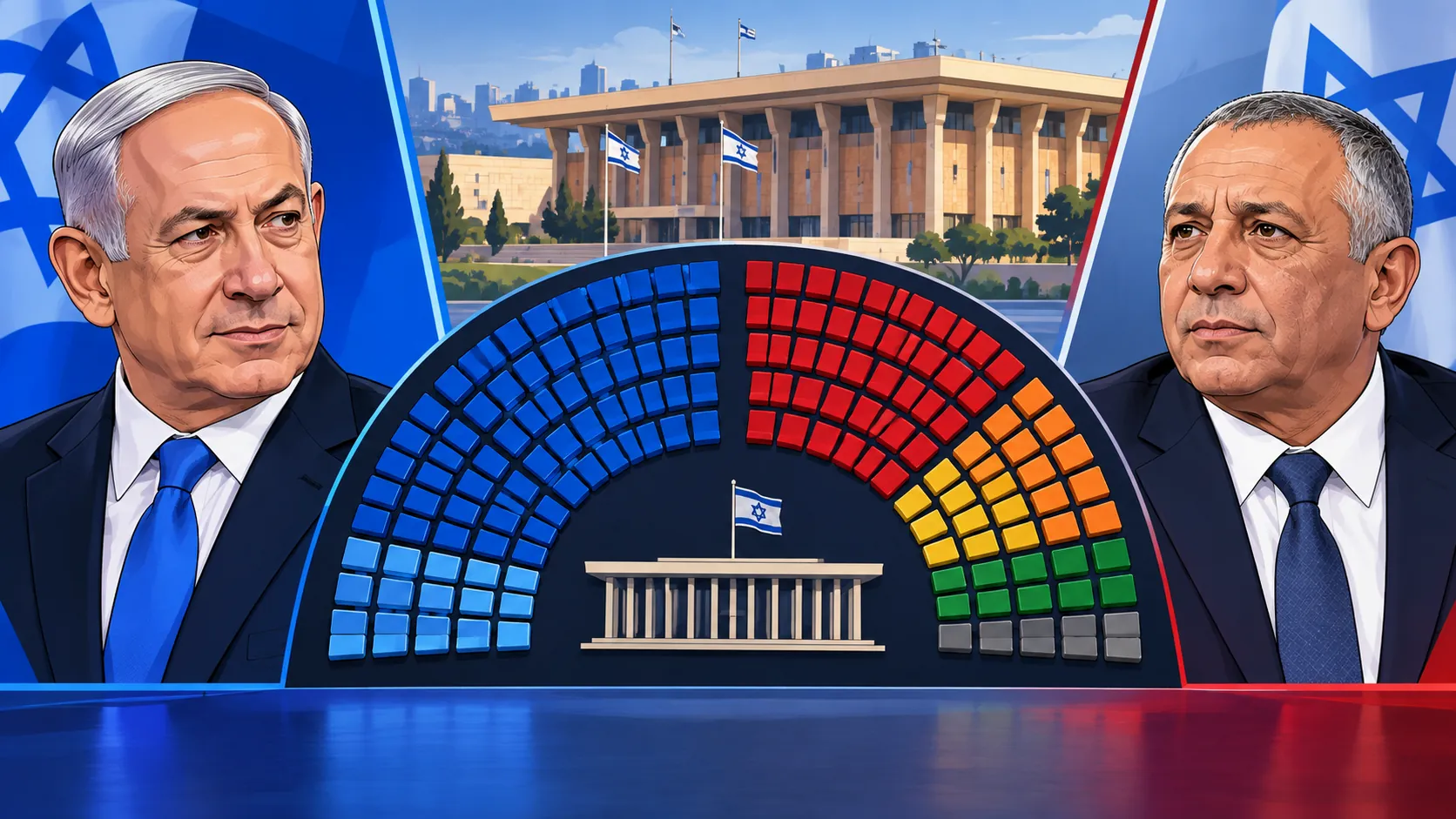
Israel’s vote count on Wednesday kept Netanyahu’s bloc ahead on 54 seats but short of the 61 needed to govern. Eisenkot’s opposition camp stood on 47, with Arab-led parties on 19. Final results are expected later this week before coalition talks begin.
R
4 min
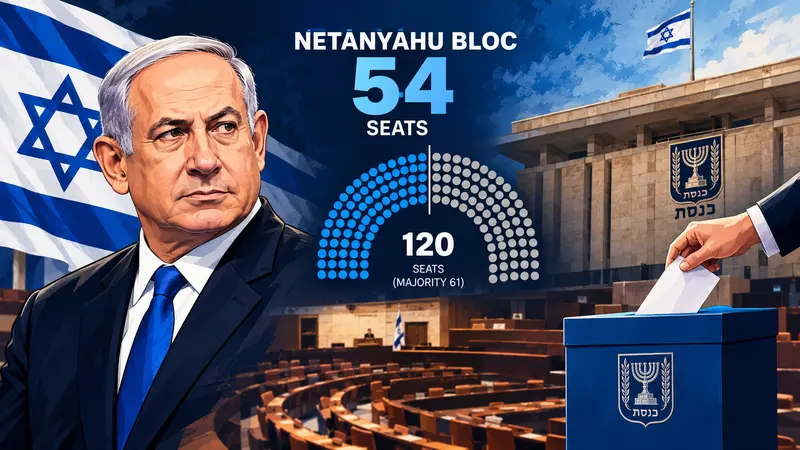
Israel’s election count on Wednesday kept Prime Minister Benjamin Netanyahu in front but still short of the 61 seats needed to form a government, extending a familiar stalemate as officials continued to process ballots after one of the country’s highest-turnout votes in decades.
With counting still under way, the latest seat projections put Netanyahu’s right-wing bloc at 54 seats, the opposition camp led by Gadi Eisenkot at 47, and Arab-led parties at 19. Israel’s Central Elections Committee reported turnout of 77.7%.
The numbers leave no bloc with a clear path to a parliamentary majority in the 120-seat Knesset. While minority governments are technically possible, Israel’s recent history of fragile coalitions and repeat elections has made most party leaders wary of arrangements that cannot reliably survive confidence votes.
A lead without a majority
Partial results released during the day showed Likud, Netanyahu’s party, leading with 27% of the vote as ballot counting continued, with 70.7% of ballots counted at one point during the morning. That tally marked a shift from earlier figures that had Likud on a lower share.
Even so, the broader picture remained stubbornly tight. Early projections on election night had suggested Netanyahu’s allies might fall well below a governing threshold, before later counts and updated models pushed his bloc back into the mid-50s. The opposition camp, meanwhile, has hovered in the high 40s to low 50s across different snapshots of the count, but has not been consistently shown crossing 61 either.
Arab-led parties, projected at 19 seats in the latest breakdown, emerged as the largest potential swing force in the next phase. Their showing is also notable against a backdrop in which both major Jewish political camps have often struggled to build governing coalitions that include, or are supported by, Arab parties.
The election was Israel’s first national vote since the Oct. 7, 2023, attacks, and it drew unusually heavy participation. The high turnout added to the sense of a decisive moment, yet the count has so far pointed to another parliament split into blocs that can block each other more easily than they can govern.
Competing claims on election night
Netanyahu sought to frame the outcome as a mandate even as the seat arithmetic remained unresolved. He said right-wing parties had won a “decisive majority” among the Zionist public and called for the immediate formation of a national right-wing government.
Eisenkot, the opposition leader, struck the opposite note, arguing that voters were looking for change and promising to build a government with broader representation.
The competing claims reflect the political reality that coalition-building, not raw vote share, will decide who governs. Likud’s position as the largest party gives Netanyahu an advantage in the coming consultations, but the current projections suggest he would still need partners beyond his bloc or a complex arrangement that allows him to cross the 61-seat line.
For Eisenkot, the challenge is different but no less steep. Without a clear majority in the anti-Netanyahu camp, any bid to form a government would likely depend on stitching together parties with divergent priorities, and potentially on outside support from Arab-led factions. Those talks can collapse quickly, especially when parties fear being punished by their voters for joining an ideologically awkward coalition.
The deadlock also revives a familiar question in Israeli politics: whether the country is heading toward another cycle of short-lived governments and repeat elections. Some analysts have already argued that the result points toward yet another inconclusive round.
What happens next
Ballots were still being processed on Wednesday, and final tallies are expected toward the end of the week before official results are published.
Once results are certified, President Isaac Herzog is expected to begin consultations with party leaders to ask whom they recommend as prime minister. Herzog then nominates the candidate he believes has the best chance of assembling a governing coalition that can command the confidence of at least 61 lawmakers.
The nominee has up to 42 days to form a government. In practice, that period becomes a test of whether parties can trade policy commitments and ministerial portfolios for parliamentary support without detonating their own alliances.
Netanyahu remains prime minister in the meantime. If coalition talks drag on or collapse, he and his cabinet would continue in a caretaker role, or Israel could be pushed toward another election.
For now, the count has delivered a narrow lead without closure: Netanyahu ahead, Eisenkot still in contention, Arab-led parties holding a large block of seats, and a country waiting to see whether its next government can be built at all.
R
4 min
What did you think?