/
Russia fires 36 ballistic missiles and 172 drones at Ukraine, Zelensky says, days before talks in Abu Dhabi
Ukraine's President said Russia launched 172 drones and 36 ballistic missiles overnight into 7 November, all the missiles aimed at Kyiv and nearby areas. At least one person was killed and eight hurt, and energy sites and a Dnipro bridge were hit. Talks are set for Abu Dhabi on 10–11 November.
R
5 min
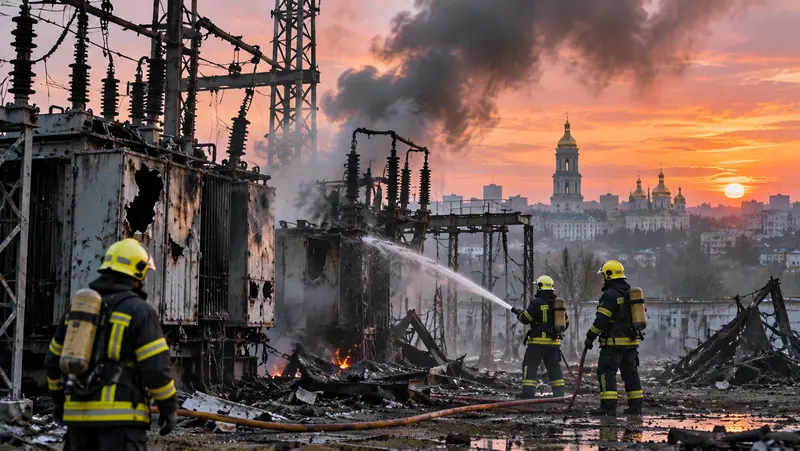
Russia launched 172 drones and 36 ballistic missiles at Ukraine overnight into 7 November 2026, President Volodymyr Zelensky said, with all the missiles aimed at Kyiv and the surrounding region. At least one person was killed and eight others, including a child, were injured in the capital and nearby areas, according to Ukrainian officials. The strikes caused significant damage to energy infrastructure and to a major bridge over the Dnipro River.
Moscow gave a different description. Russia said that it had carried out a massive strike on targets in Ukraine's military-industrial sector, along with energy and transport infrastructure in and around Kyiv. Its Defence Ministry also reported damage to energy facilities in the central Zhytomyr region.
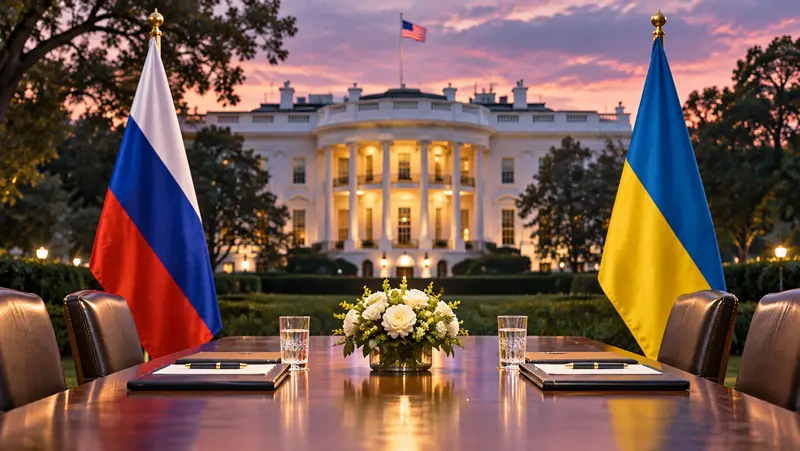
The attack came just days before another round of trilateral negotiations between Ukraine, Russia and the United States, scheduled for Abu Dhabi on 10 and 11 November, and only a day or two after President Donald Trump said that a peace deal could come soon.
An unusual weight of ballistic missiles
The number that stands out is 36. Ballistic missiles travel far faster than drones or cruise missiles and are much harder to intercept, and they need the most advanced air defence systems to stop them. A concentrated salvo aimed at one region is designed to overwhelm those defences, and drones are often used alongside to tie them up. This is a matter of general military practice. The Ukrainian authorities had not, in the accounts available, given a full count of how many were shot down.
It is a sharp step up from recent attacks. On 13 October, the UN aid coordination office, OCHA, reported an overnight assault of more than 100 drones, loitering munitions and ballistic missiles, with five ballistic missiles striking civilian infrastructure in Kyiv, according to Mr Zelensky. Forty-one people were injured in a single evening in Kharkiv on that occasion.
The figures for the latest attack come from one side, and the Russian statement does not give numbers. Neither side's claims could be independently verified in the official sources consulted.
Why it matters
Timing is what makes this attack more than another grim entry in a long list.
The first reason is the talks. On 5 November, Mr Trump told reporters that an agreement could be reached soon and might involve the whole of Europe, and he confirmed that he had met Putin's envoy, Kirill Dmitriev. On the same day, the First Lady hosted Russian and Ukrainian officials at the White House to mark a local ceasefire at Oleshky, which she called a spark that could lead to something more enduring. Two days later, 36 ballistic missiles flew towards the Ukrainian capital.
There are two readings. Moscow may be strengthening its hand before negotiators meet, by showing that it can keep up the pressure. Attacks ahead of talks have been a pattern in this war, and each side often tries to arrive at the table with a recent show of force. A different reading is that the strikes are simply part of a continuing campaign that does not depend on the diplomatic calendar. Russia, for its part, says that its targets are military-industrial. Ukraine and UN agencies have repeatedly recorded civilian harm from such attacks, and Kyiv describes them as a deliberate effort to break the country's will.
The second reason is winter. Energy is the target that matters most at this time of year. UNICEF's Water Under Fire report, released on 5 November, noted that by December 2022 attacks on energy infrastructure had left almost 7 million Ukrainian children without sustained electricity, heating and water. A UNICEF staff member reported further disruption to Kyiv's water supply this week. Each substation that goes down in November is a problem that lasts through the coldest months.
The third is the bridge. A major crossing over the Dnipro carries people, freight and military supplies alike. Its damage may affect civilian movement and aid routes, and how badly remains to be seen.
Population movement shows how far this war has reshaped life. A study commissioned by the International Organization for Migration, published on 6 November, found that nearly nine in 10 displaced Ukrainians crossing back from Poland planned to stay in their home country for no more than 30 days. Having spent almost three years abroad on average, they still go home to visit, but they do not yet feel able to stay.
For India, the consequences are mainly indirect: higher energy and food risk if the Black Sea or wider European markets are disrupted. FAO noted this week that disruption to Black Sea logistics continues to affect grain trade.
What happens next
All eyes are now on Abu Dhabi. Three things will show whether talks there can produce anything beyond statements.
The first is who attends. The level of the delegations will indicate how seriously each side takes the round. The second is whether energy is on the agenda. A limited truce on strikes against power systems could be the most achievable step, and would have an immediate effect on civilians as winter begins. The third is what Washington does. If Mr Trump wants to be seen moving towards a deal, an attack of this size just after his optimistic remarks tests his patience with Moscow, and his response will be closely read in Kyiv and in Europe.
The number of casualties may change as officials complete their assessments. For now, what can be said is that the war's largest weapons were aimed at its capital, three days before the sides are due to meet.
Sources
- Intense Russian attack on Kyiv and surrounding areas, claims Ukraine (All India Radio)2026-11-07
- Ukraine: Residents killed and dozens injured in attacks on Kharkiv and Kyiv (UN News)2026-10-13
- First Lady Melania Trump Unites Russia and Ukraine at The White House Following Historic Ceasefire (The White House)2026-11-05
About the Author
R
Reyaansh Agarawal
Staff Writer
Reyaansh Agarawal contributes to Wirony, covering stories that are carefully reviewed and approved by the editorial team before publication. Wirony is committed to maintaining tran…
R
5 min
What did you think?