/
Centre orders weekly rice stock declarations, clears limits in five southern states, doubles open market sales
A Centre order of 6 November requires traders, retailers and millers to declare rice and paddy stocks every Friday. Five southern states may impose stock limits until 31 January 2027, the OMSS sale target doubles to 50 LMT and more Bharat Rice is coming. The Food Ministry gave no price data.
A
5 min
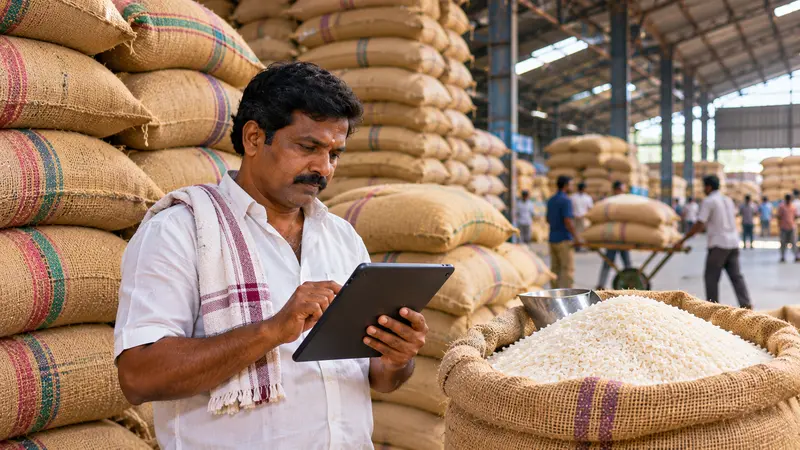
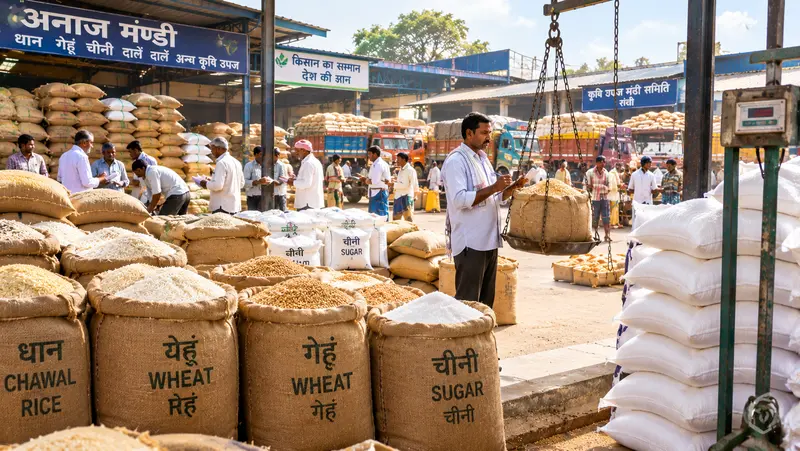
The Government of India has ordered all traders, wholesalers, retailers, big chain retailers and processors or millers across the country to declare their stocks of rice and paddy every Friday. The order, dated 6 November 2026, is one of four steps announced by the Department of Food and Public Distribution to hold down rice prices. The Centre has also cleared stock limits in five southern states, doubled the amount of rice it will sell in the open market and promised more Bharat Rice.
The Centre says it is closely monitoring food grain prices, particularly rice. Taken together, the measures are the strongest signal so far this season that it is worried.
The four measures
Weekly stock declarations. Entities must report their stocks on the Food Stock Portal under six categories: Basmati rice, non-Basmati premium rice, non-Basmati rice, parboiled rice, broken rice and paddy. Any entity found unregistered on the portal, or violating stock limits, faces punitive action under Sections 6 and 7 of the Essential Commodities Act, 1955.
State stock limits. The Centre has conveyed its concurrence to Andhra Pradesh, Karnataka, Kerala, Tamil Nadu and Telangana to impose stock limits on paddy and rice through control orders, wherever they consider it necessary. These limits can remain in force up to 31 January 2027. The order does not itself set a limit. Each state must decide whether to act and at what level.
More Bharat Rice. Additional quantities are being allocated to NAFED, NCCF and Kendriya Bhandar to expand sales across the country, particularly in the southern states, and the agencies have been told to use all possible distribution channels. The release does not give the quantity or the price.
Open market sales doubled. The target for sale through e-auction under the Open Market Sale Scheme (Domestic) for 2026-27 has risen from 25 lakh metric tonnes to 50 LMT.
The last measure carries the most telling number. By 31 October, seven months into the financial year, 25 LMT had already been sold to private parties, compared with 11 LMT in the same period a year earlier. So the original target for the whole year was used up by the end of October, and private buyers took more than twice as much as they did last year. That points to strong demand for government grain from the market.
Why it matters
Rice is the staple for hundreds of millions of Indians, and in the five states named it is the centre of the daily meal. When a state's stock limit bites, traders must hold less and sell more, which is intended to prevent hoarding and bring supplies to market.
The international picture helps to explain the timing. The Food and Agriculture Organization of the United Nations reported on the same day that its All Rice Price Index rose 1.6% in October, as harvest delays in some exporting countries added to pressure from adverse weather and rising costs. FAO also forecast that world rice production would fall by 2.5% to 552 million tonnes, the first drop in four seasons, because of poor margins for growers and El Niño-related weather. A tighter world market raises export demand for Indian rice, and that can pull domestic prices up.
The release does not explain why the south is singled out, and it gives no price figures, either retail or wholesale, so the scale of the rise is not on record here. The focus on these five states suggests that the pressure is regional, and any shortfall in paddy or stronger local demand would fit that pattern. Readers should wait for official price data before drawing firm conclusions.
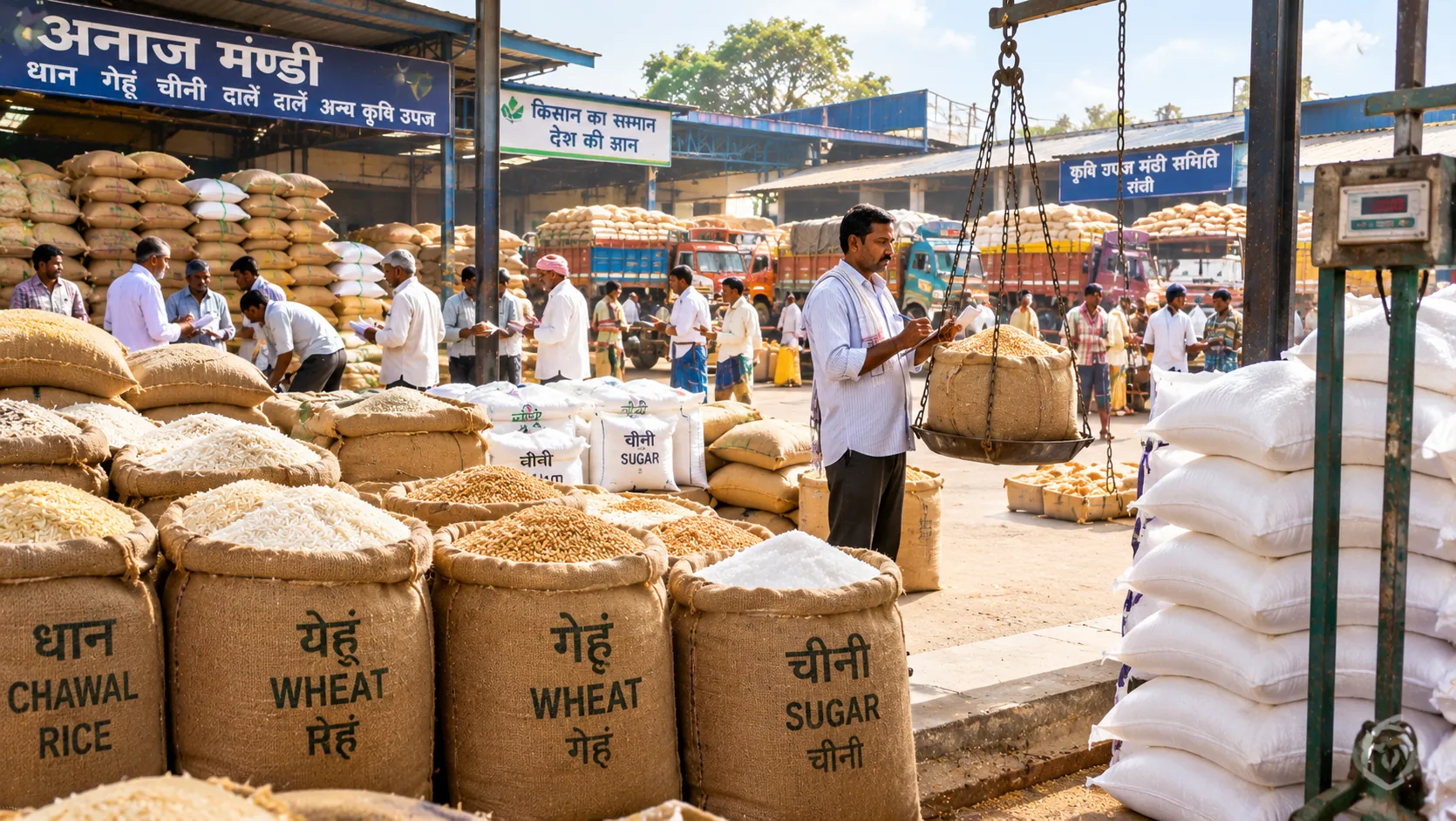
There is also a question about the method. Stock limits are an old tool. The government used them on wheat in 2025. Supporters say they stop speculation at a moment when small changes in supply can cause large movements in price. Critics argue that they treat a symptom, hurt honest traders and millers with normal working stocks, and can discourage the private storage that a market needs. Farmers' groups may also worry that limits on paddy, placed during the kharif marketing season, will reduce private buying and depress the prices they receive just when they sell. However, the Centre's position is that the measures are limited in time and meant to protect consumers.
The more effective lever is likely to be supply. Selling government stocks directly adds grain to the market and is harder to evade than a limit on paper. Official figures have shown central pool rice stocks well above buffer norms in recent years, which gives the Centre room to sell. Doubling the target tells traders that more grain is coming, and that alone can cool prices.
What traders and households should do
Traders, retailers and millers should register on the Food Stock Portal if they have not done so, and begin the Friday updates under the six categories. Being unregistered is itself a violation. Those in the five southern states should watch for state control orders, since limits will differ by state and by type of business.
Households should see no immediate change. Bharat Rice is sold through outlets of NAFED, NCCF and Kendriya Bhandar, and wider availability in the south is the stated aim, so it is worth checking with local outlets. Panic buying in a market with large public stocks makes little sense.
Farmers should watch how state orders treat paddy, and whether procurement arrangements change.
The next signs to look for are the first state orders, the price and volume of Bharat Rice, and whether the portal data lead to enforcement. The official retail price series and the next consumer price index release will show whether the measures have worked. The limits are due to end on 31 January 2027, by which time the main kharif harvest should be in the market.
This article is for information and is not investment advice.
Sources
About the Author
A
Amita Sahani
Staff Writer
Amita Sahani writes for Wirony. Every story under this byline is reviewed and approved by an editor before it is published, and corrections are made openly.
A
5 min
What did you think?