/
World food prices dip 1.2% in October, but sugar hits a near two-year high and rice output is set to shrink
The FAO Food Price Index averaged 133.9 points in October, down 1.2% on the month as cereals fell 4.5%, but still 5.9% above last year. Sugar rose 6.6% to its highest since December 2024, partly on concerns over India's crop, and world rice output is forecast to fall 2.5%.
P
5 min
World food commodity prices edged lower in October, the Food and Agriculture Organization of the United Nations said on 6 November 2026. The FAO Food Price Index averaged 133.9 points, down 1.6 points or 1.2% from its revised September level. Weaker import demand pulled down cereals, dairy and meat, while sugar rose sharply and vegetable oils rose slightly. The index remains 5.9% above its level a year ago and 16.4% below its March 2022 peak.
A one-month fall sounds like relief. The detail is more mixed, and two of the items that matter most to Indian households, sugar and rice, went the other way.
What moved in October
| FAO index, October 2026 | Change on September |
|---|---|
| Food Price Index | −1.2% |
| Cereals | −4.5% |
| Rice (within cereals) | +1.6% |
| Vegetable oils | +0.3% |
| Meat | −1.2% |
| Dairy | −1.1% |
| Sugar | +6.6% |
Cereals. Wheat fell after four monthly rises, on subdued international demand and a better production outlook, particularly in Argentina. Expectations of easier exports from the Black Sea added to the pressure, although continuing disruption there limited the fall. Maize eased from a three-year high reached in September as the American harvest came in.
Rice. The All Rice Price Index rose 1.6%, as harvest delays in some exporting countries added to pressure from bad weather and rising costs.
Vegetable oils. A small overall rise hid a big one in soybean oil, which reached its highest level since late 2022 on strong biofuel demand and seasonally lower supply from South America. Sunflower oil rebounded on tight Black Sea supplies, and rapeseed oil fell.
Meat and dairy. Pig, sheep and beef prices fell, and poultry was broadly stable. Butter and cheese fell on ample supplies, while milk powder rose again.
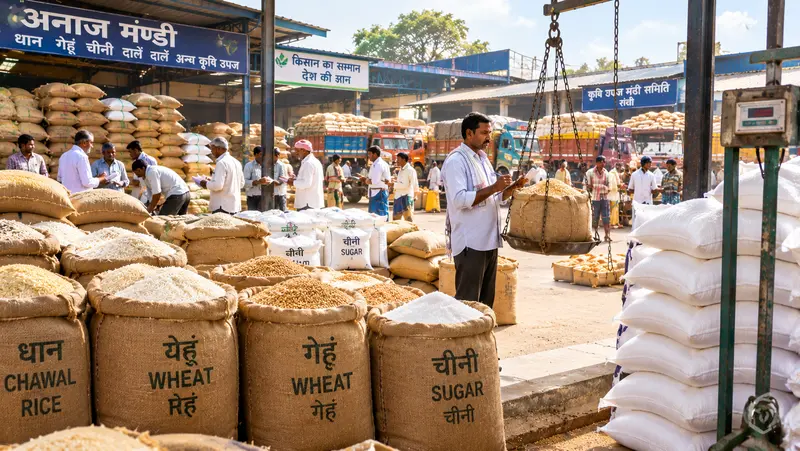
Sugar. The index rose for a fourth straight month to its highest since December 2024, up 28.8% from a year ago. FAO attributes this mainly to rain disrupting harvesting and crushing in Brazil's Centre-South, along with concerns over production prospects in India, the European Union and Thailand for 2026/27.
The outlook beyond this month
FAO released two further reports on the same day, and they may matter more than the monthly index.
World cereal output is forecast at 2,999 million tonnes in 2026, down from the 2025 record but still the second highest ever. Output is set to fall across all major cereals, most of all in wheat. Rice production is expected to contract for the first time in four seasons, by 2.5% to 552 million tonnes, because of poor margins for growers and adverse weather linked to El Niño.
Stocks look comfortable. Global cereal stocks are forecast to rise by 17.2 million tonnes, or 1.8%, and the stocks-to-use ratio to reach 32.4%, slightly above last season's level. However, there is a catch: much of the increase is wheat piling up in Russia and Ukraine, where export disruptions are keeping it from buyers. World cereal trade is forecast to contract by 3.3% to 507.7 million tonnes, with wheat trade down 8.6%. Food that cannot reach the market does little for those who need it.

The number of countries needing external food assistance stays at 41, of which 31 are in Africa. FAO says that conflict and insecurity remain the main drivers of the most severe hunger. Cereal output in low-income food-deficit countries is expected to rise by about 2%, to about 126.5 million tonnes, led by a recovery in parts of Asia.
Why it matters for India
For Indian consumers, the international index does not translate directly into shop prices. Government stocks, import duties, minimum support prices and export rules all stand in between. Even so, four signals are worth following.
The first is sugar. FAO specifically names concern over India's crop as one reason for the rise. The country is one of the world's largest producers, and its decisions on exports and on diverting cane to ethanol can move the global market. A rise of nearly 29% in a year will strengthen the case for caution over exports, and it comes during the festival season, when demand for sweets is at its highest.
The second is edible oil. India imports a large share of its cooking oil, so a soybean oil price at its highest since late 2022 feeds directly into household budgets and food companies' costs, particularly if the rupee stays weak near 94 to the dollar.
The third is rice. India is the world's largest exporter, and a global production dip raises the stakes on its export decisions. A shortfall elsewhere gives its farmers and traders better prices, but it may also bring pressure on domestic prices.
The fourth is El Niño. If the weather pattern FAO mentions persists, the next monsoon and rabi outlook will matter for food inflation, and with it for the Reserve Bank's room on interest rates.
There is an optimistic reading as well. Critics of alarm over food prices point out that the index remains well below its 2022 peak, that wheat stocks are ample and that one month of sugar strength does not make a crisis. All of that is true. The point is that the mix has changed: the commodities easing now are mostly those traded in bulk for animal feed and flour, while the ones rising are closer to the Indian plate.
The next index is due in early December. The questions to carry forward are whether Brazil's harvest recovers, whether Black Sea shipping improves and how much rice planting is affected by weather. For India, the announcement to watch is any change in sugar export or ethanol policy for the 2026/27 season, which would show how seriously the government reads the crop outlook.
About the Author
P
Prateek Rawat
Staff Writer
Prateek Rawat is a contributor to Wirony. All articles published under this byline undergo editorial review and approval before publication, with any necessary corrections handled…
P
5 min
What did you think?