/
Developing-country debt hits record $9.4 trillion as the poorest pay 8.2%, highest since 1989: World Bank
The World Bank's International Debt Report 2026 says developing countries' external debt jumped 5.5% to a record $9.4 trillion in 2025. Private lenders returned, but the poorest paid 8.2% on new private loans, the highest since 1989. Debt service reached $1.4 trillion.
S
5 min
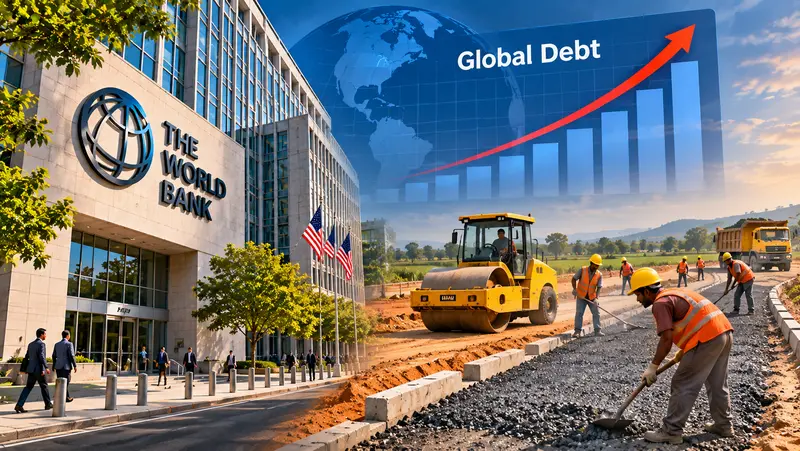
The external debt of developing countries jumped 5.5% to a record $9.4 trillion in 2025, the World Bank Group said on 5 November 2026 in its International Debt Report 2026. It was the fastest rise since 2021 and about four times the average of 2022 to 2024. Access to international finance has improved, the report finds, but the price has not, and high debt burdens in the poorest countries threaten to crowd out spending on health, schools and other essentials.
The report offers an uncomfortable kind of good news. After years in which markets shut out many poor countries, lenders came back in 2025. Those countries are now paying a very high price for the return.
The main numbers
| Measure, 2025 | Figure |
|---|---|
| External debt, developing countries | $9.4 trillion, up 5.5% |
| External debt, IDA-eligible countries | $1.3 trillion, up 8.1% |
| Bond issuance by public entities | $251 billion, up nearly 35% |
| Principal and interest paid | $1.4 trillion, up 1.9% |
| Payments to bondholders | $363 billion |
| Rate paid by IDA countries on new private credit | 8.2%, highest since 1989 |
| Rate paid by IDA countries on new bonds | 9.4% |
| Rate paid by IBRD-only countries on new bonds | 5.5%, down from 5.8% |
IDA-eligible countries are the poorest group, those that can borrow on concessional terms from the World Bank's International Development Association. Debt grew fastest among them. The gap between what they pay private and official creditors widened from 3.4 percentage points in 2016 to 5.5 points in 2025.
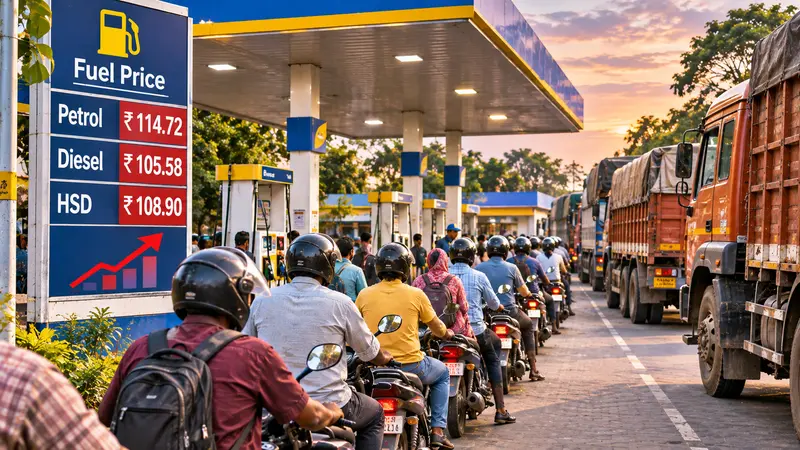
Compare the two bond rates and the divide becomes plain. Better-off developing countries paid about 5.5% on new bonds, and that rate fell. The poorest paid 9.4%. A country with the least room to spare pays nearly four percentage points more for the same kind of money.
What is driving it
Private finance explains much of the jump. Bond issuance by public entities reached its highest level in five years as markets reopened to many developing countries. Yet much of this borrowing did not fund new roads or schools. Many governments issued new bonds to buy back maturing debt, which smoothed repayment dates without significantly reducing the total, and often at higher interest rates.
Currency movements also inflated the picture. More than a quarter of the $303 billion increase in public and publicly guaranteed debt reflected the weaker US dollar, which raised the dollar value of debt held in other currencies. For several of the largest concessional borrowers, this effect outweighed the principal they repaid in 2025, leaving reported debt higher despite continued payments. A country can pay down what it owes and still see the headline number rise.
There is one real improvement. Between 2022 and 2025, developing countries paid $436 billion more in debt service than they received in new financing. In 2025 the direction shifted, with long-term debt flows moving from a $118 billion net outflow in 2024 to a net inflow of $45 billion. Money is flowing back towards these economies, after years of leaving.
Demand has stayed strong this year. By mid-August 2026, more than 10 countries had already exceeded their full-year 2025 bond issuance, the report says, while several others returned to international markets.
Why it matters
"These countries are borrowing more, paying more, and in many cases leaving less for long-term development," said Haishan Fu, the World Bank Group's Chief Statistician. That is the core of the problem. Debt service is now in its fifth straight year of increases. Every dollar sent to creditors is a dollar not spent on clinics, teachers or irrigation.
Timing makes things worse. The World Bank's data run to 2025, before the full effect of this year's energy shock. Countries that import fuel and food have faced higher bills in 2026 and a stronger case for borrowing just as rates stay high. The Bank of England raised rates on 5 November, the same day the report came out, a reminder that global money is not getting cheaper.
There is a more hopeful reading. Market access is better than the alternative, which was default or dependence on emergency lending. Private lenders are taking risks on countries that were shut out only recently. Critics of the World Bank's framing argue that the debate focuses too much on repayment and too little on the failure of rich countries to provide cheap long-term finance. However, the report's numbers show why both matter: official credit is far cheaper, and the poorest countries are relying more on expensive private money.
For readers in India, the report is mainly about the neighbourhood and the wider Global South, and a debt crisis in a neighbouring economy can quickly become a regional problem through trade, migration and instability. The press release gives no country figures, and the report's country tables should be read for those.
The questions ahead are practical. Will the bond market stay open if global rates rise further or risk appetite falls? Can countries that refinanced at high rates meet those payments when they fall due? And will richer shareholders give the IDA and other concessional lenders enough to narrow that 5.5-point gap?
Debt talks will feature at climate and development meetings in the coming weeks, including COP31 in Antalya, where finance is the central dispute. Countries asked to fund adaptation and a move away from fossil fuels are the same ones paying record sums to creditors. The World Bank's numbers show how little room many of them have left.
Sources
About the Author
S
Subhash Gupta
Desk Editor
Subhash Gupta is a writer at Wirony, contributing articles that are reviewed and verified by the editorial team before publication. The publication prioritises accuracy, editorial…
S
5 min
What did you think?