/
COP31 in Antalya: India presses for climate finance and voluntary adaptation indicators
At COP31 in Antalya, India's environment secretary asked rich countries to meet Article 9.1 finance duties and wants adaptation indicators voluntary. The leaders of China, the US and India are absent, and new multi-year climate finance pledges are down about 70%.
P
4 min
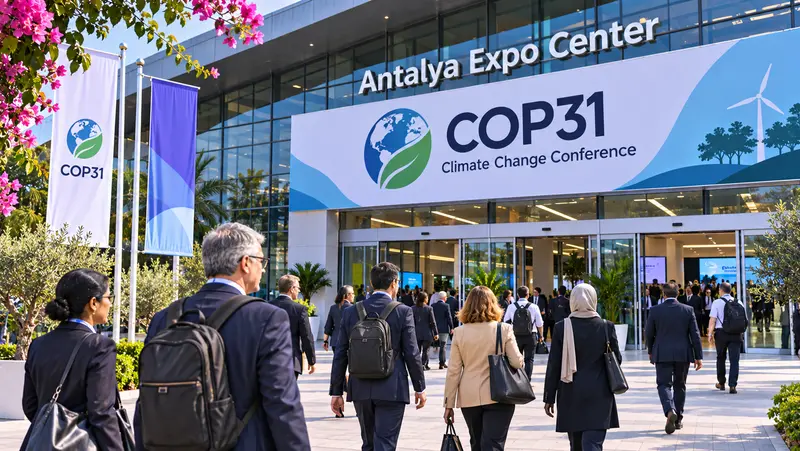
India has used the opening days of the COP31 climate conference in Antalya, Turkey, to press developed countries on money. In India's opening statement on 10 November, the environment secretary, Narendra Bhooshan, called on rich countries to meet their climate finance obligations under Article 9.1 of the Paris Agreement, and asked for finance that is predictable and mostly public. The conference runs from 9 to 20 November, and the leaders' summit on 11 and 12 November has been missing the heads of the three biggest emitters. This report is for information only.
What India is asking for
Before the conference, Environment Minister Bhupender Yadav set out India's position at a briefing in New Delhi on 3 November. India wants a formal decision to launch the Climate Finance Work Programme. It says climate finance is a developed-country obligation, and that it should be predictable, largely public and concessional so that it does not add to developing countries' debt.
On adaptation, India wants the indicators of the Global Goal on Adaptation to be voluntary, so that they cannot become conditions for getting finance. On the Global Stocktake, which reviews progress on the Paris goals, it wants a process that is facilitative and non-punitive and that respects each country's own climate plan, and it rejects new top-down targets. On technology, it says transfer is a developed-country duty and wants cost, intellectual property and trade barriers addressed. It wants participation in carbon markets to remain voluntary, and wants the Turkish presidency's voluntary Action Agenda kept apart from the formal talks.
India is working with the G77 and China, the Like-Minded Developing Countries and the BASIC group, and plans to link adaptation to agriculture, food security and the livelihoods of small and marginal farmers. It also has side events, including one on industry transition with Sweden. According to a government official at the venue, India has no country pavilion in Antalya, while neighbours such as Pakistan, Bangladesh and Nepal do.
The money and the missing leaders
The gap India points to is large. The United Nations Environment Programme's Adaptation Gap Report 2026 puts the annual cost of adaptation in developing countries at $305 billion by 2035. International public finance for adaptation was between $28.2 billion and $31.7 billion in 2024, only about $1 billion more than in 2023, and even tripling those flows would cover only 20% to 29% of needs. Allowing for future inflation, the requirement rises to about $420 billion.
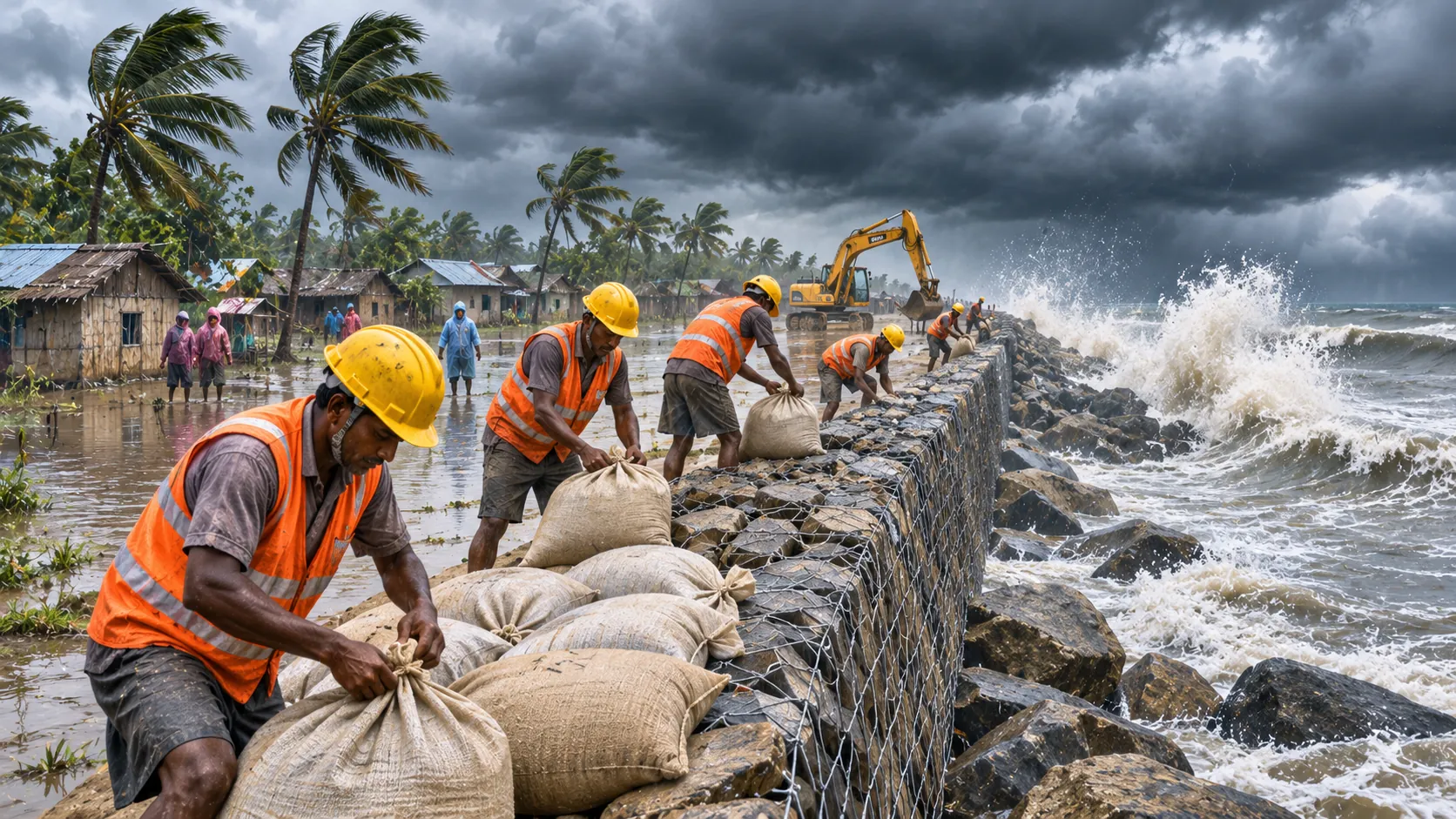
Pledges are moving the wrong way. New multi-year public climate-finance pledges from developed countries have fallen by about 70%, from roughly $40 billion a year under earlier pledges to $11.7 billion in the new ones, according to a review of the first days. Germany, France and Japan made no comparable new multi-year commitments and none is expected from Washington, while the United Kingdom is the only major donor to announce a new pledge. Developing countries want clarity on the $300 billion a year that rich countries agreed at COP29 in Baku to deliver by 2035, and progress towards a goal of $1.3 trillion.
The leaders of China, the United States and India are absent. China sent Vice President Han Zheng, the United States sent no official delegation after President Donald Trump withdrew from the Paris Agreement, and Prime Minister Narendra Modi did not attend. Together the three emit more than half of the world's carbon dioxide. Leaders of Germany, France, Italy, Canada, Japan and several other countries are also reported absent, although ministers and negotiators still represent them. Brazil's Luiz Inacio Lula da Silva, the European Commission's Ursula von der Leyen and Turkey's Recep Tayyip Erdogan are present.
What happens in the coming days
United Nations Secretary-General Antonio Guterres told the leaders' summit on 11 November that governments should adopt a Climate Justice Compact based on shared responsibility, shared security and shared benefits. It has four pillars: moving away from fossil fuels, adapting to a warmer world, more financial help from wealthy countries, and stronger international cooperation. Erdogan said developed countries must take more responsibility for cutting emissions and that climate finance should be more accessible and predictable.
| Date | Focus |
|---|---|
| 12 November | Resilience of cities and buildings to heat, floods and storms |
| 13 November | Finance and trade |
| 17 to 18 November | Follow-up meetings for leaders who could not attend |
| 20 November | Conference ends |
Murat Kurum, Turkey's environment minister, is COP31 President, and Australia's Chris Bowen, the climate change and energy minister, leads the formal negotiations. Turkey has also proposed a voluntary pledge to raise electricity's share of global final energy use to 35% by 2035, from roughly a fifth to 24% today, which countries are divided on because it does not require the extra power to be low-carbon.
The test for India's position will be the finance decisions on Friday and the final text on 20 November. The outcome depends on whether donors move off the lower pledges, and on whether India's call for voluntary adaptation indicators is accepted.
Sources
- COP31 Antalya: programme, negotiations and statements (United Nations Framework Convention on Climate Change)2026-11-11
- India's position at COP31 (Ministry of Environment, Forest and Climate Change, Press Information Bureau)2026-11-03
- Adaptation Gap Report 2026 (United Nations Environment Programme)2026-11-05
About the Author
P
Prateek Rawat
Staff Writer
Prateek Rawat is a contributor to Wirony. All articles published under this byline undergo editorial review and approval before publication, with any necessary corrections handled…
P
4 min
What did you think?