/
EU adopts a provisional cap on hybrid car imports, limiting China to 191,780 cars
The EU published a regulation on 24 November setting provisional quotas on hybrid car imports from 1 December to 18 June: 191,780 for China, 170,889 for Japan, 126,320 for Turkey, 105,402 for the UK, 67,924 for South Korea and 18,482 for the US. Imports above quota will not be allowed.
S
4 min
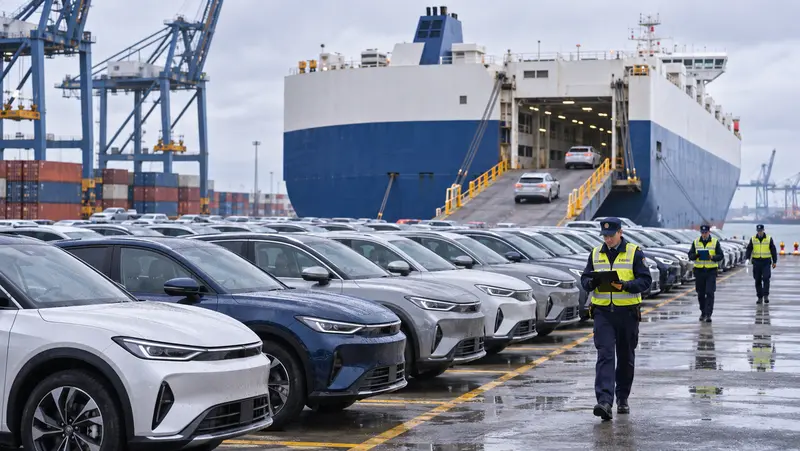
The European Union has adopted a provisional cap on imports of hybrid cars from China and other countries, in a regulation published by the European Commission on Tuesday, 24 November 2026. The measure runs from 1 December until 18 June, and sets quotas for six exporters. China is limited to 191,780 cars in that period, and imports above the quotas will not be allowed.
The regulation sets these limits for the provisional period, from 1 December to 18 June:
| Exporter | Quota for the period |
|---|---|
| China | 191,780 cars |
| Japan | 170,889 cars |
| Turkey | 126,320 cars |
| United Kingdom | 105,402 cars |
| South Korea | 67,924 cars |
| United States | 18,482 cars |
Those figures come from one agency's account of the regulation, and a second source says the figures for Japan, Turkey, the UK and South Korea were not confirmed. The measure does not cover the European Economic Area, Ukraine or a list of developing countries. It applies to cars with nine seats or fewer, and covers full hybrids, plug-in hybrids and mild hybrids. Whether cars with range extenders are covered is unclear, with some reports saying they are unlikely to fall under the quota.
How it works
The measure is a safeguard, a trade tool that lets the EU limit imports of a product when a surge in imports threatens the market and jobs. The provisional phase lasts a maximum of 200 days, and a trade investigation continues that is likely to lead to a longer-term cap. One account says the measures are ultimately expected to last four years, with the cap increasing by 6 per cent every 12 months. It also says the EU agreed with China to allow 350,000 vehicles a year from December, and 191,780 is roughly the share of that annual figure for the 200 days. No account says what duty applies above the quota, only that those imports will not be allowed.
Chinese carmakers moved towards hybrids to avoid the EU's duties on battery-electric cars from China, which were imposed in October 2024. Eurostat figures cited by an economist at ING show that hybrid imports in the first eight months of 2026 were 474,475 vehicles, up 175 per cent on a year earlier and 64 per cent more than in the whole of 2025. China's share of EU new-car sales was about 10 per cent in the first nine months of the year, against 6 per cent a year earlier.
The Chinese manufacturer BYD plans a plant in Szeged in Hungary that could build hybrids, and Leapmotor could do the same, according to a shipping industry report. No source names other carmakers as affected, and no named executive commented on the record.
No reaction from China's commerce ministry, the UK government, Turkey or the European carmakers' association is reported in the pages read. A logistics industry body said the cap would hit companies that move cars.
What a safeguard is
A safeguard is a temporary trade restriction allowed under World Trade Organization rules when a surge in imports causes or threatens serious injury to a domestic industry. Unlike an anti-subsidy duty, it is not aimed at one country's practices, which is why the quotas cover Japan, Turkey, the United Kingdom, South Korea and the United States as well as China. The rules allow provisional measures while an investigation is under way, and the regulation limits the provisional period to 200 days.
A full hybrid pairs a petrol engine with a small battery that cannot be charged from the grid. A plug-in hybrid has a larger battery that can be charged from a socket and can run a longer distance on electric power alone. A mild hybrid uses a small electric motor only to assist the engine. The regulation covers all three types in cars with nine seats or fewer, under four customs codes.
Added together, the six quotas come to about 680,800 cars for the provisional period, and China's share is about 28 per cent. For comparison, Eurostat counted 474,475 hybrid cars imported into the EU in the first eight months of 2026 from all countries, so the quotas sit above recent monthly rates once they are scaled to the 200 days. The report that gave the figures does not say how the shares were worked out.
Who is affected
The quotas bind exporters of finished cars, so they apply to the carmakers that ship hybrids into the EU from China, Japan, Turkey, the United Kingdom, South Korea and the United States, and to the importers and dealers that sell them. Cars built inside the EU, including by Chinese-owned firms, are not covered, which is why a plant such as the one BYD plans in Hungary matters to the debate. The regulation says nothing about used cars.
The provisional measure ends on 18 June 2027. The investigation will continue and could end in a final measure, a changed quota or no measure at all. The EU is also looking at similar steps for chemicals and machinery. The cap limits how far the surge in Chinese hybrid imports can go. The European Commission and the Official Journal are the official sources for the regulation.
About the Author
S
Subhash Gupta
Desk Editor
Subhash Gupta is a writer at Wirony, contributing articles that are reviewed and verified by the editorial team before publication. The publication prioritises accuracy, editorial…
S
4 min
What did you think?