/
China's AI stocks have lost $1.7 trillion since late June as the tech sell-off deepens
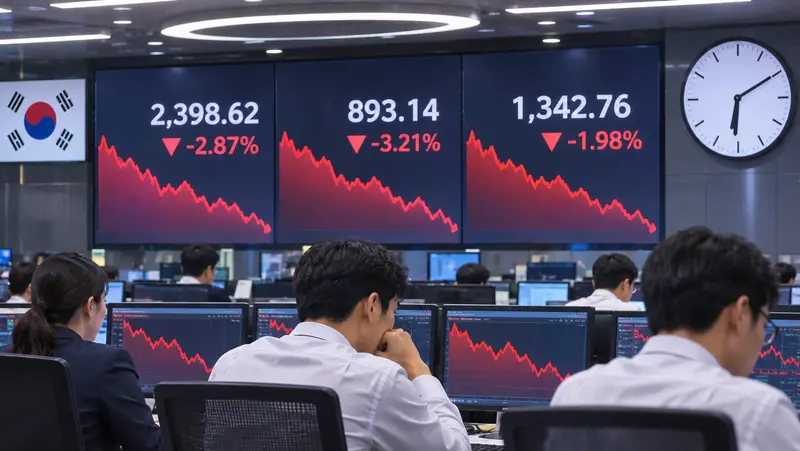
Chinese AI stocks have lost a combined $1.7 trillion in market value since late June, wiping out their first-half gains. The Hang Seng Tech Index hit a two-year low and the ChiNext index is down 31% this year. Nvidia shares fell for a seventh straight week, the longest streak since 2008.
P
4 min
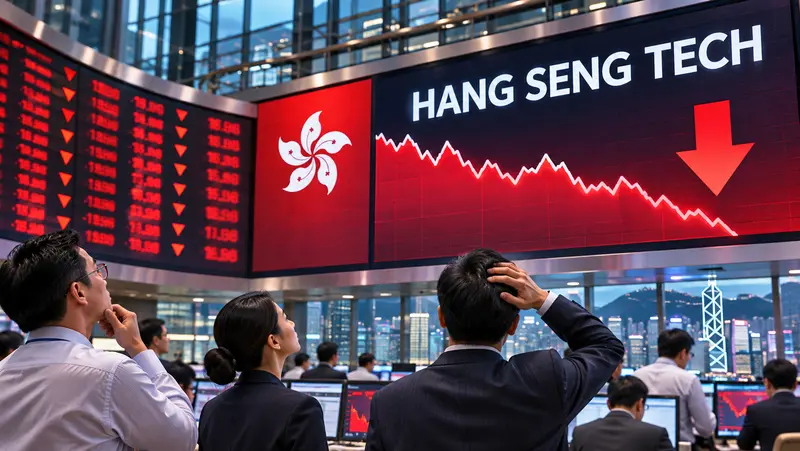
Chinese artificial intelligence stocks have lost a combined $1.7 trillion in market value since late June, wiping out the gains they made in the first half of 2026, as the global sell-off in technology shares deepens. The Hang Seng Tech Index has fallen to a two-year low, and the ChiNext index of growth stocks in Shenzhen is down 31 per cent this year after reaching record highs in the summer. The figure of $1.7 trillion comes from one market report and could not be matched against a second source.
Where the losses are
The Hang Seng Tech Index has dragged down Alibaba and Tencent, two of its heaviest members. The STAR 50 index of technology firms in Shanghai has given back its earlier gains, though no percentage was given. All three indexes are lower for 2026, while technology benchmarks in the United States, Taiwan and South Korea are still higher for the year. Index levels were not given in the report.
The report gives three drivers: worries about valuations, United States restrictions on technology, and weaker prospects for AI investment. Proposed US rules published earlier this month would stop Chinese firms from using advanced Nvidia processors through data centres overseas. Tencent has warned that chip shortages could delay its HY4 model. Alibaba expects its cloud revenue to grow by 30 to 45 per cent next year and to recover to more than 50 per cent in 2028.
Alibaba trades at about 10 times its forward earnings, against about 80 times for SMIC, the mainland chipmaker, which shows how much the market now rewards firms that supply chips and punishes those that sell AI services. Some fund managers say that Chinese AI stocks could fall another 30 to 50 per cent before valuations look attractive, according to the report, which names none of them.
| Index or stock | Move reported |
|---|---|
| Chinese AI stocks, combined | Down $1.7 trillion since late June |
| Hang Seng Tech Index | Two-year low |
| ChiNext Index | Down 31% in 2026 |
| Alibaba forward price-to-earnings | About 10 times |
| SMIC forward price-to-earnings | About 80 times |
The global picture
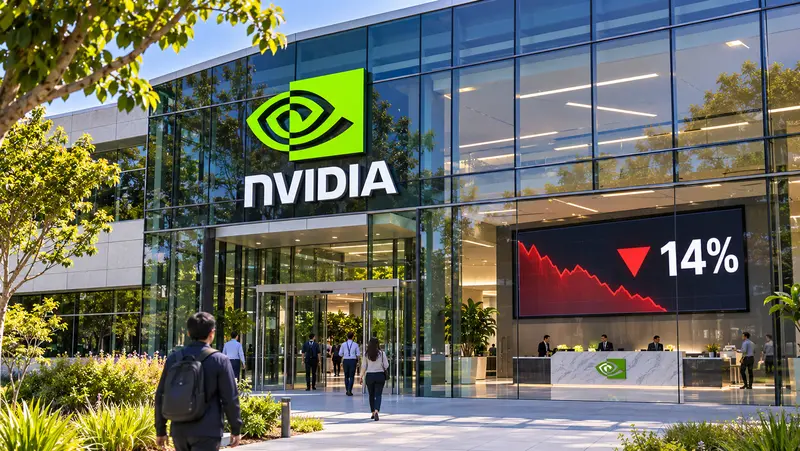
Nvidia shares fell for a seventh straight week, their longest weekly losing streak since 2008. On Friday the company slipped to fourth place among US companies by market value, behind Alphabet, at about $3.4 trillion. Apple was worth $5.08 trillion, Microsoft $3.72 trillion and Alphabet $3.44 trillion, according to data from LSEG. The fall followed Nvidia's first earnings report since co-founder Jensen Huang resigned, which did not calm investors.
On Friday Anthropic's shares traded at $87.95, about 9.5 per cent below Thursday's close, against an offer price of $83.30. Other US technology shares fell as well, with Nvidia down nearly 7 per cent at one point, Meta nearly 4 per cent, Amazon 2.1 per cent, Microsoft 1.7 per cent, AMD 11.2 per cent, Sandisk nearly 15 per cent and Intel 4.3 per cent. David Miller, chief investment officer at Catalyst Funds, said: "Investors still believe in AI but are becoming more selective about what they will pay for that growth."
The sell-off is not confined to China. Anthropic's share sale this week was described as the biggest public offering ever, and the company's value passed $2 trillion at one point. An index provider estimated that index funds could buy up to 30 per cent of its shares by the end of the year. SpaceX, which listed earlier, rose nearly 50 per cent in its first three days, fell below its offer price a month later and was down about 7.4 per cent on Friday.
These examples show how quickly sentiment has turned against some of the most heavily traded names. The same swing has hit the Chinese AI stocks that rose in the first half of the year, and it has hit them at a time when their own supply of advanced chips is in question because of the US rules proposed this month.
What it means
The report describes a shift in which investors prefer AI companies that earn money from cloud and software over those that spend heavily on chips and models. For Chinese firms the pressure comes on top of the US limits on the chips they can buy. A fall of this size in a part of the market that had been a favourite makes it harder for firms to raise money and may slow the spending that the sector has planned.
The figures here are from the reports available for 20 to 22 November and may have changed since. The Hong Kong, Shanghai and Shenzhen exchanges publish the closing values of the Hang Seng Tech, ChiNext and STAR 50 indexes, and the Securities and Futures Commission of Hong Kong and the China Securities Regulatory Commission oversee those markets. The exchanges' closing values are the final reference.
This article is for information only and is not investment or financial advice.
About the Author
P
Prateek Rawat
Staff Writer
Prateek Rawat is a contributor to Wirony. All articles published under this byline undergo editorial review and approval before publication, with any necessary corrections handled…
P
4 min
What did you think?