/
Asian stocks fall again as Seoul readies a $7.3 billion fund after Friday's rout
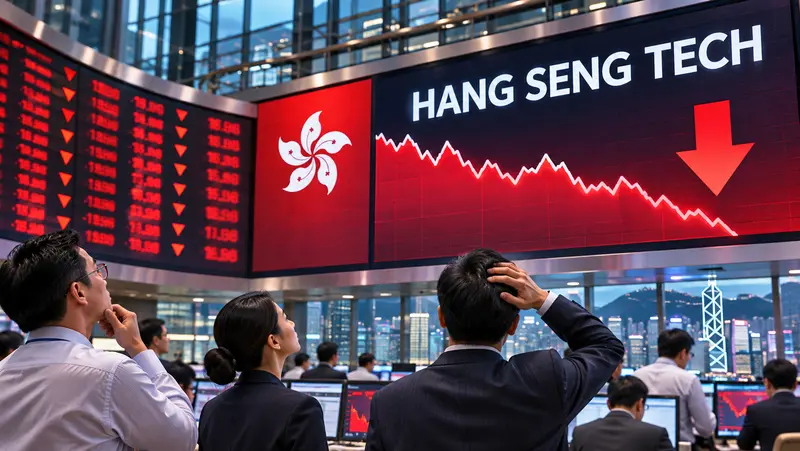
Asian stocks fell again on 23 November after Friday's rout, with the KOSPI down as much as 3.7% at the open. Seoul readied a $7.3 billion stabilisation fund, China eased margin borrowing and Taiwan limited short-selling. This is a market report, not investment advice.
A
4 min
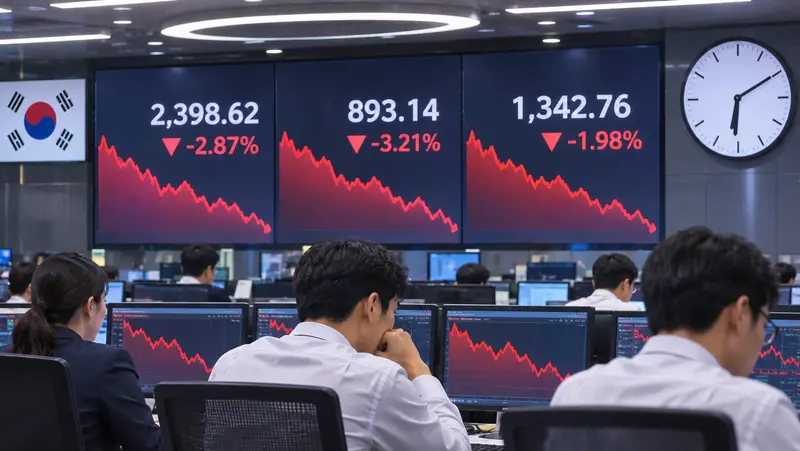
Asian stocks fell again on Monday, 23 November 2026, following a rout on Friday that wiped out a large share of the markets' value across the region and on Wall Street. South Korea's KOSPI fell as much as 3.7% at the open. Governments responded over the weekend, with Seoul readying a $7.3 billion fund, China easing the rules on borrowing to buy shares and Taiwan restricting short-selling. This is a market report and not investment advice.
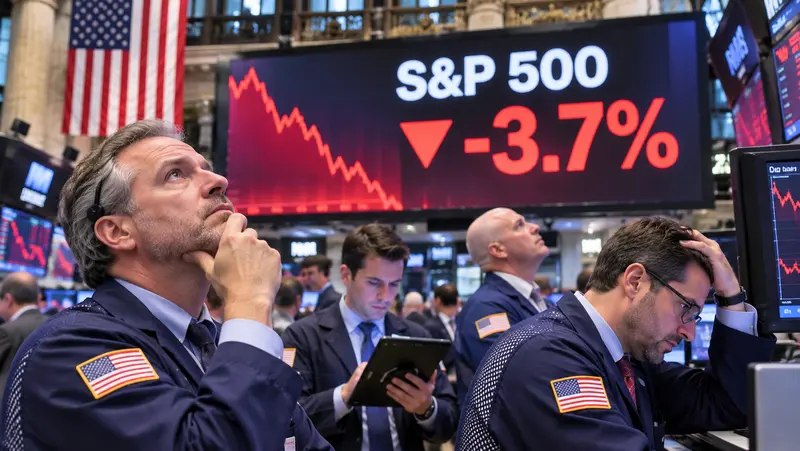
The scale of Friday's moves explains the reaction. On 20 November the KOSPI closed 5.2% lower, Japan's Nikkei 5.1% lower and Taiwan's Taiex 6.2% lower. On Wall Street the S&P 500 fell 3.7% and the Nasdaq 5.3%. Taiwan's market had its worst week since 1990.
Trend-following funds, which sell when prices fall, were reported to have sold about $57 billion of stocks, adding to the pressure. Traders also priced a 91.4% chance that the US Federal Reserve will raise interest rates in December, which weighs on shares, especially the technology shares that dominate the Korean and Taiwanese indices.
| Market | Friday 20 November close |
|---|---|
| KOSPI (South Korea) | Down 5.2% |
| Nikkei (Japan) | Down 5.1% |
| Taiex (Taiwan) | Down 6.2% |
| S&P 500 (US) | Down 3.7% |
| Nasdaq (US) | Down 5.3% |
Seoul's response
South Korea's finance minister held an emergency meeting on Sunday, and the government said that a stabilisation fund of about $7.3 billion is ready. The aim of such a fund is to buy shares when the market falls too fast, in order to calm trading. The KOSPI fell as much as 3.7% at the open on Monday, so the fall continued despite the announcement.
China is to let investors borrow more to buy shares, which frees about 400 billion yuan for the market from 30 November. Borrowing to buy shares, known as margin financing, can lift prices if investors use it, but it also raises risk.
Taiwan banned short-selling below the previous day's closing price. Short-selling is a way of betting on a fall, and a rule of this kind stops sellers from pushing a falling market lower by selling at ever lower prices. Both steps are old tools that regulators use in a panic, and they show how worried the authorities are.
David Kelly of JPMorgan Asset Management was among those who commented on the fall. Analysts have linked the selling to the prospect of higher US interest rates and to the unwinding of crowded positions in technology shares, though no single cause has been named. Whether it continues depends on the next US data and on what the Fed says.
Why Korea and Taiwan feel it most
South Korea and Taiwan are both big exporters of technology, and semiconductor makers carry a large weight in the KOSPI and the Taiex. When investors sell technology shares around the world, those two indices fall further than most. Japan's Nikkei also has a large technology component. That helps to explain why the three Asian indices fell by more than 5% on Friday, about as much as the Nasdaq.
When interest rates rise, the future profits of companies are worth less in today's money, and bonds become more attractive compared with shares. Technology companies, whose profits lie further in the future, are hit hardest. If traders are right that the Fed will raise rates in December, the selling could continue, but the odds change with each new data release, so the 91.4% figure is a snapshot and not a forecast.
A stabilisation fund buys shares to slow a fall. A short-selling limit makes it harder to bet against the market. Easier margin borrowing lets investors buy with borrowed money. None of these measures changes the reasons for the fall, and they often buy only time.
The next signals for investors
Investors will look at three things. The first is whether the KOSPI recovers or whether Seoul has to use the stabilisation fund. The second is US inflation and jobs data, which will shape the odds on a Fed rate rise in December. The third is whether the measures in China and Taiwan steady their markets or are read as a sign of panic.
Moves of this size are unusual for large indices, and they leave many investors with losses on paper. Readers who hold shares should not read this report as a reason to buy or sell, and should consult a registered adviser for decisions about their own money.
The Financial Services Commission of South Korea and the Financial Supervisory Commission of Taiwan are the sources for the stabilisation and short-selling measures, and the Federal Reserve is the source for its policy decisions and its calendar. The index levels quoted come from the closing figures reported for each exchange.
About the Author
A
Amita Sahani
Staff Writer
Amita Sahani writes for Wirony. Every story under this byline is reviewed and approved by an editor before it is published, and corrections are made openly.
A
4 min
What did you think?