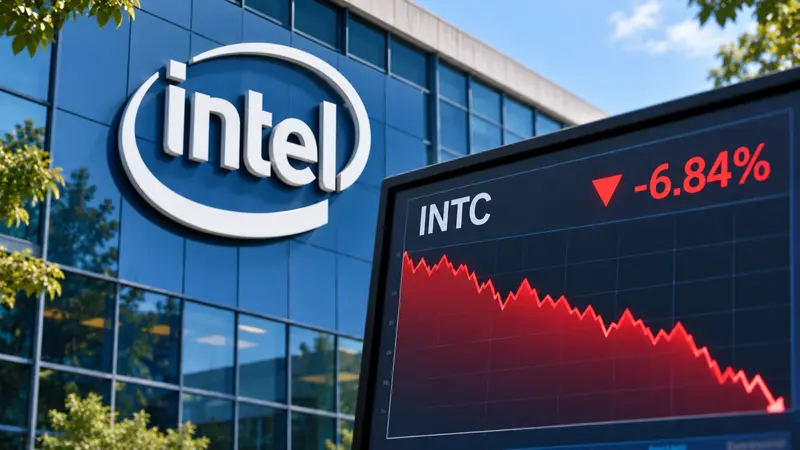
/
Nvidia's board weighs Jensen Huang's future as shares fall about 8%: what we know
Nvidia's board met late on 11 November to decide whether to remove CEO Jensen Huang, and no decision had been announced when this was written. Shares fell about 8% before the market opened on 12 November. Removal needs a majority of the 11-member board, and Huang owns about 3.6% of the company.
A
4 min
Nvidia's board of directors met late on Wednesday, 11 November 2026, to decide whether to remove its co-founder and chief executive, Jensen Huang, and no decision had been announced by the morning of 12 November. Nvidia shares fell about 8% in premarket trading on Thursday and were down more than 20% over the month. The board's meeting followed the opening of an independent investigation on 9 November and allegations about Huang's personal conduct. Those allegations have not been tested, and the company has not confirmed any plan to remove him. This article is for information and is not investment advice.
What the board has said and done
On Sunday, 9 November, the board announced an independent investigation into whether Huang was the target of a foreign intelligence effort, and said in the same statement that it had confidence in him and his leadership team. It said it saw no reason to believe that national security or Nvidia's secrets had been compromised. The same day Huang acknowledged in a memo to staff a relationship with an executive of the cloud company Megaspeed, whom lawmakers describe as an alleged Chinese spy. China has denied the spy claim, and Huang told President Donald Trump, according to Trump's account, that he had no idea of it. Trump said on Monday that the FBI is looking into the matter.
On Wednesday a second relationship was alleged, with a Nvidia vice president who reports to Huang. A report that the board was preparing to force him out followed, and Nvidia had not confirmed it. The board's meeting on Wednesday to discuss removal was confirmed.
How removal would work
Under Nvidia's bylaws, Huang can be removed with or without cause by a majority vote of the directors. The board has 11 members, and all except Huang are considered independent. The company has no board chair, which one analyst, Steve Okun, called astounding.
| Governance point | Position |
|---|---|
| Board size | 11 directors, 10 of them independent |
| Vote needed | Majority of directors |
| Huang's ownership | About 3.6%, according to LSEG data |
| Board chair | None |
| Named successor | None |
Huang does not control the company through shares. He owns about 3.6% according to market data, in contrast with executives at Meta and SpaceX who hold majority voting power. He is 63 and co-founded Nvidia in 1993, and is credited with moving it from gaming hardware to the centre of the AI boom. He has not named a successor. Analysts see two likely internal candidates: chief financial officer Colette Kress and engineer Ian Buck.
The sequence of events over the week is short.
| Date | Event |
|---|---|
| Sunday 9 November | Board opens an independent investigation and says it has confidence in Huang; Huang acknowledges a relationship in a staff memo |
| Monday 10 November | Trump says the FBI is looking into the matter |
| Wednesday 11 November | Board meets late to discuss removal; House committee chairs set a reply deadline |
| Thursday 12 November | Shares fall about 8% before the market opens |
| Wednesday 18 November | Date the committee chairs asked Huang to appear |
The board's earlier statement of confidence and its later meeting on removal are three days apart, which is the main reason the market has treated the position as unstable.
The market, the analysts and Washington
Nvidia is valued at about $4.2 trillion and has lost more than $600 billion of market value this week. Bernstein cut its price target from $400 to $200. Several analysts say the stock could fall 20% if Huang is removed. Bernstein's Stacy Rasgon said an alleged relationship with a direct report made it much tougher for the board to leave him in place, and that it is unclear who could succeed him as the visionary for the next decade. Richard Reyle of Questar Capital Partners said the lack of a succession plan makes the stock uninvestable. Rivals AMD and Broadcom rose in premarket trading.
The political pressure is separate. Three House committee chairs asked Huang to attend a closed-door briefing by 18 November, and said they would pursue a subpoena if he did not respond. A Republican senator and two House members have called for his resignation. The case has also fed into the debate over curbs on AI chip exports to China, since Huang opposed strict controls and travelled to China with Trump in May. Megaspeed bought about $4.8 billion of equipment from Nvidia, and US authorities have investigated it since 2024 over alleged export-control violations, which it denies.
It is unclear whether Huang will go to the APEC summit in Shenzhen on 18 and 19 November. The immediate questions are whether the board announces a decision before markets open in the United States, whether it names an interim chief executive if it removes him, and what the independent investigation finds. Until the company says otherwise, he remains chief executive.
Sources
About the Author
A
Amita Sahani
Staff Writer
Amita Sahani writes for Wirony. Every story under this byline is reviewed and approved by an editor before it is published, and corrections are made openly.
A
4 min
What did you think?