/
Education Minister Dharmendra Pradhan resigns after Cockroach paper-leak protests
Education Minister Dharmendra Pradhan resigned in July 2026 after weeks of Cockroach protests over exam paper leaks. Protesters ended their sit-in after government promises, but thousands were detained in New Delhi on 14 November.
R
5 min
Education Minister Dharmendra Pradhan resigned in July 2026 after weeks of nationwide protests over leaked examination papers. He announced the decision on social media, shortly before talks were due between protest leaders and federal officials.
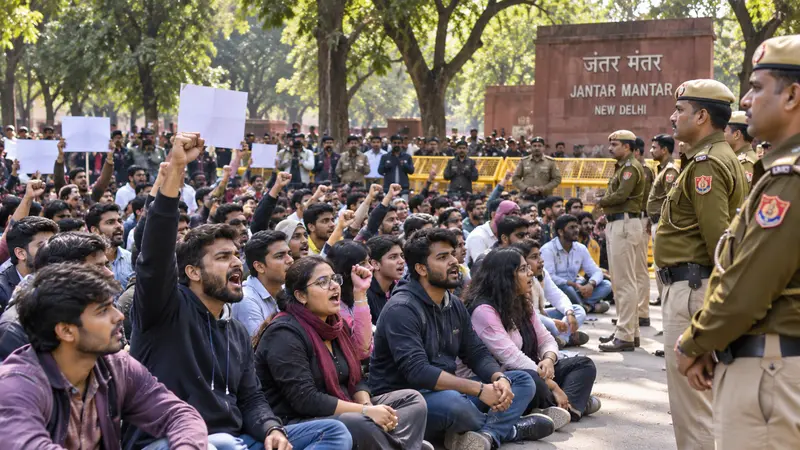
The demonstrations were led by the Cockroach Janta Party (CJP), a Gen Z-led group. Once Pradhan had gone, the youth movement called off its agitation at New Delhi's Jantar Mantar after the government agreed to review exam reform proposals, compensate the families of students affected by exam-related suicides and halt punitive action against demonstrators.
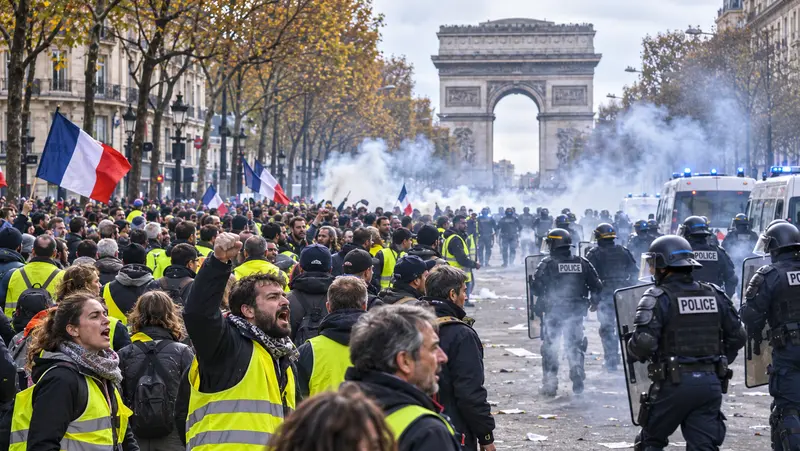
The quiet has not held. On Saturday 14 November, authorities deployed a sweeping security presence across New Delhi and detained thousands of protesters, as the "Cockroach" movement turned its anger on Prime Minister Narendra Modi and the country's election chief.
Timing explains much of the exit. Pressure on Pradhan had mounted through weeks of street protest, and his announcement came just ahead of the scheduled talks with CJP leaders. Supporters of the party celebrated after he resigned, and the agitation was called off once the government agreed to the commitments set out below.
Paper leaks that fed the protests
The anger grew out of repeated paper leaks affecting major national entrance tests, among them NEET, the medical school entrance examination. The leaks left students in distress, and that distress spread into public protest on a national scale. Pradhan, as the minister responsible for education, became the focus of it.
The protesters called themselves after an insect that officials might have preferred to ignore, and the "Cockroach" label stuck. The CJP drew its strength from young people, and its volunteers and supporters have been a regular presence at demonstrations in the capital. A photograph taken during one of the protests shows a volunteer fanning supporters in the crowd, days after thousands marched towards Parliament.
What began as a protest about examinations has changed in character since July. Commentator Anita Anand has described a protest that evolved into a movement calling for systemic changes across the political system, and has asked whether it should be understood as a protest, a movement or history being made.
Academic writers are asking a similar question. An analysis of the 2026 NEET-UG paper leak mobilisation by Mayurakshi Baishya, dated 13 November, is titled "From Protest to Movement?" and examines how the leak campaign took shape as a social movement.
For the students themselves, the stakes were concrete. Entrance tests such as NEET decide admission to medical school, so a leaked paper puts the fairness of a whole year's results in doubt. The compensation promised to the families of students affected by exam-related suicides shows how heavily the pressure of these examinations has weighed on some households.
What the government promised at Jantar Mantar
The settlement that ended the sit-in rested on three commitments. The government agreed to review exam reform proposals, to provide financial compensation to the families of students affected by exam-related suicides, and to stop punitive actions against demonstrators.
A fourth assurance followed. The government told the CJP that police cases filed against students would be withdrawn and that no action would be taken against them in future. That pledge matters because the protest movement is largely made up of students and young people, many of whom risked criminal cases by joining marches and sit-ins.
Each commitment works differently. The review is a policy process: it covers how entrance tests are set, guarded and run, and whether the proposals on the table lead to changes in the system that failed students. Compensation is a payment owed to families. The withdrawal of cases depends on police and prosecutors acting on the government's word.
Pradhan's resignation settled a separate question, that of political accountability for the leaks. It did not, by itself, change any rule about how examinations are conducted. That work sits inside the review the government accepted when the CJP ended its agitation at Jantar Mantar.
The movement's leaders and federal officials had been due to meet when Pradhan stepped down. Those talks produced the terms on which the demonstrators left Jantar Mantar. They did not, however, end the movement itself, and its wider aims have since grown beyond the examination system.
Crackdown in New Delhi on 14 November
Four months after the July agreement, the capital saw a very different scene. Authorities put a security operation across New Delhi on Saturday 14 November and detained thousands of protesters. No tally of detentions has been given in the material available beyond "thousands".
The latest protests are aimed at more than the education system. Tens of millions of voter deletions have drawn widespread protest, and demonstrators are now directing their anger at Prime Minister Modi and at the election chief, as well as at the handling of examinations. The CJP's supporters, who celebrated when Pradhan resigned, have kept up pressure in the capital in the days since.
The arrests sit uneasily beside the government's earlier assurance that students would face no action over the protests. Whether the people now detained include those students is not stated, and the government's July pledge covered police cases already filed against them as well as any action in future.
The July terms are still the reference point for both sides. The government has agreed to review exam reform proposals and to withdraw police cases against students, and the CJP has not dropped its wider demands. The next step is the review itself: what it examines, how long it runs and whether the withdrawal of cases goes ahead while thousands of demonstrators are being held in New Delhi.
About the Author
R
Reyaansh Agarawal
Staff Writer
Reyaansh Agarawal contributes to Wirony, covering stories that are carefully reviewed and approved by the editorial team before publication. Wirony is committed to maintaining tran…
R
5 min
What did you think?