/
Over 100,000 protest across France for fifth weekend, 219 arrested
The Interior Ministry counted 106,000 marchers across France on 14 November, the fifth weekend of protests over living costs, schools and police powers. Police made 219 arrests and used tear gas in five cities.
R
5 min
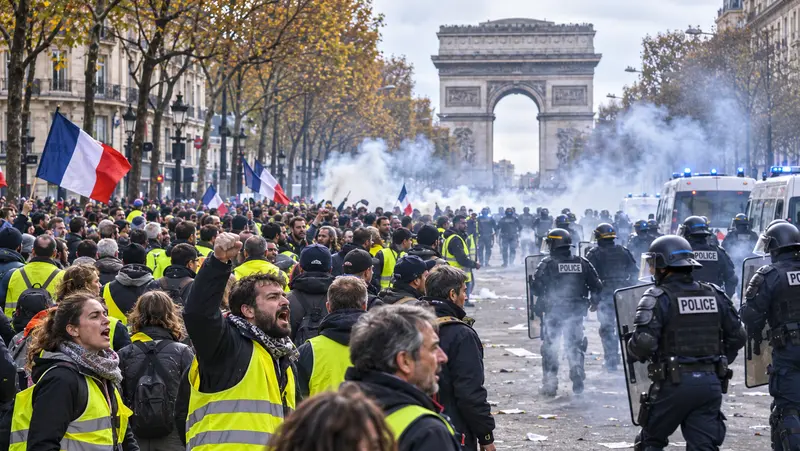
More than 100,000 people marched across France on Saturday 14 November, the fifth weekend in a row of demonstrations over the cost of living, conditions in schools and police powers. The Interior Ministry put the national turnout at 106,000, of whom about 24,000 were in Paris.
Police fired tear gas at demonstrators in the capital, and local authorities in several other cities used tear gas and water cannon as well. Law enforcement recorded 219 arrests across the country. Most of the marches passed without trouble, though some escalated into clashes with officers.
The crowd was smaller than a week earlier. The previous weekend, roughly 146,000 people took part, so Saturday's figure is a fall of about 40,000. Even so, the count stayed above 100,000 for another week.
The demonstrations are organised by Yellow Vest groups and student movements, and they are aimed squarely at the Macron government. Protesters chanted against declining affordability, the government itself, police violence and poor conditions in schools. Estimates of the total turnout varied, running from the ministry's 106,000 to as many as 200,000.
Yellow Vest groups and student movements
Two currents feed the marches, and their grievances overlap without being identical. One is the older Yellow Vest strand, driven by anger over inflation, housing pressures and the falling affordability of daily life. The other is led by young people, who are protesting over strained conditions in schools and what they describe as economic disparities between generations.
Police powers form a third thread. Marchers raised them alongside the complaints about money, and the chants against police violence on Saturday sat next to the slogans about prices and school buildings. The protests were also directed at a bill concerning police powers, according to the coverage of the day, though the material does not set out what the bill contains.
Because the complaints span prices, housing, classrooms and policing, there is no single demand that one ministry could answer. That helps explain how a movement with an anti-government edge can bring students and older Yellow Vest supporters onto the same streets on the same day.
The geography of the turnout points the same way. With about 24,000 marchers in Paris out of the Interior Ministry's 106,000, roughly 82,000 were counted elsewhere in the country. The protests are not confined to the capital, and the clashes that followed were not either.
The wide range in estimates for the day, from 106,000 up to 200,000, reflects how difficult it is to count marches held in many towns and cities at once. The ministry's figure is the official one and the figure used for comparison with the previous weekend.
Tear gas in five French cities
Local authorities used tear gas and water cannon in Paris, Marseille, Lyon, Bordeaux and Nantes. The triggers differed from place to place. In some cities the trouble followed incidents involving fireworks or street fires. In others it came after marchers pressed on along assembly routes that the authorities had banned.
In Paris, where the crowd was largest, police used tear gas on demonstrators. Elsewhere, peaceful marches occasionally tipped into standoffs with police, and the clashes were local flashpoints rather than disorder spread across whole city centres.
Banned routes shape each Saturday's events. Organisers who are refused a route can change the plan or march anyway, and on 14 November some chose to march, which brought a police response. Fireworks and fires in the street gave officers a second reason to intervene in other places.
The 219 arrests recorded nationwide are fewer than the detentions seen on the heavier, more volatile weekends earlier in the movement. Those rounds were marked by tougher confrontations and more people taken into custody. Saturday's total sits below those peaks, although it still means hundreds of people were detained in a single day.
The use of tear gas and water cannon in five separate cities on the same day shows that confrontations were not limited to Paris. Marseille, Lyon, Bordeaux and Nantes each saw the same tools deployed, in the middle of marches that were otherwise described as largely orderly.
The arrest figure comes from law enforcement, while the turnout figure comes from the Interior Ministry. Together they make up the official picture of the fifth weekend, and neither has been revised in the material available.
Turnout falls from 146,000 to 106,000
The drop from roughly 146,000 to 106,000 is the clearest change from one weekend to the next. Fewer people marched, and fewer were arrested than on the earlier rounds. Yet the movement still produced a national crowd above 100,000 for a fifth Saturday in succession.
For people living in or visiting French cities, the pattern is by now familiar. Marches take place in the centres of cities such as Paris, Lyon and Marseille, assembly routes can be banned, and police respond with tear gas and water cannon when events turn confrontational. Anyone planning to be in those cities on a Saturday should expect crowds and possible disruption around the march routes.
For the government, the marches pose a different problem. The demands run from prices and housing to school conditions and police behaviour, and several are aimed directly at the Macron government. A fall in turnout of about 40,000 in one week does not remove any of those grievances, and the chants on Saturday covered each of them.
The fifth weekend also shows how the movement has changed shape. The earliest rounds were more volatile and produced heavier detentions. Saturday's march was calmer by that measure, yet it still carried the same mix of complaints about affordability, schools and police conduct, and it still drew a crowd the ministry counted in six figures.
No date for a sixth round has been given in the material available, and the organisers have not set out their next steps. What the ministry's figures show is a movement that has lost some numbers but not its reach, in a country where the Yellow Vest groups and student movements are still turning out in the tens of thousands, week after week.
About the Author
R
Reyaansh Agarawal
Staff Writer
Reyaansh Agarawal contributes to Wirony, covering stories that are carefully reviewed and approved by the editorial team before publication. Wirony is committed to maintaining tran…
R
5 min
What did you think?