Leak claims Galaxy S27 Ultra drops 3× telephoto, keeps 5× periscope at f/2.9
Leaks this week claim Samsung’s Galaxy S27 Ultra will drop its 3× telephoto and jump from 1× to a 5× periscope lens rated at f/2.9. Reports also point to a 200MP ISOCELL HP6 main sensor, M16 OLED display tech, and a largely unchanged front design ahead of an early-2027 launch.
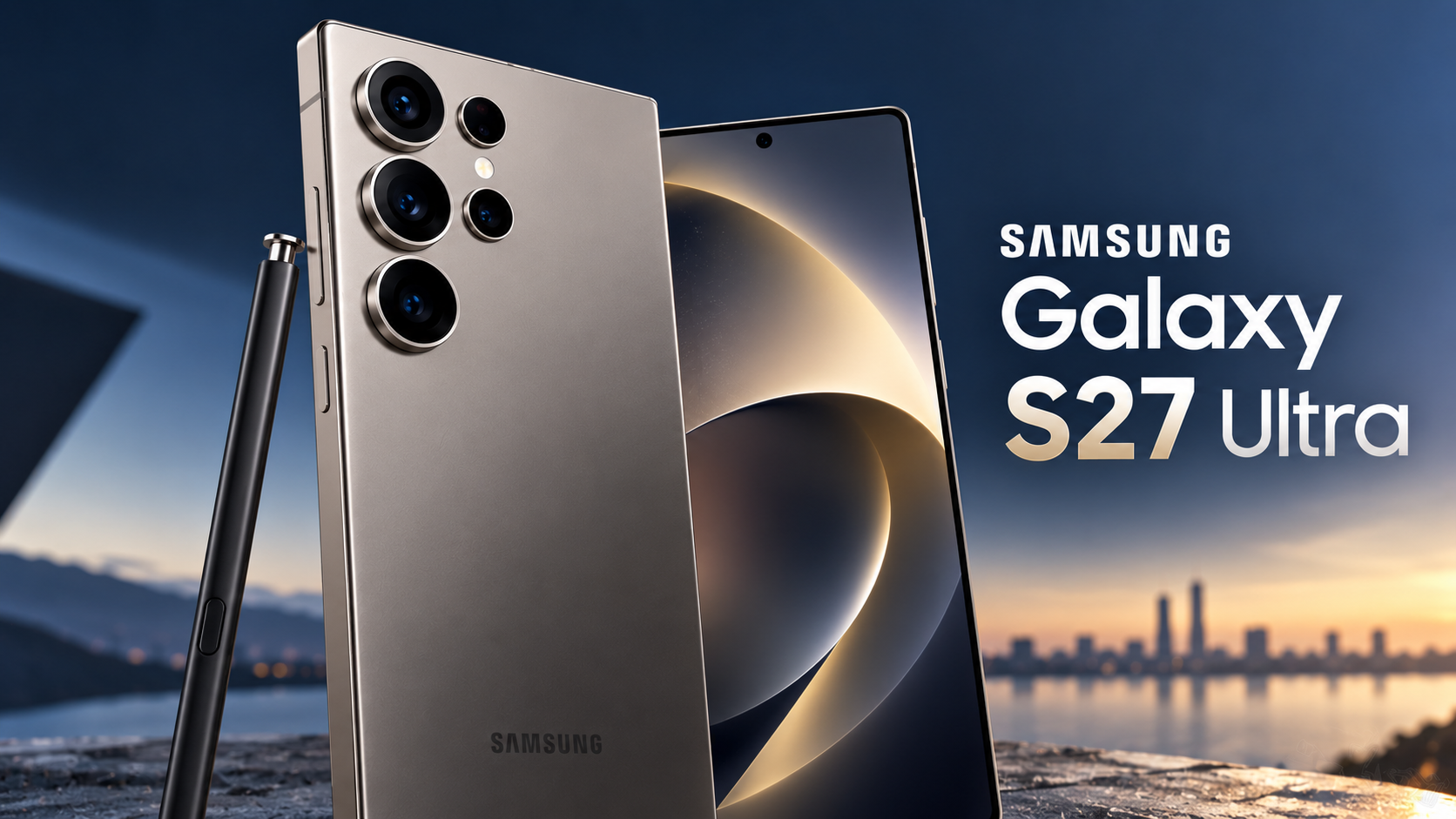
Samsung’s next Ultra flagship could bring some significant changes to its camera system, with recent leaks pointing to a redesigned zoom setup, a new 200MP main sensor and improvements to image processing.
The Galaxy S27 Ultra is expected to arrive in early 2027, although Samsung has not officially announced the phone or confirmed any of its specifications.
One of the biggest potential changes involves the telephoto cameras. The Galaxy S27 Ultra is rumoured to drop the dedicated 3× telephoto camera while retaining a 5× periscope telephoto lens. If that happens, the phone would move from the current combination of shorter and longer optical zoom cameras to a simpler setup built around the main camera and 5× optical zoom.
The 5× periscope camera is also expected to have an f/2.9 aperture. A larger telephoto system could give Samsung more flexibility for distant subjects while keeping the phone relatively slim.
A new 200MP main camera
The Galaxy S27 Ultra is also expected to feature a 200MP ISOCELL HP6 main sensor.
The resolution would remain at 200MP, but the new sensor could represent a significant step forward in image quality and processing. Samsung is also expected to make further improvements to its image-processing system.
The reported changes include a warmer overall colour profile, better handling of small bright objects and improved control over noise in darker areas.
If these improvements make it into the final device, photos could have smoother shadows, better highlight control and cleaner results in low-light conditions.
What losing the 3× camera could mean
Removing the dedicated 3× telephoto camera would be one of the more noticeable changes to Samsung's Ultra camera system.
A 3× lens is useful for portraits, indoor photography and subjects that are too close for a 5× camera but too far away for the main sensor. Moving directly from the main camera to 5× could therefore create a larger gap between the two focal lengths.
Samsung could compensate for that gap through high-resolution crops from the 200MP main sensor and computational photography. The effectiveness of that approach will depend heavily on how well the software combines data from the different cameras.
For everyday photography, the difference may not always be obvious. However, users who frequently switch between 2×, 3× and 5× zoom could notice the change.
Camera design could also change
The camera hardware may not be the only part of the Galaxy S27 Ultra receiving attention.
Early information about the phone's rear design has shown several possible layouts, with different camera arrangements appearing in various accessory designs. Some versions feature large vertical camera openings, while others show a combination of larger openings and separate cut-outs.
This has created uncertainty about the final arrangement of the rear cameras and other sensors.
Samsung could still make changes before production begins, so the exact design remains unclear at this stage.
Front design expected to remain familiar
While the rear of the Galaxy S27 Ultra could receive noticeable changes, the front of the phone is expected to remain largely familiar.
Early information suggests that the screen design could be very similar to the Galaxy S26 Ultra. The similarities may extend to the dimensions and positioning of the display, potentially allowing some accessories to work across both generations.
That does not necessarily mean Samsung will use the same display technology.
The Galaxy S27 Ultra is expected to feature a next-generation M16 OLED panel. The newer panel technology could bring improvements in brightness, power efficiency and colour accuracy while maintaining a similar overall front design.
The selfie camera could also receive an upgrade, with the phone reportedly moving from a 12MP front camera to a 16MP sensor.
Up to 16GB of RAM
Samsung could also offer higher memory configurations with the Galaxy S27 Ultra.
The expected lineup may include 12GB RAM with 256GB or 512GB of storage, while the highest-end 1TB version could come with 16GB of RAM.
There are also expectations that Samsung could introduce newer LPDDR6 memory and UFS 5.1 storage technology with the Pro and Ultra models.
However, the final configurations could vary depending on production costs and regional availability.
Exynos could return to the Ultra
The processor is another area where Samsung may take a different approach with the S27 series.
The Galaxy S27 Ultra is reportedly being tested with an Exynos processor, potentially the upcoming Exynos 2700. This could mean Samsung is considering a move away from an exclusively Snapdragon-powered Ultra model.
Samsung has previously used different processors across markets, so the final chip configuration could vary by region.
It is still unclear which processor would be offered in markets such as India, and Samsung has not confirmed its processor strategy for the Galaxy S27 Ultra.
Expected launch in early 2027
The Galaxy S27 Ultra remains several months away, with the launch expected in early 2027.
At this stage, the most interesting potential changes centre on the camera system. The removal of the dedicated 3× telephoto camera, the introduction of a new 200MP main sensor and improvements to image processing could significantly change the way the Ultra handles everyday photography and zoom.
The expected M16 OLED display, possible 16MP selfie camera, higher memory options and the potential return of an Exynos-powered Ultra add further interest to the upcoming flagship.
Samsung has yet to officially confirm the Galaxy S27 Ultra, so the final specifications and design could still change before launch. More details are expected to emerge as development progresses toward the 2027 release.
What did you think?