/
Ukraine says Starshield speed caps are back, hampering drone interception
President Volodymyr Zelensky said on 12 November that a speed cap of about 161 km/h on Starshield, the military version of Starlink, has returned and is hampering interception of Russian jet-powered drones. Musk says the US military decides; Washington has not accepted responsibility.
S
4 min
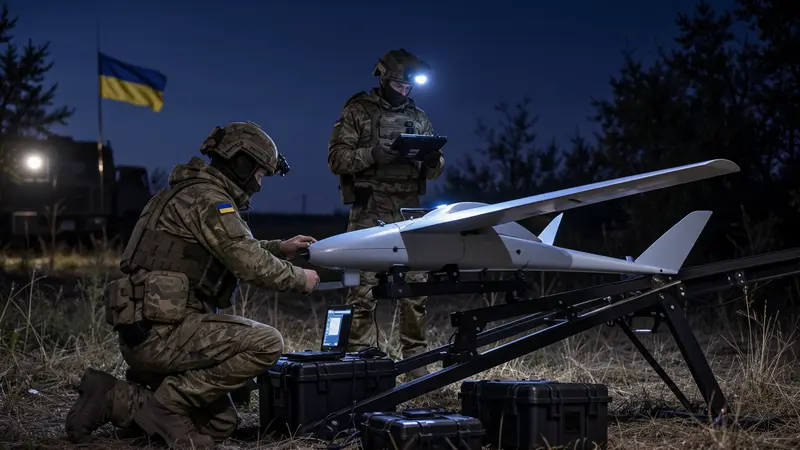
Ukrainian President Volodymyr Zelensky said on Thursday, 12 November 2026, that speed restrictions on Starshield, the military version of SpaceX's Starlink satellite network, have returned. They have disrupted the interception of Russian drones for several days, he said, across the front line and the Russian-occupied territories. Ukraine's military investigated and concluded that the disruptions were systematic and not random technical faults, and Zelensky wrote that systematic speed restrictions are being imposed that limit Starshield to 161 kilometres an hour. Elon Musk has said the US military and ultimately the US president decide such limits. This report is for information only.
What Ukraine says is happening
Zelensky said the figures came from briefings by Defence Minister Yevhenii Khmara and Commander-in-Chief Mykhailo Drapatyi. The restrictions, he said, mainly complicate the interception of Russian jet-powered drones, and some strikes got through because Ukraine's interception systems could not reach enough speed in time. He warned that the restrictions help Russia make more accurate attacks and cause more Ukrainian casualties, and that Ukraine is trying to establish the circumstances with the American side.
The cap does not limit internet speed. It limits how fast a Starshield-equipped drone or vehicle can travel while staying connected, which is why it hits high-speed interceptor drones, the ones sent against jet-powered attack drones, harder than slower equipment.
Jet-powered attack drones fly faster than the propeller-driven kind, so the interceptor drones sent against them have to be fast as well. That is where a ceiling on how quickly a Starshield-linked machine can move while staying connected does the most harm: an interceptor held to about 161 km/h has less margin to catch a faster target. Ukraine's military says it cannot compensate by other means in the time available, which is why Zelensky linked the restrictions directly to strikes that got through.
Ukraine's government has also made clear that it sees the issue as a matter of control and not only of speed. A network owned and controlled by the US government, as Musk described Starshield, can be tuned from outside Ukraine, and decisions about its limits are not made in Kyiv.
The timeline since October
The restrictions have come and gone twice in a month.
| Date | Event |
|---|---|
| 13 to 14 October | Restrictions first appear; terminals lose connectivity at about 160 km/h |
| 22 October | Ukraine's defence ministry signs a letter of intent with Finnish companies ICEYE and Nokia on a sovereign satellite communications system |
| 24 October | Ministry says connectivity restored, with stable links above 400 km/h, after high-level contacts with Washington |
| 12 November | Zelensky says the caps are back, less than three weeks later |
The October limits appeared while US-mediated peace talks were under way. The new ones arrive after two days of talks in Abu Dhabi that ended on 11 November without a breakthrough on the main disputes, including Moscow's demand that Kyiv give up territory it still holds.
The pressure on Kyiv is also political. Ukraine has been under pressure to make territorial concessions in the talks, and the October restrictions came while US-mediated negotiations were under way, as the new ones follow the Abu Dhabi round. Ukraine's officials have not said that the two are linked, and Washington has not said so either. What the front line shows is that a service Ukraine relies on for drones and communications can be throttled by a decision outside the country, and that the throttle has now been used twice in a month.

Who is responsible
Nobody has accepted responsibility. President Donald Trump denied ordering the October slowdown, and Secretary of State Marco Rubio said the administration was not responsible. Musk wrote that Starshield systems are owned and controlled by the US government, and that any limits on speed or usage are decided by the US military and ultimately the president. Neither Washington nor SpaceX has publicly claimed the decision for the latest restrictions.
| Who | What they said |
|---|---|
| Zelensky | The caps are systematic, not random faults; limit of 161 km/h |
| Elon Musk | Starshield is owned and controlled by the US government; limits are decided by the US military and ultimately the president |
| Donald Trump | Denied ordering the October slowdown |
| Marco Rubio | Said the administration was not responsible |
| Washington and SpaceX | Have not accepted responsibility for the latest restrictions |
The dispute is also about the future of the service. Ukraine's access to Starshield under its agreement with Washington expires in the middle of 2027, and Kyiv wants it extended, with officials saying that talks should start soon. That is why the defence ministry has also been looking at a sovereign satellite system with Finnish partners, to reduce dependence on a network owned and controlled by another government.
Earlier this year, SpaceX and Ukraine's defence ministry agreed to block Russian forces from using Starlink on attack drones, which shows that the network's controls cut both ways. The immediate questions are whether the cap is lifted again, who decides, and whether Ukraine's interceptor drones can be adapted to work below the limit. Zelensky has not said what response he expects from Washington.
About the Author
S
Subhash Gupta
Desk Editor
Subhash Gupta is a writer at Wirony, contributing articles that are reviewed and verified by the editorial team before publication. The publication prioritises accuracy, editorial…
S
4 min
What did you think?