/
3.6-magnitude earthquake jolts south Kashmir; tremors felt across Valley
A 3.6-magnitude earthquake struck south Kashmir early Friday, centred near Kulgam/Anantnag at about 12:30 am. Tremors were felt across parts of the Valley, with no major damage or casualties reported so far.
R
2 min
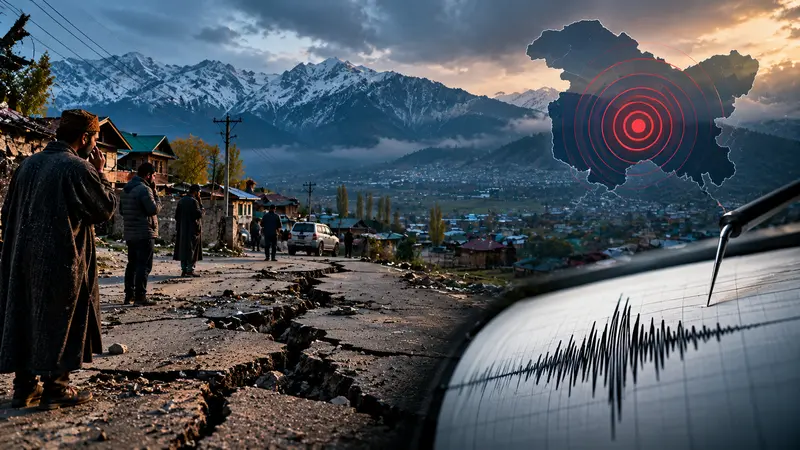
A 3.6-magnitude earthquake shook parts of the Kashmir Valley early on Friday, with residents in several areas reporting brief tremors but no immediate reports of casualties or major damage.
The quake struck at around 12:30 am local time. Its epicentre was in south Kashmir near Kulgam and Anantnag, roughly 24 km southwest of Anantnag and about 52 km south-southeast of Srinagar. The tremor originated at a shallow depth of around 10 km, a level that can make even smaller quakes feel sharper near the surface.
People in and around the epicentral area said the shaking was short-lived. In some neighbourhoods, residents stepped outside as a precaution, according to reports, before returning indoors once the tremors stopped.
Where it hit and how deep
Seismological readings placed the epicentre in south Kashmir, in the Kulgam–Anantnag belt. The depth was recorded at 10 km, classed as shallow.
Shallow quakes are often more noticeable, even when the magnitude is modest, because less energy is lost before the shaking reaches the surface. In this case, the tremors were described as light across parts of the Valley.
No official assessments of structural damage were reported through the day. There were also no confirmed reports of injuries.

While the epicentre was in south Kashmir, the tremor was felt across a wider area of the Valley, including Srinagar and neighbouring districts, according to reports of residents who noticed doors and windows rattle and briefly felt the ground move.
The earthquake came in the early hours, when many people were asleep, which can heighten alarm even during small events. Still, the available information through Friday evening indicated no escalation beyond the initial tremor.
Authorities had not announced any disruption to services. There were no reports of road closures, power cuts, or communication outages linked to the quake.
What happens next
With no damage or casualties reported so far, the focus typically shifts to monitoring for aftershocks, which can follow even low-magnitude events. There was no confirmed information in the available details about any aftershocks on Friday.
The quake adds to a run of small-to-moderate tremors recorded in different parts of the world on the same date, with other 3.6-magnitude events reported in the Aegean Sea near Greece, near Chitre in Panama, and in the Tyrrhenian Sea off Sicily. These events are not connected in any stated way, but they underline how frequently earthquakes of this size occur globally.
For Kashmir, Friday’s tremor was a reminder of the region’s seismic sensitivity, even when the immediate impact is limited. Officials and residents alike will be watching for any further movement, though nothing in the reported information suggested heightened risk beyond routine caution after a shallow quake.
R
2 min
What did you think?