/
Centre tells Supreme Court it will review UGC's stayed equity rules: what the 2026 text says and why it froze
The Centre told the Supreme Court on 5 November it is setting up a committee to review the UGC's 2026 equity regulations, stayed since January as vague and open to misuse. The dispute centres on a definition limiting caste discrimination to SC, ST and OBC members. The case returns in four weeks.
P
5 min

The Centre has told the Supreme Court that it is setting up a special committee to review the University Grants Commission's 2026 equity regulations, the rules on discrimination in colleges and universities that the court froze in January. On 5 November 2026, Solicitor General Tushar Mehta informed a bench of Chief Justice Surya Kant and Justice Joymalya Bagchi that the government is examining measures to address students' concerns and to ensure that no section feels excluded or threatened. The court adjourned the petitions for four weeks and said that the welfare of the younger generation must remain central.
The announcement moves one of the year's most bitter campus disputes out of the courtroom for now. It also leaves a gap: the stronger rules that families of two dead students fought for are not in force, and students are still governed by a framework from 2012.
What the 2026 regulations require
The UGC notified the University Grants Commission (Promotion of Equity in Higher Education Institutions) Regulations, 2026 on 13 January, replacing the 2012 rules. They apply to every higher education institution in India and set out a detailed system.
Every institution must have an Equal Opportunity Centre, with an Equity Committee chaired by the head of the institution. The committee has three professors or senior faculty, a non-teaching staff member and two civil society representatives, with two students as special invitees and representation for OBCs, persons with disabilities, Scheduled Castes, Scheduled Tribes and women. Institutions must run a 24-hour Equity Helpline and an online reporting portal, form mobile Equity Squads to watch vulnerable spots, and name Equity Ambassadors in each department and hostel.
The rules also impose short deadlines.
| Step | Time limit |
|---|---|
| Equity Committee meets after a complaint | Within 24 hours |
| Committee reports to the head of the institution | Within 15 working days |
| Head of the institution starts further action | Within 7 working days |
| Appeal to the Ombudsperson | Within 30 days of the report |
| Ombudsperson's effort to dispose of the appeal | Within 30 days |
If a complaint discloses an offence under the penal laws, the police must be told. The UGC is to monitor compliance and can visit campuses.
The definition at the centre of the fight
Two definitions in the text explain much of the conflict. "Discrimination" is broad: unfair, differential or biased treatment of any stakeholder, explicit or implicit, on grounds of religion, race, caste, gender, place of birth or disability. "Caste-based discrimination" is narrower. It means discrimination only on the basis of caste or tribe against members of the Scheduled Castes, Scheduled Tribes and Other Backward Classes.
Three writ petitions challenged the rules as discriminatory towards the general category. Their complaint, in plain terms, is that a student outside those groups would have no matching protection under the caste clause, and that the system could be turned against them. Supporters reply that the rule reflects who has historically faced caste discrimination, and that the general definition of discrimination still covers every stakeholder.
On 29 January 2026 the bench ordered the regulations to be kept in abeyance. It said that they appeared prima facie vague and capable of misuse, suggested that they be revisited by a committee of eminent jurists, and ordered that the 2012 regulations would operate in the meantime. Two days earlier, Education Minister Dharmendra Pradhan had assured the public that the rules would not be misused.
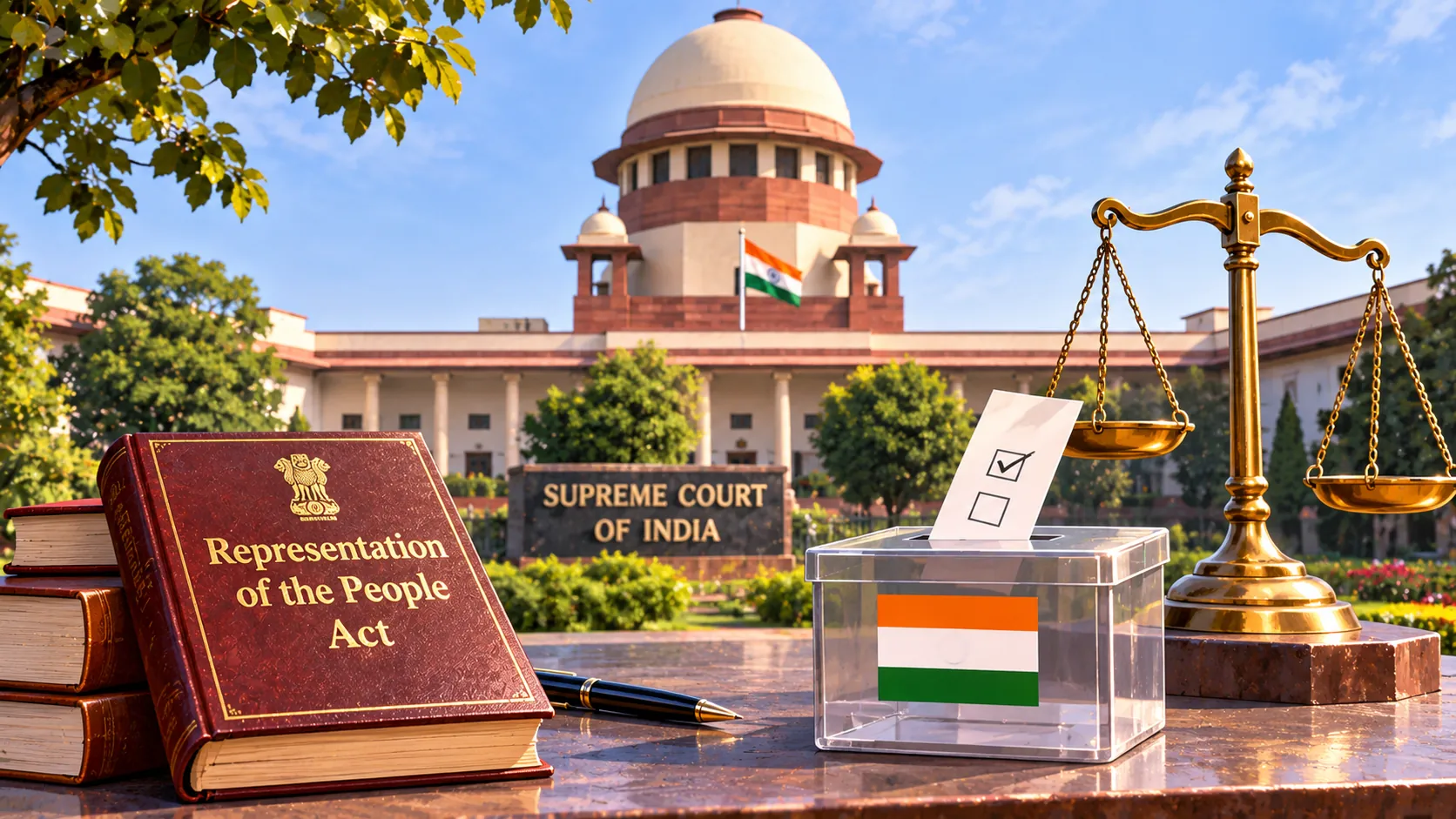
The court has made no final finding that the regulations are unconstitutional. A stay is an interim step, and the court's description was a first impression.
Why it matters
This case began in tragedy, not in a rule book. The original petitions were filed in 2019 by the mothers of Rohith Vemula and Payal Tadvi, who died by suicide after allegedly facing caste discrimination on campus. They asked for stronger safeguards because they argued that the 2012 rules existed on paper and did little in practice. The 2026 regulations were the system's answer, and the stay sends the matter back to where they began.
So for now, a student who faces discrimination must rely on the older framework, which is built around an Anti-Discrimination Officer and allows up to sixty days to decide a complaint. Institutions are not barred from going further, but the 2026 text's helpline and tight deadlines do not bind them while it is in abeyance.
For the government, the task is delicate. A rewrite that narrows protection for Dalit, Adivasi and OBC students would provoke the families and many student groups. Leaving the text unchanged would run into the court's concerns and the petitions by general category students. The Solicitor General's phrase, that no section should feel excluded or threatened, suggests that the committee will look for wording that covers both.
Four questions will test the outcome. Will the caste clause stay limited to named groups, or be widened? Will the rules define terms such as implicit bias more tightly, to answer the charge of vagueness? Will there be a safeguard against false complaints, which critics want and many advocates fear will deter genuine ones? And will the short deadlines survive?
The composition and terms of the committee have not been announced, and the government has not said when it will report. The petitions will return to the bench in four weeks, by which time the court should have a clearer idea of what the Centre intends.
Until a new text is cleared, the 2012 regulations remain the operating law on every campus in India. Students who need help can still approach their institution's existing grievance bodies. The larger question, whether a law can both protect those most at risk and reassure everyone else, has now been handed to a committee.
Sources
About the Author
P
Prateek Rawat
Staff Writer
Prateek Rawat is a contributor to Wirony. All articles published under this byline undergo editorial review and approval before publication, with any necessary corrections handled…
P
5 min
What did you think?