/
India-Bangladesh Ganga water treaty lapses on 12 December with no renewal talks begun
The 1996 Ganga water treaty between India and Bangladesh expires on 12 December and no formal renewal talks have begun. Dhaka wrote to India's Jal Shakti minister on 17 November; an Indian team is in Dhaka from 21 to 23 November for a joint committee meeting that excludes renewal.
A
4 min
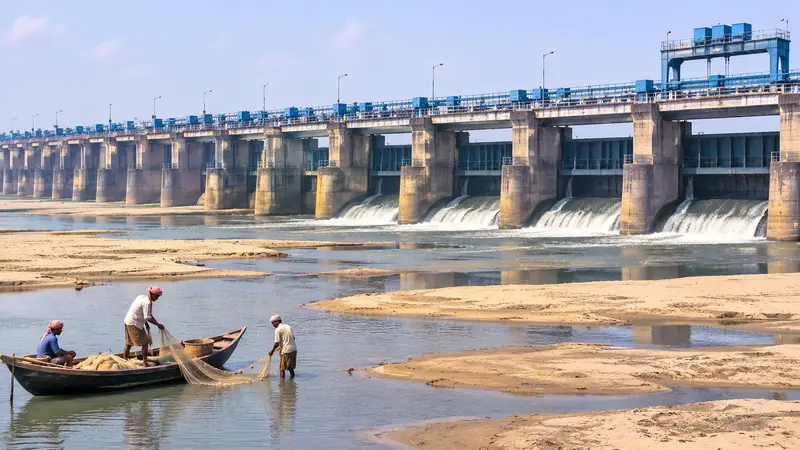
The 30-year Ganga water-sharing treaty between India and Bangladesh runs out on 12 December 2026, and formal talks on renewing it have not begun. Bangladesh's Water Resources Minister, Shahiduddin Chowdhury Anee, wrote to Union Jal Shakti Minister C.R. Patil through diplomatic channels on 17 November, and an Indian delegation is in Dhaka from 21 to 23 November. The visit is for a routine joint committee meeting, and renewal is not on its agenda.
The treaty was signed on 12 December 1996 by then Prime Ministers H.D. Deve Gowda of India and Sheikh Hasina of Bangladesh. It governs how the dry-season flow of the Ganga is shared at the Farakka Barrage in West Bengal, one of 54 rivers the two countries share. The formula runs from 1 January to 31 May, in ten-day periods.
When the flow available at Farakka is 70,000 cusecs or less, the two countries generally get equal shares. From 11 March to 10 May, each gets 35,000 cusecs in three alternating ten-day periods. If availability falls below 50,000 cusecs in any ten-day period, the two sides must hold emergency consultations. Article XII allows renewal by mutual consent, and the treaty does not continue automatically after its 30-year term.
What Dhaka has done
Anee's letter of 17 November said Bangladesh had set up a high-level technical committee, headed by Rashed Al Mahmud Titumir, adviser to the prime minister on finance and planning, and asked for details of India's negotiating team. New Delhi has not publicly named a team. Bangladesh wants a minimum-flow guarantee like the one in the 1977 agreement. Indian officials are reported to want extra water for the Kolkata port, thermal power plants and for controlling salinity in the Sundarbans, and West Bengal and Bihar have raised their own needs.
India and Bangladesh agreed to form a joint technical committee during Hasina's visit to New Delhi in June 2024. Officials say the interim administration in Dhaka made little progress in the two years that followed. Bangladesh's present prime minister, Tarique Rahman, has not yet accepted two invitations to visit India this year.
| Item | Detail |
|---|---|
| Signed | 12 December 1996, New Delhi |
| Expires | 12 December 2026 |
| Dry-season formula | 1 January to 31 May, ten-day periods at Farakka |
| Dhaka's letter | 17 November, from Shahiduddin Chowdhury Anee to C.R. Patil |
| Indian delegation in Dhaka | 21 to 23 November, joint committee meeting |
People familiar with the talks say India is unwilling to discuss the water treaty on its own. They say New Delhi's view is that Dhaka cannot press for one issue while holding back talks on train services, land-port trade, customs and border management. One source familiar with the discussions put it this way: "They cannot cherry pick one issue. Talks should go ahead on all the pending issues." Neither government has made that position public, and it comes from unnamed sources.
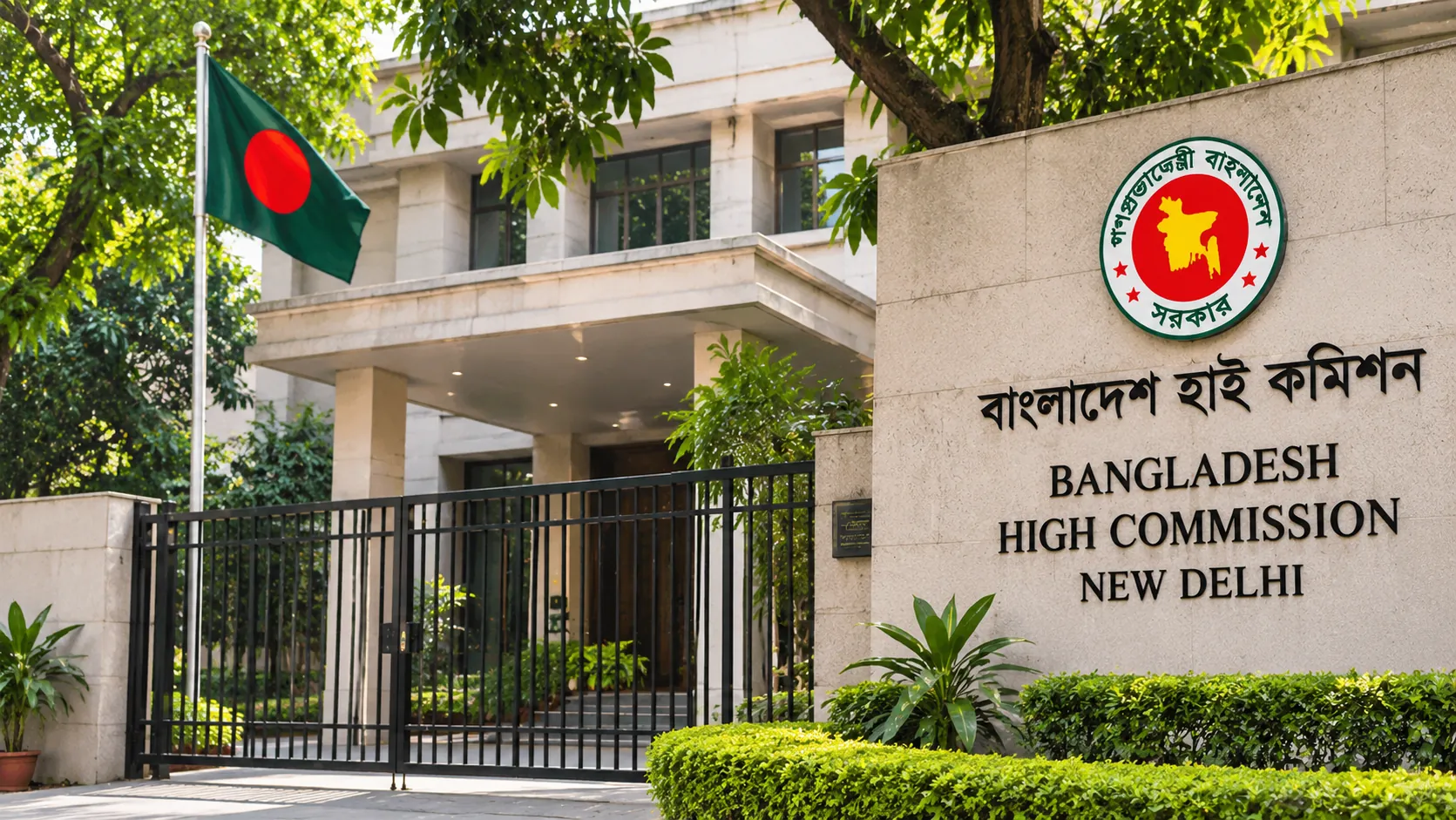
Concluding talks in about three weeks looks very hard, people familiar with the matter say, given climate change, river flows and rising demand for water. An interim extension in the present form appears unlikely without a political decision at the highest level.
Two possible outcomes
Accounts differ on what happens after 12 December. One says New Delhi may keep current releases going for the time being while letting the treaty lapse formally, which would mean water continues to flow under existing terms without a legal agreement. Neither government has confirmed such an interim plan. The other view is that an extension is slim without a signal from the leaders of both countries. The dry season starts again in January 2027, and the first ten-day periods of the formula fall then.
For Bangladesh, the Ganga flow matters for irrigation, river navigation and drinking water in the south-west, and a lapse without a replacement would leave it dependent on India's goodwill. The Teesta river still has no bilateral accord. For India, the treaty is tied to wider talks on border management, trade routes and security, and it has not given up that link.
If the treaty lapses on 12 December without a successor, the two countries would have no written formula for the dry-season flow at Farakka. The formula applies from 1 January to 31 May, so the first period that would be affected begins about three weeks after the expiry. Bangladesh depends on the dry-season flow of the Ganga for irrigation and for its south-west region, and India has its own needs at Kolkata port and in the Sundarbans, so both sides have reasons to avoid a gap.
What the meeting in Dhaka can and cannot settle
The Indian delegation is in Bangladesh for the 91st meeting of the India-Bangladesh Joint Committee, which is one of three mandatory annual meetings. The agenda is a review of the implementation of the existing treaty, and not renewal. The meeting can fix a date for talks and name the negotiators on each side, but it cannot extend the treaty. Any extension needs the approval of both governments.
The Ministry of Jal Shakti and the Ministry of External Affairs are the official sources for India's position, and neither had issued a statement on renewal when this was written.
About the Author
A
Amita Sahani
Staff Writer
Amita Sahani writes for Wirony. Every story under this byline is reviewed and approved by an editor before it is published, and corrections are made openly.
A
4 min
What did you think?