/
France reports first known human case of Shamonda virus, a livestock infection, in a patient who died in Lyon
French authorities confirmed on 22 October the first known human infection with Shamonda virus, a midge-borne virus of cattle. The patient, who was severely immunocompromised, died in Lyon in early October. Officials say no risk to the general public has been identified.
A
4 min

France has confirmed the first known human infection with Shamonda virus, a virus that until now was known only in animals, mainly cattle. The patient was severely immunocompromised and died in Lyon in early October. Health authorities announced the case on 22 October and said that no risk to the general population has been identified.
Santé publique France says it was notified on 7 October about a severely immunocompromised patient who was being treated at the Hospices Civils de Lyon for a serious neurological illness. The patient died, and deeper microbiological investigations at the hospital found the virus. Authorities say the brain complications seen before the death were very likely linked to the infection, but they are still working out whether the virus caused or contributed to the death. One report describes the patient as a man in his 60s from the Lyon area, but that detail comes from a local newspaper and has not been confirmed by the authorities.
How the patient was probably infected
Shamonda virus spreads through the bites of biting midges of the Culicoides group, the same tiny insects that spread bluetongue and other livestock diseases. Authorities suspect that the patient was bitten by an infected midge in eastern France, where the virus has been circulating among animals. The European Centre for Disease Prevention and Control says the exact species of midge involved is still unknown.
Investigators attribute the case to the patient's exceptionally weak immune system and not to any change in the virus itself. In other words, the virus is not thought to have become better at infecting people. A healthy immune system normally stops a virus that is poorly adapted to humans, and a patient with almost no immune defence is the kind of person in whom such an infection can take hold. People are classed as severely immunocompromised when their defences are suppressed by illness or by treatment, for example after an organ transplant or during intensive cancer therapy. That is why doctors in such cases test widely for unusual pathogens when a neurological illness does not have an obvious cause, and it is how this infection was found.
What is known about the virus
Shamonda virus was first found in Nigeria in the mid-1960s. It has since been reported in cattle in parts of Africa and in Japan, and this summer it was detected in Western Europe, with cases reported in Austria, Belgium, France, Germany, Ireland, Italy, Liechtenstein, Luxembourg, the Netherlands, Portugal, Spain, Switzerland and Jersey. As of 20 October, it had been found in cattle in 52 French departments, and there have been occasional infections in small ruminants such as sheep and in horses.
More from GeneralExplore General

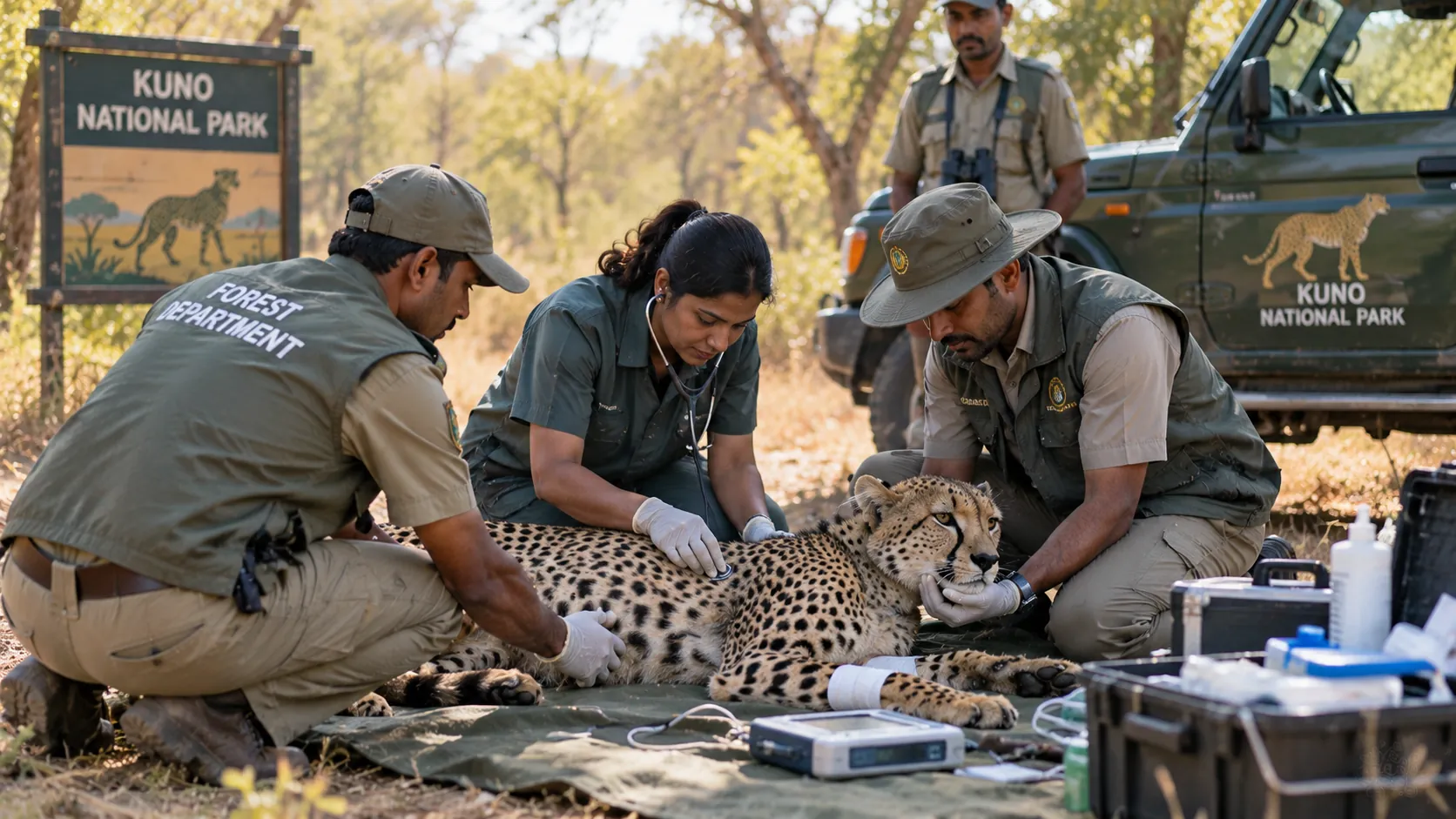

Cattle are the main hosts. In adult animals the signs include fever, lethargy and diarrhoea, and dairy cows can show a sharp fall in milk production. Shamonda belongs to a family of insect-borne viruses that also includes the Schmallenberg virus, which emerged in northern Europe in 2011 and caused stillbirths and malformed calves and lambs. Virologists have found that Schmallenberg is a reassortant, a virus that carries genes from two parents, and that one of them is Shamonda. This history is one reason animal-health agencies in Europe watch the virus closely, even though human illness had never been seen.
Because it is spread by insects, the virus follows the season, and the midge-biting period usually ends as temperatures drop in the autumn.
The investigation is continuing, with clinical, laboratory and epidemiological work under way together with the World Health Organization and the European centre. The WHO has described the case as an isolated human infection that is unlikely to lead to wider spread at this time. No human-to-human transmission has been found.
For the public, the advice that follows from the findings is limited. There is nothing to suggest a need for new travel or food restrictions, and the case has been called exceptional. The people most affected by the virus remain livestock farmers, who face lower milk yields and the cost of managing animal illness. Doctors in countries where the virus circulates in cattle may now think of it as a possible cause when an immunocompromised patient has an unexplained brain illness after midge season. The reports do not mention any risk to India.
A
4 min
What did you think?