/
Fast Track Special Courts extended to 2031 with Rs 3,788 crore; government data show the backlog still growing
The Union Cabinet has continued the Fast Track Special Courts scheme for rape and POCSO cases to 31 March 2031, raising the target from 779 to 850 courts. Each court gets a dedicated prosecutor. Government data show 2024 filings outran disposals, and courts stayed below their 165-case target.
A
5 min
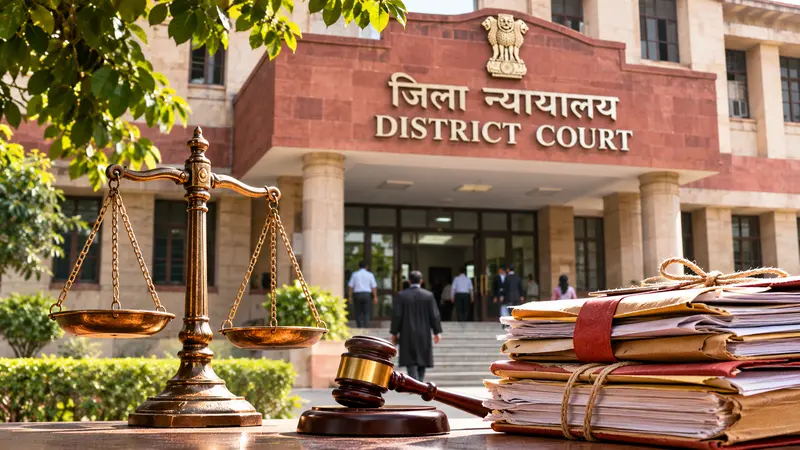
The Union Cabinet has approved the continuation of the Centrally Sponsored Scheme for Fast Track Special Courts for five more years, from 1 April 2026 to 31 March 2031, the Press Information Bureau said on 4 November 2026. The scheme, which covers rape cases and offences under the Protection of Children from Sexual Offences Act, has an outlay of Rs 3,788.04 crore. The Centre will pay Rs 2,353.15 crore from the Nirbhaya Fund and states and Union Territories Rs 1,434.89 crore.
The decision keeps the courts running and makes them larger. It also comes at a point when the government's own numbers show the courts working hard without yet reducing the pile of cases.
What the Cabinet approved
The number of courts is to rise from 779 at present, of which 399 are exclusive POCSO courts, to 850. The additional courts will go to districts chosen on the basis of pending rape and POCSO cases. The scheme runs in 29 participating states and Union Territories and has disposed of 4,02,457 cases since it began on 2 October 2019.
Each court will have one judicial officer and six support staff. The notable addition is a specialised Special Public Prosecutor assigned exclusively to each court. The scheme also encourages Vulnerable Witness Deposition Centres and child-friendly court spaces, so that survivors can give evidence without further distress. The Department of Justice will monitor performance through the FTSC Dashboard, progress reports and expenditure statements, and consult High Courts and state governments.
The scheme was launched under the Criminal Law (Amendment) Act, 2018, and after a Supreme Court order of 25 July 2019 directing exclusive special courts in districts with more than 100 pending POCSO cases.
Output has kept growing. A Lok Sabha reply in March 2026 put total disposals at 3,66,124 by 31 December 2025, with 774 courts working on 31 January 2026, including 398 POCSO courts. The Cabinet note's figures are 4,02,457 and 779.
The money is higher too. The previous three-year cycle had an outlay of Rs 1,952.23 crore, or about Rs 651 crore a year. The new cycle works out to about Rs 758 crore a year, an increase of roughly 16% that also pays for more courts and a dedicated prosecutor.
Why it matters: what the numbers show
These courts exist because ordinary courts could not cope. The government has said that regular courts dispose of about 3.2 such cases per court per month, against 9.5 in Fast Track Special Courts. That is a real gain, and the total of more than four lakh cases decided in seven years is large.
The less comfortable figures come from the Law Ministry's own release of March 2025. In 2024, 88,902 new cases were instituted in these courts and 85,595 were resolved. The ministry called that a 96.28% disposal rate. But a rate below 100% means the courts took in 3,307 more cases than they finished, so the backlog grew during the year.


The same release sets a benchmark: each court is expected to dispose of 41 to 42 cases a quarter and at least 165 a year. With 745 courts operating at the time, 85,595 disposals work out to about 115 cases per court, around 70% of the target, which matches the 9.5-a-month figure. At the benchmark, 850 courts could dispose of about 1,40,250 cases a year, well above the 2024 filings. Reaching that level is what would finally bring pendency down.
| Measure | Figure |
|---|---|
| Courts functional now | 779 |
| Target by the end of the scheme | 850 |
| Cases filed in 2024 | 88,902 |
| Cases resolved in 2024 | 85,595 |
| Benchmark per court per year | 165 |
| Actual per court in 2024 (about) | 115 |
The official releases read for this article do not give a current national count of pending cases in these courts. That is the most important number for judging the scheme, and it should be published alongside the disposals.
The official material does not explain the gap between target and actual. The Cabinet note points to the remedies it expects to help: a dedicated prosecutor in every court, full staffing and more courts where pendency is highest.
What to watch
Setting up courts is a state subject, in consultation with High Courts, and the numbers show the difficulty. The previous cycle aimed at 790 courts, and 779 are working after seven years. The target of 850 depends on states appointing judicial officers and prosecutors and paying their share. The dashboard run by the Department of Justice is the place to check whether additional districts actually get courts.
The scheme's stated goals include time-bound trials. The POCSO Act and criminal procedure law set timelines for completing investigation and trial, and the 2025 release concedes that delays persist. For survivors and their families, the measure that matters is not the number of courts but how long a case takes from charge sheet to judgment, and whether they are protected from repeated appearances. Those figures are not published in the Cabinet note.
Survivors and families can seek support through the Childline number 1098 and the women's helpline 181, and the law protects the identity of survivors in such cases. The next test of the scheme will be the first annual figures under the new cycle, which should show whether disposals have finally overtaken filings.
Sources
About the Author
A
Amita Sahani
Staff Writer
Amita Sahani writes for Wirony. Every story under this byline is reviewed and approved by an editor before it is published, and corrections are made openly.
A
5 min
What did you think?