/
'Don't travel by air': Supreme Court declines urgent hearing on festive fare surge; new rules start 1 January
A Supreme Court bench refused to list at once a plea alleging a 700% festive airfare hike and said passengers need not fly. The Centre notified aviation rules on 1 November that allow fare directions only in an 'extraordinary situation'; they take effect on 1 January 2027, after Diwali.
A
5 min
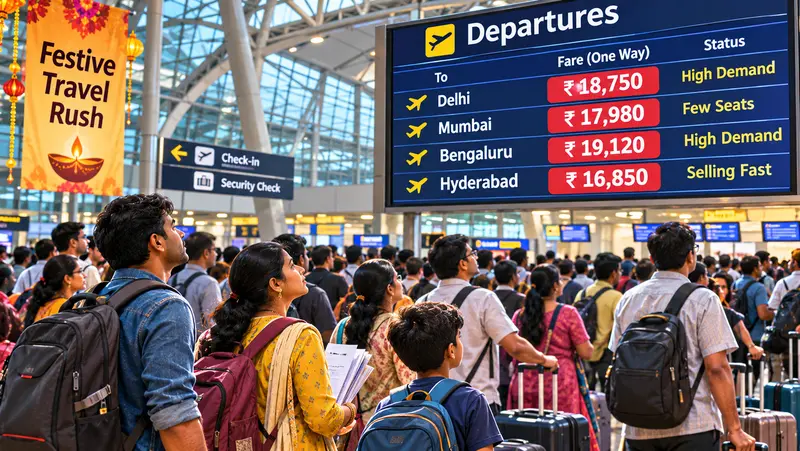
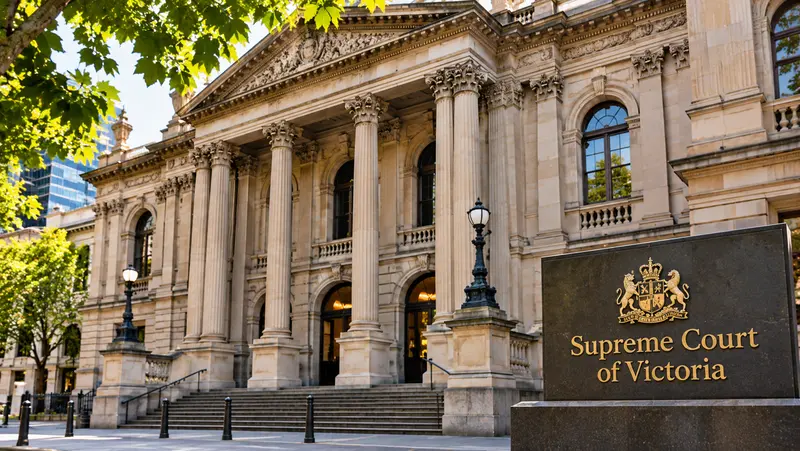
A Supreme Court bench has declined to hear immediately a plea that complains of a sharp rise in airfares ahead of Diwali, and its remark, "Don't travel by air", has drawn attention far beyond the courtroom. The bench of Justices Vikram Nath, Sandeep Mehta and Aparesh Kumar Singh was asked by an advocate to list the matter urgently. The advocate said that "the aviation fare has increased by 700 per cent", that air travel is an essential service and that the situation violates Article 14 of the Constitution, which guarantees equality before the law. The bench refused urgent listing and observed that people need not travel by air. The connected petition is listed on 16 November.
The remark should not be read as the court's last word on the subject. A refusal to hear a matter on a particular day says nothing on the merits, and the bench was dealing with a request for an emergency date, not with the fares themselves. The larger point is that the Centre has notified new aviation rules on fares, and they do not apply to this Diwali.
What the court was told
The urgent plea is linked to a pending public interest petition by social activist S. Laxminarayanan, who wants an independent regulator for the aviation sector and controls on what he calls unpredictable fluctuations in airfares and ancillary charges. The court first sought responses from the Centre and others on that petition in November last year. In January it called the fare increases "exploitation", flagged the exorbitant rises seen during festivals, and asked the Centre and the aviation regulator, the Directorate General of Civil Aviation, to file replies.
On 16 October the Centre told the court that administrative approval had been given to rules under the Bharatiya Vayuyan Adhiniyam, 2024, and that they were likely to be published in two weeks. The court asked Solicitor General Tushar Mehta to place the published rules before it. That is what happened next, as the rules were notified on 1 November, and they are now the main document for the hearing on 16 November.
The 700% figure needs care. It was stated in court by the advocate, and the reports do not give a route-by-route analysis behind it. The petition cites specific fares for one pair of cities: a rise on the Mumbai to Delhi route from Rs 11,531 to Rs 60,577, and on Delhi to Mumbai from Rs 5,223 to Rs 26,793. A separate report claims increases of up to 462% on Delhi to Mumbai. These come from a petition and from news reports, not from an official data set, so they should be treated as claims. Other reports are more concrete about one corridor: one-way tickets from Mumbai and Bengaluru to Patna were priced near Rs 30,000 on 7 November, the day before Diwali, several times a normal day's fare, with Delhi to Patna also rising ahead of Diwali and Chhath.
What the new rules allow
The Bharatiya Vayuyan Niyam, 2026, notified on 1 November, take effect on 1 January 2027. The provision that matters for fares is Rule 192. Under sub-rule (6), if the Central Government considers that an extraordinary situation has arisen and that intervention is necessary in the public interest, it can issue written directions to air transport undertakings limiting or capping airfares.
Several things follow from that wording. First, there is no permanent cap. Airlines will keep setting prices according to market conditions on ordinary days, and the power is held in reserve for emergencies. Second, the notification does not define an extraordinary situation or set a numerical trigger. Officials have given natural calamities and major disruptions as examples. Whether a festival with predictable demand counts is not answered in the text. Third, airlines will be required to submit their fare structures to the regulator one month in advance, although reports differ on whether this amounts to approval, and the notification does not introduce mandatory prior government approval of individual fares. Fourth, the fare shown on a booking website and on the ticket must state the total amount payable with a complete itemised break-up, which addresses the practice of adding fees late in the booking process.
The Aviation Minister, Ram Mohan Naidu, had said in December that the government keeps the power under the Aircraft Act to cap fares in extraordinary situations. The new rules put that power in a more specific place, but they do not change the fact that for this festive season the position is the same as before: no cap, and no rule that forces airlines to publish a limit.
Why fares spike and what flyers can do
Festival travel is lopsided. Millions of people want to go to the same few places, such as Patna, Lucknow or Kolkata, in the same few days, and the return flights run nearly empty. Airlines sell seats in price buckets, and as the cheaper buckets fill, only the expensive ones are left. The number of aircraft and slots does not rise to meet a short peak, so when demand jumps the price does the rationing. A cap would change who gets the seats, not how many seats exist, which is why the more durable answers are capacity, competition and transparency, and they are slower than a court order.
For now, travellers have limited but real choices. Book for dates a day or two on either side of the peak, since fares fall quickly outside it. Compare nearby airports and check whether a train or a two-leg journey is cheaper. Look at the full price including baggage and seat charges before comparing airlines. And check the Supreme Court's hearing on 16 November and the regulator's guidance for January, because the question of what counts as an extraordinary situation will decide whether the new rule is a real safeguard or a power that is rarely used.
A
5 min
What did you think?