/
Delhi air data gaps: up to 36 of 59 stations offline on Diwali night, Monday average 344
An analysis of CPCB data shows up to 36 of Delhi's 59 monitoring stations stopped reporting around 1 am after Diwali. The board's 4 pm bulletin gave Delhi 376 on Diwali, with all 59 stations, and 344 on Monday, with 47. AAP alleges manipulation; the board has not said why stations went dark.
P
4 min
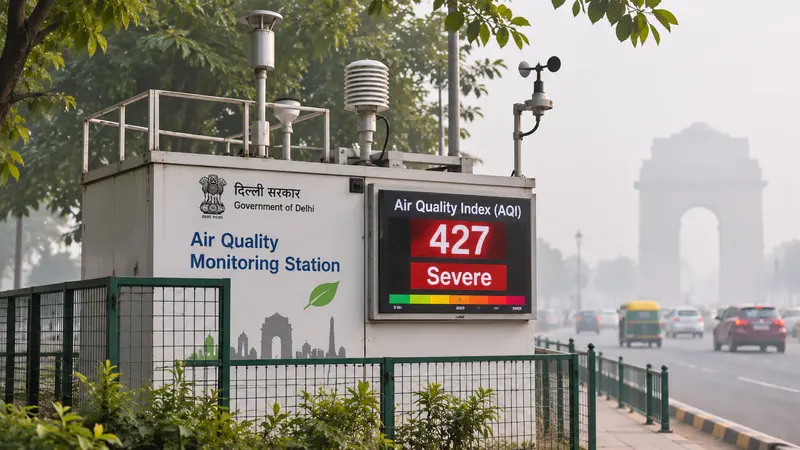
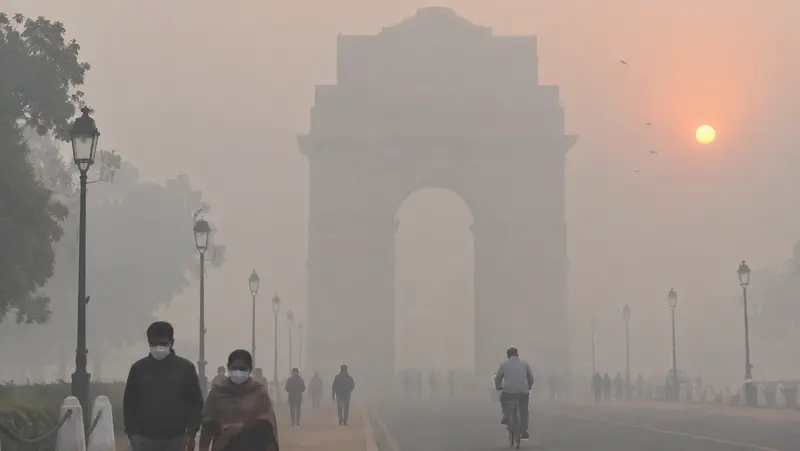
Delhi's air-quality network went partly dark on Diwali night, and the figure the Central Pollution Control Board published for Monday rests on fewer stations than the one it published for Sunday. An hour-by-hour analysis of the board's data by the Centre for Research on Energy and Clean Air shows that, of Delhi's 59 monitoring stations, one was missing data at 7 pm on Sunday, 8 November, 29 at midnight and 36 at 1 am on Monday, which left 23 reporting. The board's 4 pm bulletin on Monday put Delhi's 24-hour average at 344, in the very poor band, with 47 stations reporting. Its bulletin for Diwali day had given 376 with all 59.
The Aam Aadmi Party alleges that the gaps were deliberate and that the government manipulated the readings. The government has asked for details. The board had not explained the outages when this was written.
How many stations went dark, hour by hour
The count of stations without data climbed through the evening and fell through the morning, according to the analysis.
| Time | Stations without data (of 59) |
|---|---|
| 7 pm Sunday | 1 |
| 10 pm | 7 |
| 11 pm | 23 |
| Midnight | 29 |
| 1 am Monday | 36 |
| 2 am | 35 |
| 4 am | 20 |
| 6 am | 16 |
| 8 am | 7 |
| 9 am | 2 |
| 11 am | 1 |
The analysis does not name most of the stations. Reports named RK Puram, Pusa, NSIT Dwarka and Nehru Nagar among those with missing data, and said all four had recorded readings above 400 on Sunday. That matters because a station that stops reporting during the worst hours takes its highest readings out of the day's picture. The 24-hour average the board uses is calculated from the readings that arrive.
Anumita Roychowdhury of the Centre for Science and Environment called the gap "inexplicable", given the large public investment in what she describes as the country's densest monitoring network. She argued that real-time data should drive public health advisories and emergency measures.
What the board's two bulletins show
The board publishes a bulletin each day averaging the previous 24 hours up to 4 pm. The two most recent bulletins differ in their reach as well as in their numbers.
| City | Sunday 8 Nov, 4 pm | Monday 9 Nov, 4 pm |
|---|---|---|
| Delhi | 376, very poor, 59 of 59 stations | 344, very poor, 47 of 59 stations |
| Ghaziabad | 344, very poor | 324, very poor |
| Noida | 318, very poor | 332, very poor |
| Gurugram | 288, poor | 345, very poor |
| Faridabad | 291, poor | 350, very poor |
| Ballabgarh | 398, very poor | 316, very poor |
Of the 47 Delhi stations reporting on Monday afternoon, 40 were in the very poor band and seven in the poor band, and the worst readings were at Bawana (396) and Burari (393). Reports put the hourly city average at 370 at 8 am on Monday and 371 at 10 am, the worst post-Diwali morning since 2021. Diwali's average of 376 was reported as the highest for a Diwali in five years. Neighbouring towns moved in different directions on Monday: Gurugram and Faridabad rose by 57 and 59 points into the very poor band, while Ghaziabad and Ballabgarh fell.
The board has described its system in the past as automatic, with readings sent every 15 minutes and an index calculated each hour. A silent station's hours are simply absent from the day's average, so the average can move up or down depending on which stations are missing, and the bulletin carries a footnote listing the cities left out for want of data. Private monitors give very different numbers, because they use other scales and averaging. One international tracker showed 245 on the American index on Monday morning, which is not comparable with the board's scale.
The allegations, the answer so far and what is still unclear
Saurabh Bharadwaj of the Aam Aadmi Party accused the Delhi government of data fraud. He alleged that large water sprinklers were used near the Jahangirpuri station to bring its readings down, and that the government had put 20 new stations in open, green, low-traffic areas to lower the overall average. He compared accurate air data to blood-sugar readings that people rely on for medicine. The party made a similar claim last year, when it said stations run by several agencies went offline on Diwali night.
Delhi cabinet minister Kapil Mishra asked reporters to share details of the stations reported as non-functional and said he would seek action. None of the allegations has been confirmed in the reports read for this article, and the board and the Delhi Pollution Control Committee had not given an explanation for this year's outages.
Several things are still unclear. It is not known whether the outages came from power cuts, network faults, maintenance or something else, which stations were affected for how long, or whether the board will publish station-by-station availability for 8 and 9 November. The board's own bulletin offers one fixed point: Delhi's Monday average of 344 is based on 47 of 59 stations, and the figure for Sunday on all 59.
Sources
About the Author
P
Prateek Rawat
Staff Writer
Prateek Rawat is a contributor to Wirony. All articles published under this byline undergo editorial review and approval before publication, with any necessary corrections handled…
P
4 min
What did you think?