/
World Bank: India's extreme poverty fell from 27.1% to 2.6% in 2011-23, but youth unemployment is 15.9%
The World Bank's October Poverty and Equity Brief says India's extreme poverty rate fell from 27.1% to 2.6% between 2011 and 2023, lifting 496 million people out of poverty. It also flags stagnant real wages, youth unemployment of 15.9% and a poverty belt from Uttar Pradesh to West Bengal.
R
4 min
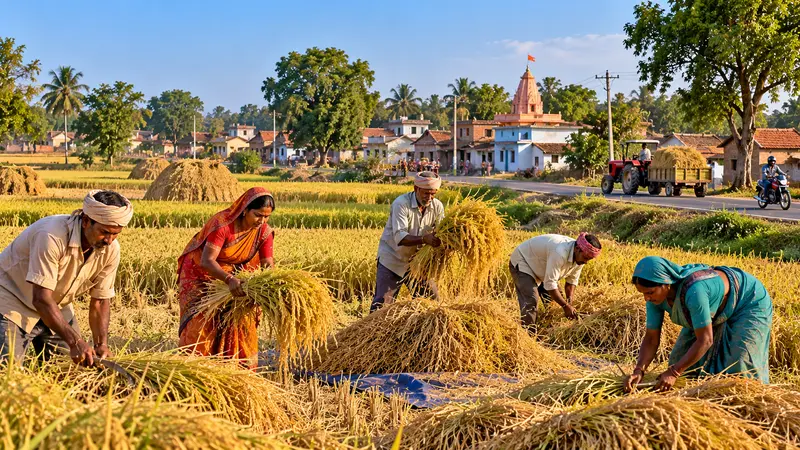
The World Bank says India lifted an estimated 496 million people out of poverty between 2011 and 2023, and that its extreme poverty rate fell from 27.1% to 2.6% of the population. The figures are in the Bank's October 2026 Poverty and Equity Brief, which called the decline one of the fastest in the world. The same brief also lists the problems that remain: stagnant real wages, rising youth unemployment, and a heavy concentration of poor people in a belt of states from Uttar Pradesh to West Bengal.
The headline numbers
| Measure | Start | End |
|---|---|---|
| Extreme poverty rate (2011 to 2023) | 27.1% | 2.6% |
| Below the USD 4.20 a day line (2021 prices) | 57.7% | 16.1% |
| Oxford multidimensional poverty index (2005-06 to 2019-21) | 53.8% | 16.4% |
The World Bank's own multidimensional measure puts the rate at 15.5% in 2022-23. The report found improvements in both monetary and non-monetary measures of poverty. The reports found do not state which poverty line lies behind the 2.6% figure, and they describe the USD 4.20 a day line as the threshold for lower-middle-income countries.
The poverty lines
The Bank uses three poverty lines in 2021 prices: USD 3.00 a day, the international extreme poverty line, USD 4.20 a day, the lower-middle-income country line, and USD 8.30 a day, the upper-middle-income country line. The brief's India figure at the USD 8.30 line is not given in the reports found. One report links the fall from 27.1% to 2.6% to the USD 3.00 line, but another does not say which line applies, so that link should be treated as unconfirmed.
The brief credits rising consumption, more jobs and expanded social transfers, including food subsidies. Employment rose by about 134 million between 2017 and 2023, nearly twice the growth in the working-age population. Much of the increase came from rural women entering paid work, which the report names as a major contributor to the fall in poverty.
The challenges the brief names are regional disparities, youth unemployment and poor-quality employment.

- Real wages stayed broadly unchanged.
- Most of the new jobs were in relatively low-productivity activities.
- Youth unemployment rose from 14.6% to 15.9% between the first quarters of 2025-26 and 2026-27, and rural young women were particularly affected.
- About 57% of India's poor live in a contiguous belt from Uttar Pradesh to West Bengal, and the report stresses creating productive jobs in these states.
At the USD 4.20 a day line, the Bank expects the poverty rate to fall from 14.2% in 2026 to 12.1% by 2028, at a slower pace than before. It calls these estimates indicative, based on microsimulations that could change with new data on the labour market and the wider economy.
An earlier World Bank release in June 2025 reported that India's extreme poverty fell from 27.1% in 2011-12 to 5.3% in 2022-23. The new brief gives 2.6% for 2023, and the difference reflects the years and poverty lines used, not a sudden fall in a year. A reader comparing the two figures should check the line and the year behind each of them.
Poverty estimates in India rely on household consumption surveys. The Bank cautions that some of the recent gains may reflect improvements in how the surveys measure consumption, along with genuine gains in living standards. Because the reports found rely on the Bank's brief and not on the survey data, the size of this effect is not known. They also note that earlier World Bank releases gave different numbers for different years and poverty lines, so the new 2.6% figure should not be read as comparable with them without checking the line and the year.
The Bank called the fall one of the fastest in the world, and its brief says that further progress depends on jobs. The same brief says that wages have not risen in real terms and that young people are finding it harder to get work, so the next stage of the decline will need more productive employment, especially in the states where the poor are concentrated, from Uttar Pradesh across to West Bengal.
R
4 min
What did you think?