/
Rupee slips to 94.98 against the dollar, third straight fall, as crude stays high and foreign investors sell
The rupee fell 5 paise to 94.98 against the dollar in early trade on Monday, after closing at 94.93 on Friday. It is the third straight day of losses. High crude, West Asia tension and foreign selling are cited; reserves are reported to have fallen to $721.016 billion.
R
4 min
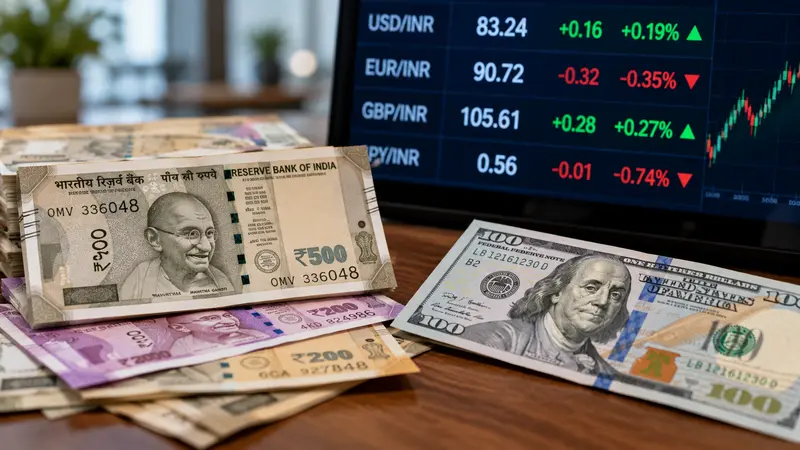
The rupee fell 5 paise to 94.98 against the US dollar in early trade on Monday, 26 October. It opened at 94.92 and weakened to 94.98, compared with Friday's close of 94.93. It was the third day in a row that the currency has fallen, and it followed a bigger dip on Friday. The move is a small one in rupee terms, but the level, which is close to 95, has drawn attention to a currency that is under steady pressure from oil and from the flow of foreign money out of the country. Brent crude is about $115, and it is the rupee that pays for the difference between that price and the one that the country's budget assumed.
Why the rupee is under pressure
The reasons given by the reports are the same as those behind the weakness of the stock market this month. Brent crude was reported at about $114.48 a barrel in early trade, and one report says that prices surged beyond $115. Oil had settled at a six-month high of $116.72 on Friday on fears of a US strike on Iran and attacks on Saudi Arabia by Houthi forces. India imports about 90 per cent of its oil, and every rise in the oil price increases the demand for dollars from the refiners that pay for it.
The second reason is foreign selling of shares. Foreign portfolio investors have withdrawn about Rs 48,056 crore from Indian equities in October so far, and when they sell they convert rupees into dollars. An analyst quoted in one report expects a slightly negative bias for the rupee because of geopolitical uncertainty, high crude prices and selling by foreign institutional investors.
What the central bank is doing
One report says that the Reserve Bank of India is stepping in to support the rupee, and that the country's foreign exchange reserves fell by $5.011 billion in the latest weekly data, taking the total to $721.016 billion. The other reports do not mention any central bank action on the day, and the RBI does not announce its operations in the market. A fall in reserves is consistent with the bank selling dollars to slow the currency's decline, but it also reflects changes in the value of the gold and foreign assets that make up the reserves, so it does not by itself prove intervention.
It is easy to describe a level near 95 as a record low, but the reports available do not support that. They describe 94.98 as a daily fall, and the results that mention record lows refer to earlier years and much lower levels. The rupee has been weakening for a long time, and what the present fall shows is how quickly it can move when oil and flows turn against it.
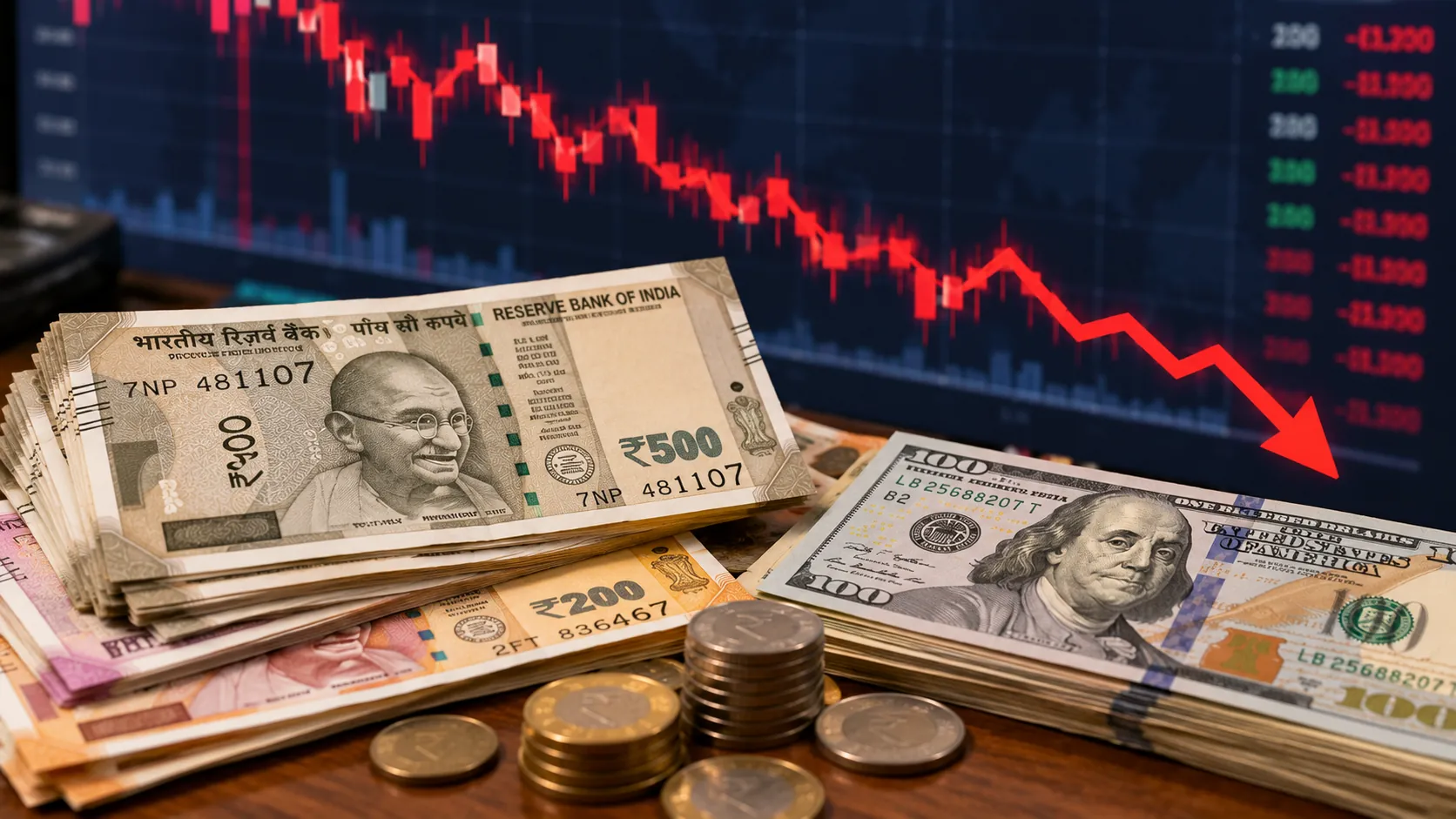


A weaker rupee has effects that reach households. Imported goods, from fuel to electronics and edible oil, become more expensive, which can add to inflation. Students who study abroad, travellers and families that send money overseas need more rupees for each dollar. Exporters gain, because they earn dollars, and so do families that receive money from relatives abroad. Companies that borrowed in dollars see their repayments rise in rupee terms.
For the government and the RBI, the main worry is the combination of a weak currency and expensive oil, since it widens the current account deficit and raises prices at the same time. The RBI has tools. It can sell dollars from its reserves, tighten rules on foreign borrowing or take other steps to draw in foreign money, and it has used them in the past.
For ordinary households, the effect of a few paise is small, but a steady slide adds up over months. The first signal is crude oil: a fall below $110 would take pressure off, and a further rise would push the rupee through 95. The second is the flow of foreign money, which depends on the calm of global markets and on how Indian companies' results look. The third is the central bank meetings in the United States, Europe and Japan this week, which can move the dollar. A listing such as that of Jio Platforms on 28 October could bring some foreign buying, which would help.
R
4 min
What did you think?