/
Reliance posts record Rs 62,409 crore EBITDA as refining drives 85% of the gain; shares jump nearly 12%
Reliance's September-quarter revenue rose 27.8% to Rs 3,62,268 crore and EBITDA 23.9% to a record Rs 62,409 crore. Oil-to-chemicals supplied about 85% of the EBITDA rise, Jio grew steadily and retail slipped. The shares gained nearly 12%, their best day since April 2020.
A
5 min

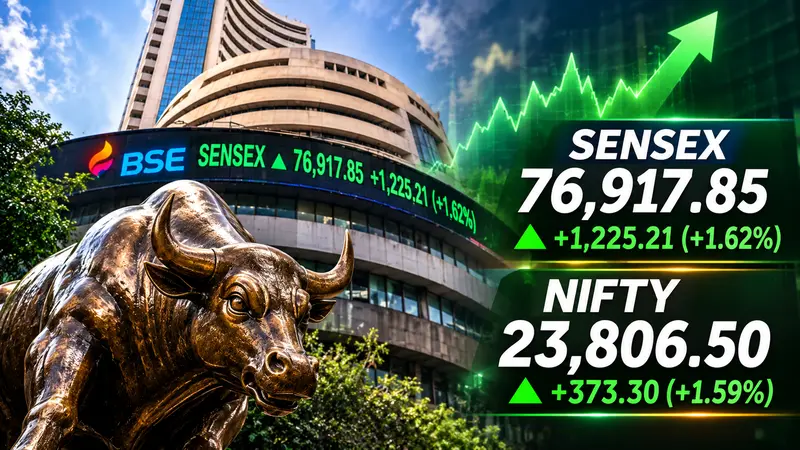
Reliance Industries has reported the strongest quarter in its history for the three months to 30 September 2026. Consolidated gross revenue rose 27.8% to Rs 3,62,268 crore and EBITDA rose 23.9% to a record Rs 62,409 crore. Profit after tax, including the share of associates and joint ventures, rose 33.8% to Rs 29,550 crore. The profit attributable to shareholders was about Rs 25,550 crore, up roughly 41% and well above the average analyst estimate of about Rs 21,367 crore. On Monday 2 November the shares jumped nearly 12% to close near Rs 1,300, their best single-day gain since April 2020, adding more than $19 billion to the company's market value.
Two profit numbers are in circulation and both are correct, because they measure different things. The Rs 29,550 crore figure is profit after tax before splitting out minority shareholders in subsidiaries such as Jio Platforms and Reliance Retail, and it includes earnings from associates. The Rs 25,550 crore figure is what belongs to Reliance's own shareholders. The 41% growth quoted in some reports refers to the second figure, while the 33.8% refers to the first. When a headline mixes the two, the comparison with analyst estimates becomes misleading, so it is worth checking which profit a number refers to.
One segment did most of the work
The most important line in the results is the oil-to-chemicals business. Its EBITDA rose 67.9%, from Rs 15,008 crore to Rs 25,203 crore. That one segment supplied about Rs 10,195 crore of the Rs 12,042 crore increase in consolidated EBITDA, which is roughly 85% of the whole gain. The company's own consolidated margin was 17.2%, and some coverage notes that this is slightly below the 17.8% of a year earlier, so the profit rose because the base got bigger, not because the business became more efficient.
The refining volumes explain why this is a price story and not a volume story. Throughput actually slipped to 20.6 million tonnes from 20.8 million, and production for sale was flat at 18.1 million tonnes. What changed was the margin the company earned on each tonne: the segment's EBITDA margin rose to 10.9% from 9.3%. Management put this down to supply disruptions and low inventories that held up the prices of diesel and aviation fuel, along with changes in the company's crude sourcing and the markets where it sells its products. Diesel refining margins have stayed close to historic highs because of tight global supply and the disruption in the Middle East, where the war and the closure risk around the Strait of Hormuz have kept Brent crude above $100 a barrel.
That is the part investors should read carefully. A margin earned from a shortage lasts only as long as the shortage. The results themselves acknowledge the risk: if supply recovers and refining margins narrow, earnings can fall unless other parts of the business improve to offset it. The diplomatic talks that could reopen the strait are therefore not only a geopolitical story for Reliance, they are a variable in its next few quarterly results.

Jio steady, retail the weak spot
Jio Platforms delivered the kind of steady growth that analysts like. Revenue rose about 11% to Rs 40,475 crore on the operating measure, EBITDA rose 16.6% to Rs 21,879 crore, and profit after tax rose 13.7% to Rs 8,387 crore from Rs 7,375 crore. Average revenue per user increased to Rs 218.8 from Rs 211.4, and the customer base grew to 542.4 million from 506.4 million. During the quarter the company crossed 300 million 5G mobility subscribers and 30 million fixed broadband subscribers. Reliance holds about 64.5% of the business, so a large part of this profit belongs to outside shareholders.
Reliance Retail was the weak spot. Gross revenue rose 6.4% to Rs 91,716 crore compared with the prior year, adjusted for the demerger of the consumer brands business. But EBITDA fell 8.6% to Rs 6,228 crore, the margin was 7.8%, and profit after tax dropped 24.3% to Rs 2,611 crore from Rs 3,451 crore. Management pointed to festive shopping that shifted into the next quarter, heavy investment in online and quick commerce, and higher input costs. The quarter also carried a Rs 108 crore impairment linked to the 7-Eleven convenience store venture, although retail EBITDA would still have fallen 8.6% without it. Quick commerce is a business where growth is bought with discounts and dark stores, and the margin cost shows up before the scale benefits do.
The balance sheet and what the rally prices in
Net debt fell to Rs 1,17,140 crore from Rs 1,22,914 crore in the previous quarter, even as the company spent Rs 38,153 crore on capital expenditure, most of it on oil-to-chemicals and new energy projects. Finance costs, however, were up 24.2% from a year earlier, a reminder that the group is still funding a very large investment programme.
The market reaction says as much about sentiment as about the numbers. The stock had fallen more than 20% earlier this year, so part of Monday's jump is a recovery from a depressed base. According to data compiled by a financial information provider, 32 analysts now rate the stock a buy and none rates it a hold or sell, the first time in close to a decade that no analyst holds a cautious view. On Tuesday the shares opened about 1.3% lower, which is a normal pause after a move of this size. A unanimous buy rating also leaves little room for disappointment, since every analyst who could upgrade already has.
For a reader trying to judge the quarter, the useful summary is this. The headline growth is real, the balance sheet is improving and Jio is compounding. But about 85% of the EBITDA increase came from a single segment whose margin depends on fuel shortages, while the consumer-facing retail business, which the company has spent years building, saw its profit fall by almost a quarter. The next two quarters will show whether the refining boom is a temporary windfall, whether the festive demand that slipped out of this quarter shows up in the next, and whether retail can start converting its online investment into margin.
A
5 min
What did you think?