/
Windfall tax revised: diesel export levy Rs 11.50 a litre, ATF Rs 11, petrol export duty scrapped
The Finance Ministry has raised the export levy on diesel to Rs 11.50 a litre from Rs 8.50 and on aviation turbine fuel to Rs 11 from Rs 10.50, and cut the petrol export levy to zero from Rs 2.50. The new rates apply from 31 October for the next fortnight; domestic duties are unchanged.
P
3 min
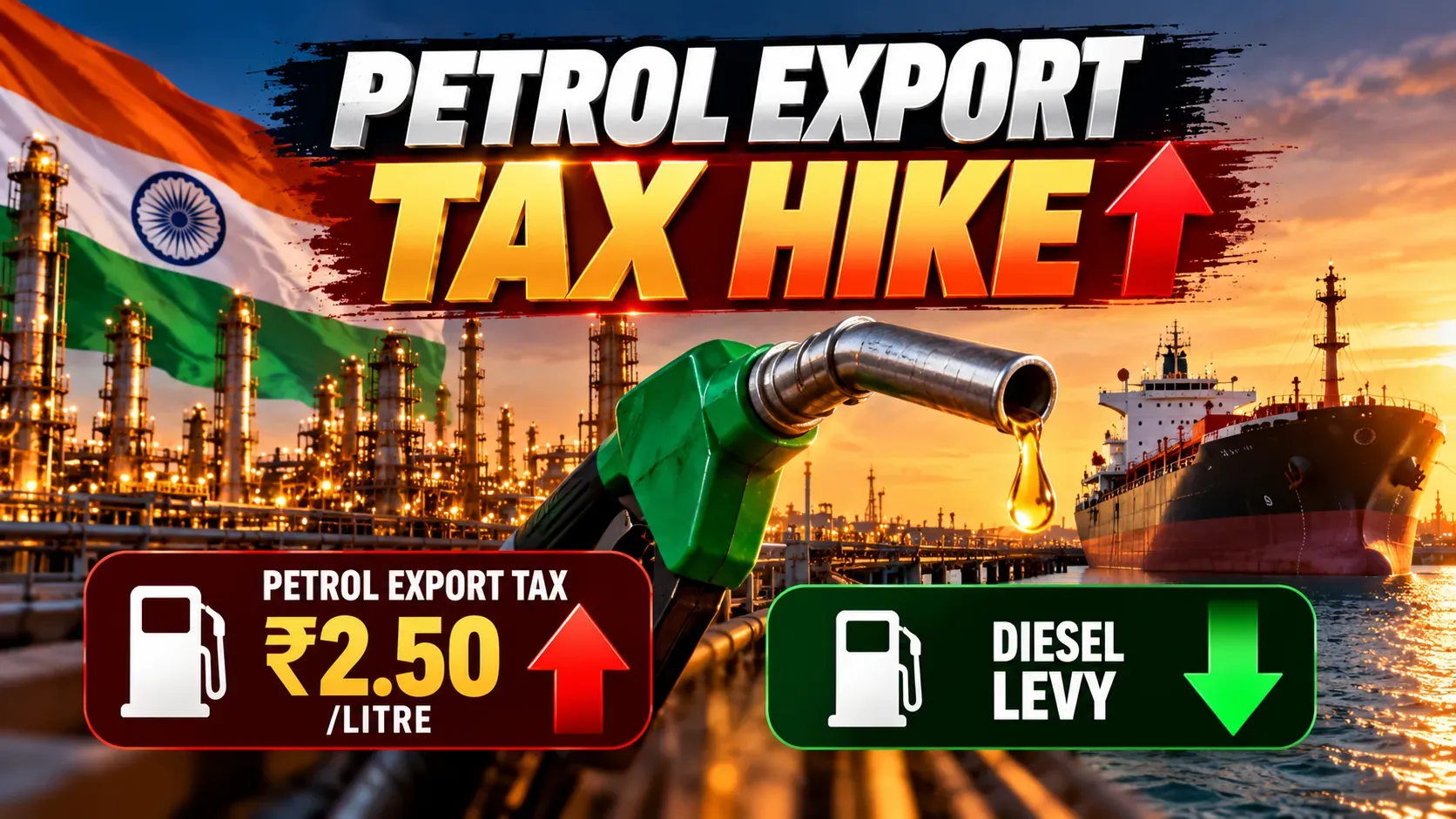
The Finance Ministry has raised the export duty on diesel and aviation turbine fuel and scrapped the one on petrol, in the latest fortnightly revision of what are known as windfall taxes. From 31 October, the combined special additional excise duty and road and infrastructure cess on exported diesel is Rs 11.50 a litre, up from Rs 8.50. The duty on ATF exports is Rs 11 a litre, up from Rs 10.50, and the petrol export duty is cut to zero from Rs 2.50. The new rates apply for the next fortnight, and domestic duties on petrol and diesel sold in India are unchanged.
The new rates
| Product | Previous rate per litre | New rate per litre |
|---|---|---|
| Diesel (special additional excise duty plus road and infrastructure cess) | Rs 8.50 | Rs 11.50 |
| Aviation turbine fuel | Rs 10.50 | Rs 11.00 |
| Petrol | Rs 2.50 | Nil |
The Finance Ministry issued the notification on Saturday. The diesel rate rose by Rs 3 a litre. One report names only the special additional excise duty on petrol and does not break down the diesel and ATF levies, so the reports differ on how the diesel figure is made up.
How the duties work
The duties were first imposed on diesel and ATF exports on 27 March 2026, amid tensions in West Asia, and the petrol duty followed on 16 May. The government reviews them every fortnight. The rates are set on the basis of the average international prices of crude oil, petrol, diesel and ATF since the previous review, and the potential gains that refiners and exporters could make from overseas sales.
The levies are described as windfall taxes, which capture extra profit when global fuel prices are high. The stated aims, according to the reports, are to stop exporters from profiting disproportionately when international prices spike, and to keep fuel available at home by making exports less attractive. The government is balancing refiners' profits with the need for enough fuel for domestic consumers.
One report says that the changes can affect the refining margins and per-litre export profits of Reliance Industries, Indian Oil Corporation, Bharat Petroleum and Hindustan Petroleum. Another refers more generally to exporters and domestic refiners. The reports found do not report any share price moves or analyst reactions to the revision.
The revision comes against a background of volatile energy markets. Brent crude rose about 2% on 30 October on fears of renewed US–Iran military action that could affect supply, and market reports that day put it at between USD 113 and USD 117 a barrel. Two tankers with Indian crew were also attacked in the Strait of Hormuz this week.
The cut in the petrol export duty to zero removes the levy that was introduced on 16 May. The reports found do not say how the average prices that the government used compare with those used in the previous fortnight.
The next review is due in about a fortnight, when the government will recalculate the rates using the prices since this revision. Exporters will want to see whether the diesel and ATF levies keep rising or whether the petrol duty returns. The reports found do not give the volumes of diesel, petrol or ATF that India exports, and they do not say how much revenue the duties have raised since March.
Domestic duties on petrol and diesel sold in India stay as they were, so the revision does not directly affect pump prices. One linked headline in the coverage speaks of possible fuel price increases after Diwali, but the reports on the revision do not confirm any such increase.
P
3 min
What did you think?