/
S&P expects the RBI to raise rates 25 bps in December and keeps India growth at 7%
S&P Global Ratings expects the RBI to raise rates by 25 basis points in December and again in early 2027, and sees India growing 7% in FY27 and FY28. It forecasts CPI inflation averaging 5.3% this fiscal year after October's 6.1%, with El Nino a risk. This is not investment advice.
R
4 min
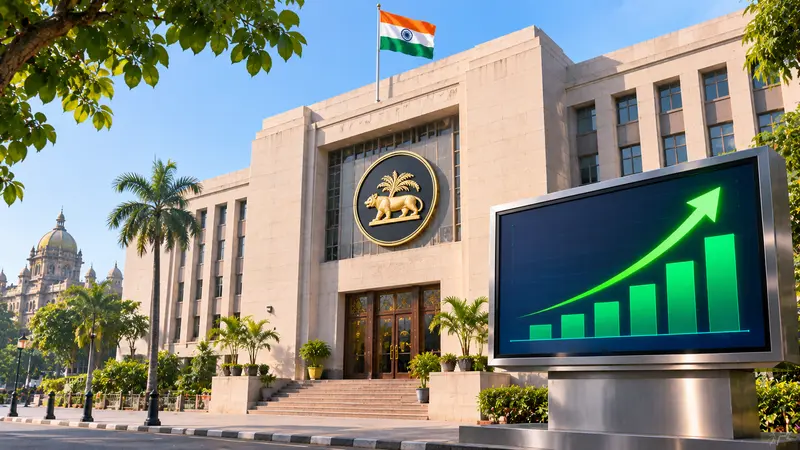
S&P Global Ratings expects the Reserve Bank of India to raise interest rates by 25 basis points in December, and again by the same amount in early 2027, according to its Asia-Pacific economic outlook released on 22 November 2026. It keeps its forecast for India's growth at 7 per cent in both FY27 and FY28, and says that El Nino and rising costs will push up food prices and overall inflation. This is a report on a forecast and not investment advice.
S&P sees growth of 7 per cent in FY27, the current fiscal year, and 7 per cent in FY28. One report says that it cut the FY28 forecast by 0.2 percentage points from 7.2 per cent. India grew 7.8 per cent in FY26. S&P says India and Vietnam will be the fastest-growing economies in the Asia-Pacific region in 2027, when it expects regional growth of 4.4 per cent, down from 4.8 per cent in 2026.
For inflation, it forecasts consumer prices rising an average of 5.3 per cent in FY27, against about 2 per cent in FY26, easing to 4.7 per cent in FY28. The risks, it says, are tilted to the upside. The latest reading was 6.1 per cent in October, above the 6 per cent upper limit of the RBI's tolerance band, which is 2 to 6 per cent.
| Measure | S&P forecast |
|---|---|
| GDP growth, FY27 | 7% |
| GDP growth, FY28 | 7% |
| Consumer inflation, FY27 average | 5.3% |
| Consumer inflation, FY28 | 4.7% |
| Last CPI reading (October) | 6.1% |
| RBI move | +25 bps in December and +25 bps in early 2027 |
| Rupee | 94.5 per dollar by March 2027; 96 by March 2028 |
| Brent crude, 2027 average | $85 a barrel |
Why prices are rising
S&P points to El Nino, deficient summer rainfall, lower reservoir levels and an uneven monsoon, which threaten food output including the winter crop. Higher input costs are being passed on to consumers, and the lagged effects of earlier disruptions add to this. It says food prices will rise across the Asia-Pacific region, and most in India.
On its forecast the policy rate would reach 6 per cent by March 2027, stay there until March 2028 and then fall to 5.5 per cent by March 2029. The reports read do not give the current repo rate.
A rate rise would raise the cost of loans linked to the repo rate, such as home loans, and S&P's call comes as the Monetary Policy Committee prepares for its December meeting. The committee decides, and the central bank's own statements are the only guide to what it will do.
S&P expects the rupee to weaken from 91.5 per dollar at the end of FY26 to 94.5 by March 2027, 96 by March 2028 and 97 by March 2029. It expects Brent crude to average $85 a barrel in 2027, against $97 so far in 2026. A weaker rupee and dearer oil both add to prices in India, which imports most of its oil.
The data that follows
The July-to-September quarter GDP figure is due on 30 November. The RBI had forecast 7.2 per cent growth for that quarter and the finance ministry's economic review put it at 7.35 per cent. A reading that differs from the forecasts will change the odds on a December rate move.
The repo rate is the rate at which the RBI lends to banks, and it sets the base for borrowing costs in the economy. Floating-rate home and other retail loans are linked to an external benchmark, usually the repo rate, so a rise in the rate passes quickly to borrowers' monthly instalments. The RBI's medium-term inflation target is 4 per cent, with a tolerance band of 2 to 6 per cent, and the central bank is expected to act when inflation stays outside that band. October's 6.1 per cent is the first reading above it in this report.
Why a forecaster's call matters
A rating agency's forecast does not decide what the committee does, but it adds to the market's expectations, and bond yields and currency moves reflect them. If the committee does raise rates in December, it would be a turn after a period in which the rate was held or cut. The decision rests on the data that arrive before the meeting, the November inflation reading above all.
The three things to watch are the November inflation figure, the quarterly GDP release on 30 November, and the Monetary Policy Committee's decision in December. A forecast from a rating agency is one view, and the committee's choice will rest on its own reading of the data. Readers should not treat this report as advice on loans, deposits or shares.
The Reserve Bank of India and the Ministry of Statistics and Programme Implementation are the official sources for the repo rate, GDP and inflation data. S&P's forecasts are published in its outlook.
About the Author
R
Reyaansh Agarawal
Staff Writer
Reyaansh Agarawal contributes to Wirony, covering stories that are carefully reviewed and approved by the editorial team before publication. Wirony is committed to maintaining tran…
R
4 min
What did you think?