/
SEBI's new settlement rules are in force: Rs 25,000 fee and a fast track up to Rs 10 lakh
SEBI's Settlement of Administrative and Civil Proceedings Regulations, 2026 took effect on 7 November. The application fee is Rs 25,000 for individuals and Rs 35,000 for others, cases up to Rs 10 lakh get a fast track, and people with pending matters have until 4 February 2027 to apply.
A
6 min
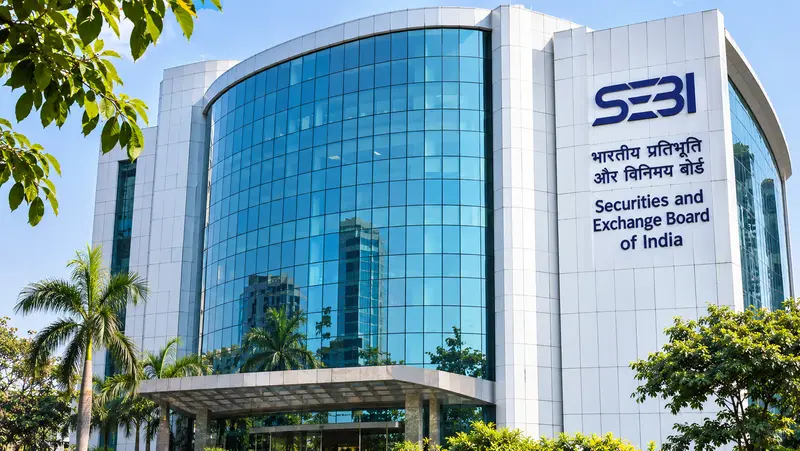
The Securities and Exchange Board of India's Settlement of Administrative and Civil Proceedings Regulations, 2026 came into force on 7 November 2026, and they replace the Settlement Proceedings Regulations of 2018. In plain terms, a person or company that faces an enforcement case can offer to pay a negotiated amount and accept some conditions in exchange for closing the matter, usually without admitting or denying the findings. The new rules keep that idea and change the fee, the arithmetic and the deadlines. SEBI announced the commencement in its press release No. 70/2026 of 6 November. This article is for information and is not investment advice, and it is not legal advice for anyone with a case pending.
What changed on 7 November, and who can settle?
The regulations were notified in October, and the 2018 rules stopped applying at the end of 6 November. Anyone who wants to settle now files an application online, with a fee of Rs 25,000 for a natural person and Rs 35,000 for anyone else, such as a company or an intermediary. SEBI's frequently asked questions say the fee is paid through a payment gateway on its portal, and the application format is Part A of Schedule I.
The rules cover what they call specified proceedings. These are enforcement proceedings that SEBI may start or has started and that are pending before it, as well as appeals pending before the Securities Appellate Tribunal or the Supreme Court. One application has to cover every proceeding that arises from the same cause of action. The routes are an application made on one's own initiative, one made after a pre-show cause notice, one made after a show cause notice, one made during an appeal, a fast track, and a confidential settlement for people who come forward before SEBI has acted.
Some matters cannot be settled. The regulations bar an application if the same default was already rejected at an earlier stage, unless the reasons for rejection no longer apply, and refiling then carries an additional 20% on the amount. They also bar it while an audit, investigation, inspection or examination on the same cause is pending, with an exception for confidential settlement, and for anyone classed as a wilful defaulter, a fraudulent borrower or a fugitive economic offender. SEBI may also decline a settlement where the default affects the whole market, causes large losses to investors or damages market integrity, unless the money and the remedial steps can make up for it. A person can withdraw an application until the decision of the panel is communicated, but refiling after withdrawal costs another 20%.
How the settlement amount is worked out
The 2026 rules use a formula. The settlement amount equals a base amount multiplied by the sum of factors for the stage of the proceeding, the regulatory action, the gravity of the default and any aggravating factors, less any mitigating factors. If that sum comes to less than one, it is taken as one. The floor on the amount is Rs 3 lakh for a first-time applicant and Rs 7 lakh for anyone else.
The base amount starts from the minimum statutory penalty on the date of the application, multiplied by a factor that depends on who is applying.
| Applicant | Multiple of the minimum penalty |
|---|---|
| Independent director | 2 |
| Non-executive director | 3 |
| Executive director, promoter in control or key managerial person | 3.5 |
| Other natural person | 2.5 |
| Body corporate, intermediary or pooled investment vehicle | 4 |
| Market infrastructure institution | 5.5 |
If SEBI identifies the applicant as the lead conspirator, mastermind or key operator, the base amount is doubled. Where the gains or losses can be quantified, the applicant must also give up the amount as disgorgement. Interest is charged on the principal from the date of each violation to the date of the application, at 9% where no final order has been passed. If a final order exists, the rate is 9% up to that order and 12% after it.
SEBI has published a settlement amount calculator, with an explainer video, on its website, and its frequently asked questions say requests for an indicative computation can go to a dedicated help desk, which aims to reply within five working days. The questions are explanatory and not binding.

Deadlines, the fast track and pending cases
Two fast-track routes are new in this form. The first, in regulation 27, is for matters that start with a notice and mainly concern delayed disclosures, such as late returns, reports or documents. The applicant has 30 days from the notice, and SEBI can add 15 days at a cost of 1% more. The second, in regulation 28, is for cases where the settlement amount is up to Rs 10 lakh. It needs no separate application, and the Internal Committee can send a pending application there if no disgorgement or remedial step is needed. These cases go directly to the Panel of Whole Time Members without the High Powered Advisory Committee.
The main deadlines, as the regulations set them, are these.
| Step | Time allowed |
|---|---|
| Apply after a pre-show cause notice | 60 days from the notice |
| Apply after a show cause notice | 90 days from service |
| Pay a fast-track amount | 30 days, extendable by 15 days with 1% more |
| Pay a settlement amount after the demand notice | 30 days, extendable by up to 30 days with 1% more |
| Apply for matters already pending on 7 November | By 4 February 2027 |
For cases that began under the old rules, the transition clause (regulation 44) sorts them in three groups. Where the panel accepted the committee's recommendation before 7 November, the 2018 rules continue to apply. Where it had not approved a recommendation by 6 November, the applicant has 30 days from SEBI's notice to choose between the old rules and refiling under the new ones. Where no recommendation existed on 7 November, the 2026 rules apply. Anyone who never applied, or whose application was rejected, returned or withdrawn under the 2018 rules, can use the new ones until 4 February 2027.
SEBI can relax most timelines within 30 days after they expire, but not the deadlines for applying after a show cause notice or a pre-show cause notice. Settlement does not mean a case is treated as trivial: the rules let the regulator refuse where the harm reaches the wider market, and the formula makes the cost of settling higher for directors and promoters than for others. What the changes will do to the number of cases that end this way will be known only from the orders SEBI issues over the coming months.
Sources
- Securities and Exchange Board of India (Settlement of Administrative and Civil Proceedings) Regulations, 2026 (Securities and Exchange Board of India)2026-10-08
- Frequently asked questions on the Settlement Regulations, 2026 (Securities and Exchange Board of India)2026-11-06
- Press release No. 70/2026: commencement of the Settlement Regulations, 2026 (Securities and Exchange Board of India)2026-11-06
About the Author
A
Amita Sahani
Staff Writer
Amita Sahani writes for Wirony. Every story under this byline is reviewed and approved by an editor before it is published, and corrections are made openly.
A
6 min
What did you think?