/
Sensex and Nifty reopen after Balipratipada from 81,106 and 25,044: what to watch
Indian markets reopened on 11 November after the Diwali-Balipratipada holiday, with the Sensex last at 81,106.65 and the Nifty at 25,044.65. Since then US inflation came in hot, Fed hike bets rose and Brent fell below $92. Closing levels were not available when this was written.
R
4 min
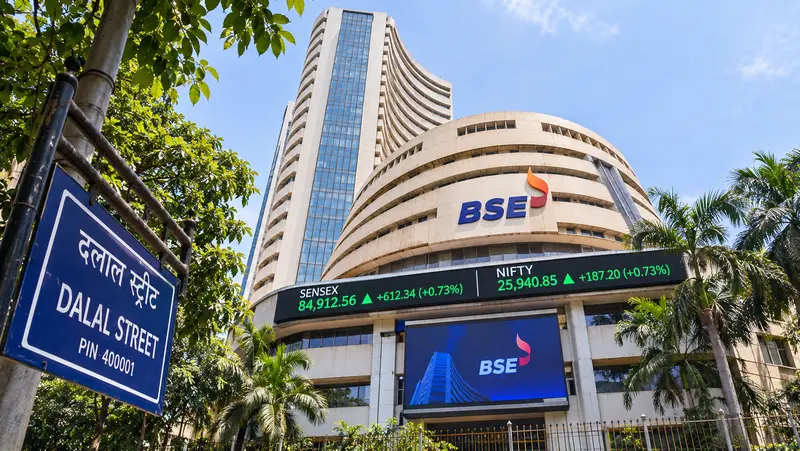
The BSE and the National Stock Exchange reopened on Wednesday, 11 November 2026, after being shut on Tuesday, 10 November, for Diwali-Balipratipada. The last session before the break was Monday, 9 November, when the Sensex rose 107.25 points, or 0.13%, to 81,106.65, and the Nifty 50 gained 58.25 points, or 0.23%, to 25,044.65. This article was written before the day's session ended, so it gives the starting point and the things the market had to price, not closing levels. It is for information and is not investment advice.
Where the market stood before the break
The 9 November session was a narrow one. The Sensex opened at 81,327.29, against a previous close of 80,999.40 from the Diwali Muhurat session on 8 November, touched a high of 81,339.41 and a low of 80,519.31 before settling. The Nifty opened at 25,003.65 and ranged between 24,838.75 and 25,084.05.
The gains were concentrated in a few places. The Nifty PSU Bank index rose more than 3% and pharmaceutical shares gained, while information technology shares fell, with the Nifty IT index down more than 1%. The move came after a run of gains in the previous week that took both indices to their best week since 2021, which means the market entered the holiday near its recent highs.
| Index | 9 November close | Change |
|---|---|---|
| Sensex | 81,106.65 | +107.25 (0.13%) |
| Nifty 50 | 25,044.65 | +58.25 (0.23%) |
What changed while the exchanges were shut
Three developments came in while Indian markets were closed.
First, US inflation data on 10 November showed consumer prices rising 0.4% in October, above the 0.3% expected, with core prices up 0.3%. Traders now price a quarter-point rate rise by the Federal Reserve in December in full, and put a 13.6% probability on a half-point rise. US stocks fell and Treasury yields jumped after the report. Higher expected US rates tend to strengthen the dollar and weigh on emerging-market equities, including India's, through foreign investor flows.
Second, crude oil fell. Brent settled below $92 a barrel on 9 November, its lowest close since 31 August, after President Donald Trump said further strikes on Iran were highly unlikely and that the war was effectively over militarily, and on hopes of a diplomatic route that could reopen the Strait of Hormuz. Brent was about 22% below the six-month high of $118 reached on 30 October. Lower crude helps India, which imports most of its oil, because it eases the import bill, inflation and the rupee. Tehran denied reports of planned talks, so the move rests on expectations and not on an agreement.
Third, the Russia-Ukraine talks began. Russian, Ukrainian and American delegations met in Abu Dhabi on 10 November and were due to meet again on Wednesday, which adds to the geopolitical backdrop for oil.
What to watch on Wednesday and Thursday
The immediate cue is how Indian shares respond to the US inflation number and the stronger case for a Fed rise. On the technical side, some analysts flagged 25,100 on the Nifty and 81,400 on the Sensex as a level that, if broken, could open the way to 25,200 to 25,250 and 81,700 to 81,800. These are analysts' views, not official forecasts.
The next domestic data point is India's retail inflation for October, due from the statistics ministry on Thursday, 12 November, at 4 pm. September was 5.54%, and the Reserve Bank raised the repo rate to 5.50% on 7 October. A reading above expectations would add to the case for tightening, while a lower number would help rate-sensitive shares such as banks and housing finance.
The movement in public sector banks and the weakness in information technology on 9 November are the two sector trends to follow: whether the PSU bank rally continues, and whether technology shares recover as US yields rise. For the day's final levels and sector moves, readers should check the exchanges' own end-of-day reports on the NSE and BSE websites.
The run into the holiday was strong. The Sensex gained 2,009 points to 79,310 on 5 November for its sixth straight rise, and 1,718 points to 81,028 on 6 November for its seventh, with the Nifty topping 25,000. The special Muhurat session on Sunday, 8 November, ended with the Sensex at 80,999 and the Nifty at 24,986, and the market then added a little on Monday. A rally of that size means that expectations going into the reopening are higher than they were a fortnight ago, and a pause or a profit-taking dip would not by itself signal a change of trend. Smaller companies lagged the large ones in the run-up, which is a point to check in the day's closing breadth figures.
The holiday also affects settlement. Under India's one-day settlement cycle, trades done on Monday settle on the next working day, which this time is Wednesday, so payouts and deliveries for Monday's trades were delayed by the closure.
Sources
About the Author
R
Reyaansh Agarawal
Staff Writer
Reyaansh Agarawal contributes to Wirony, covering stories that are carefully reviewed and approved by the editorial team before publication. Wirony is committed to maintaining tran…
R
4 min
What did you think?