/
Sensex jumps 2,009 points to 79,310 in sixth straight gain; autos and banks lead as capital goods reverse
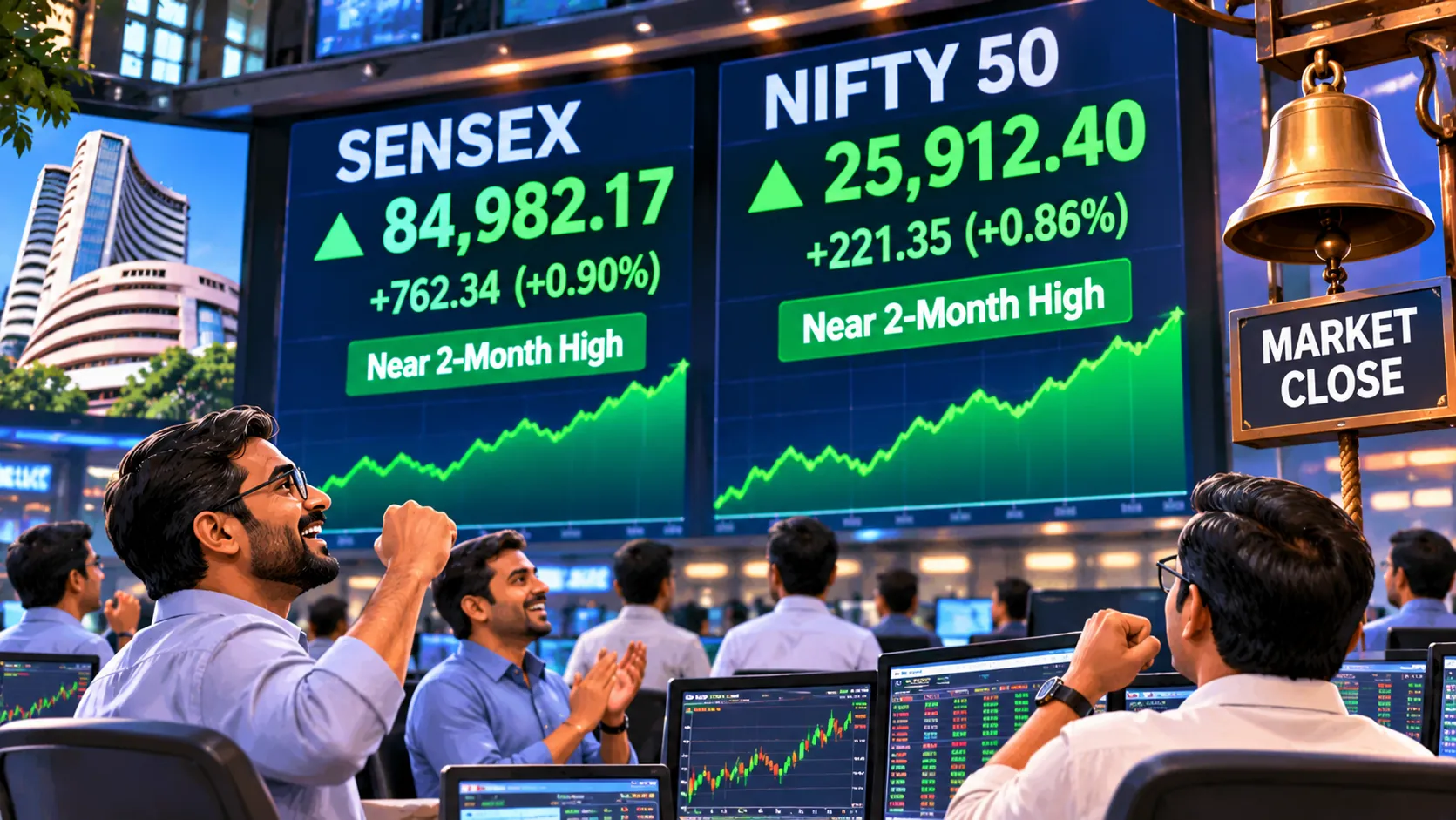
The Sensex rose 2,009 points, or 2.6%, to 79,310 on 5 November, and the Nifty 576 points to 24,537, a sixth straight gain. Auto and financial shares led, capital goods fell over 2% a day after leading the market, and the rupee gained 18 paise to 94.47. Official accounts cite positive global cues.
A
4 min
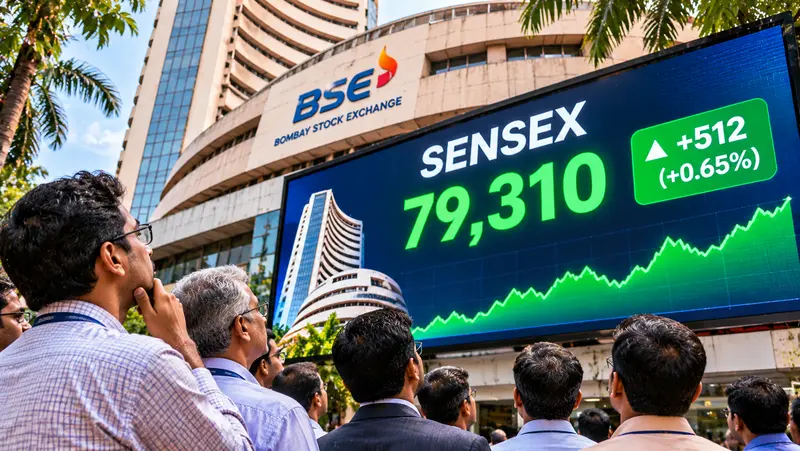
The Sensex rose 2,009 points, or 2.6%, to close at 79,310 on Thursday 5 November 2026, and the Nifty 50 gained 576 points, or 2.4%, to settle at 24,537. It was the sixth straight session of gains on the BSE and the National Stock Exchange. Of the 30 Sensex shares, 24 rose. The NSE Midcap 100 gained nearly 1.9% and the Smallcap 100 almost 0.6%. The official market report put the gains down to positive global cues.
The size of the move stands out. The Sensex added 1,225 points on Tuesday, 384 on Wednesday and 2,009 on Thursday, a total of about 3,618 points in three sessions. Thursday's gain alone was larger than the two before it combined.
Who led, and what reversed
| Sensex gainers | Change |
|---|---|
| Bajaj Finance | almost +7.8% |
| IndiGo | +5.8% |
| ICICI Bank | +5.3% |
| Maruti | +5.3% |
| Sensex losers | Change |
|---|---|
| NTPC | over −1.6% |
| BEL | nearly −0.6% |
| Adani Ports | over −0.5% |
Among BSE sectoral indices, 25 of 28 ended higher. Auto gained over 4.1%, financial services almost 3.8% and private banks over 3.6%. Capital goods fell over 2%, telecommunication nearly 0.9% and power almost 0.5%. On the BSE, 2,994 companies advanced, 1,453 declined and 200 were unchanged.
Two things in that list deserve attention. The first is the turn in leadership. On Wednesday capital goods was the best sector, up 3.6%, and Bharat Electronics was the top Sensex gainer, up 4.6%. A day later the same sector was the worst and BEL was among the losers, while the money moved into lenders, car makers and an airline. A rally that rotates this quickly often reflects fast-moving positioning as much as a change in company prospects.
The second is the difference between large and small companies. The Sensex rose 2.6%, while the Smallcap 100 rose only about 0.6%, the opposite of Wednesday, when smallcaps rose 2% and the Sensex 0.5%. Thursday's move was led by heavyweights, and advancing shares outnumbered decliners by about two to one, which is healthy but below what the size of the index move might suggest.
Why it matters, and what explains it
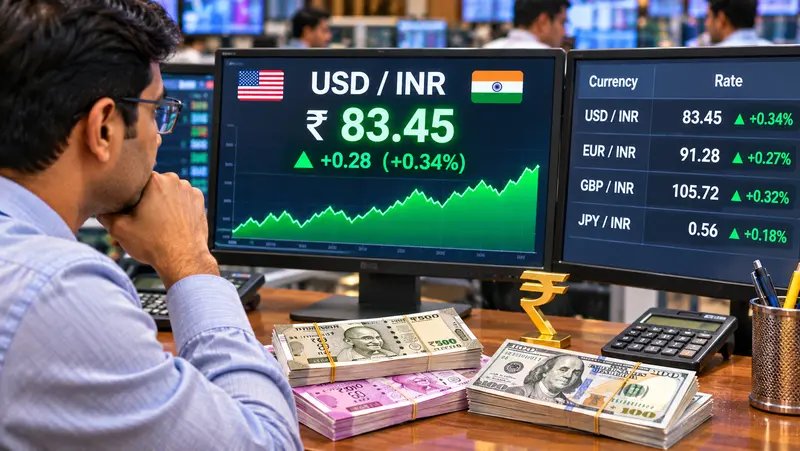
The official report gives only "positive global cues", and readers should treat stronger claims with care. What the record does show is the following. Wall Street closed sharply higher overnight, with the Dow up more than 3%, the S&P 500 up 1.6% and the Nasdaq Composite up more than 1.4%, as investors welcomed the end of election uncertainty after the Democratic victory in the midterms. Crude oil prices declined on hopes of de-escalation in West Asia, which supports India as a large importer. The rupee closed at 94.47 to the US dollar, up 18 paise, with the dollar index at 101.56 during the day. It had gained 10 paise on Wednesday.
Those factors fit the shape of the rally. Lower oil helps airlines such as IndiGo, whose fuel bill is a large cost, and car makers. Lower oil also eases inflation and interest rate fears, which helps banks and non-bank lenders, whose shares are sensitive to borrowing costs. That link is an interpretation of the day's pattern and not an official statement, but the leaders of the session were the sectors one would expect to gain from cheaper crude.
Thursday's rally also came a day after a survey put the India services PMI at a four-month high of 55.8 for October, so the backdrop was not only global.
What to watch next
After six sessions of gains, the first thing to watch is whether the market can hold the move. Sharp advances are often followed by a pause, and a fall in one session would not change the picture. The more important question is whether the two main supports last.
Oil comes first. Hopes of a settlement in West Asia have been raised and disappointed before. A reversal in crude would hit the same sectors that led on Thursday.
Second, the rupee. It has gained for two sessions but remains weak by recent standards, at more than 94 to the dollar. On 5 November SEBI aligned its currency derivatives limits with the RBI's tighter rules, so the rules on rupee hedging are also changing.
Third, foreign flows. The exchanges publish provisional buying and selling by foreign portfolio investors after each session. Whether those flows stayed positive during a rally of this size will show who was doing the buying.
Finally, global rates. The Bank of England raised its Bank Rate to 4% on Thursday, citing the energy shock, a reminder that high energy prices are still pushing central banks elsewhere to tighten. A single day's move of this size says more about how much of the rally rests on one assumption, that oil keeps falling, than about where the market goes next.
This article is for information and is not investment advice.
Sources
About the Author
A
Amita Sahani
Staff Writer
Amita Sahani writes for Wirony. Every story under this byline is reviewed and approved by an editor before it is published, and corrections are made openly.
A
4 min
What did you think?