/
Digital Life Certificate campaign 5.0: pensioners can use face scan in November, with 2.30 crore DLCs targeted
The Pensions Department's fifth Digital Life Certificate campaign runs from 1 to 30 November in 2,000 cities and districts, aiming for 2.30 crore certificates, 1.50 crore by face scan. Minister Jitendra Singh launches it on 6 November. How to submit, where to get help and who gets priority.
S
5 min
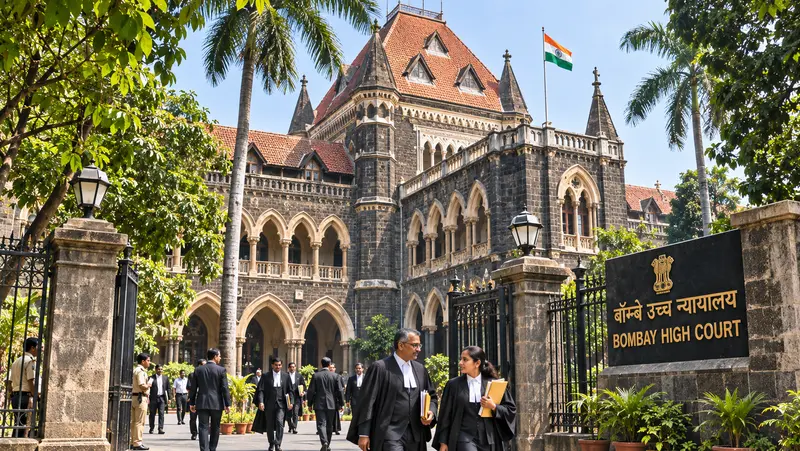
The Department of Pension and Pensioners' Welfare is running the fifth nationwide Digital Life Certificate campaign from 1 to 30 November 2026 across 2,000 cities and districts. The department calls it the biggest such campaign so far. The target is 2.30 crore Digital Life Certificates, of which 1.50 crore are to come through face authentication, according to its release of 30 October. Union Minister of State Dr Jitendra Singh will launch the campaign in New Delhi on 6 November.
For a pensioner, the campaign answers one annual problem. Pensioners are required to give their bank or post office a life certificate each November, either by going in person or by sending a form. For a person of 85 living alone, or for someone with limited mobility, that trip has long been the hardest part of drawing a pension.
The Digital Life Certificate, known as Jeevan Pramaan, was launched on 10 November 2014. It lets a pensioner prove they are alive through Aadhaar-based biometric authentication, and it stores the certificate online. The bank, post office or other Pension Disbursing Agency can then see it directly, with no paper form.
The basic requirements, as set out on the Jeevan Pramaan portal, are:
- an Aadhaar number;
- a working mobile number;
- Aadhaar already registered with the agency that pays the pension;
- internet access and, for the face route, a smartphone.
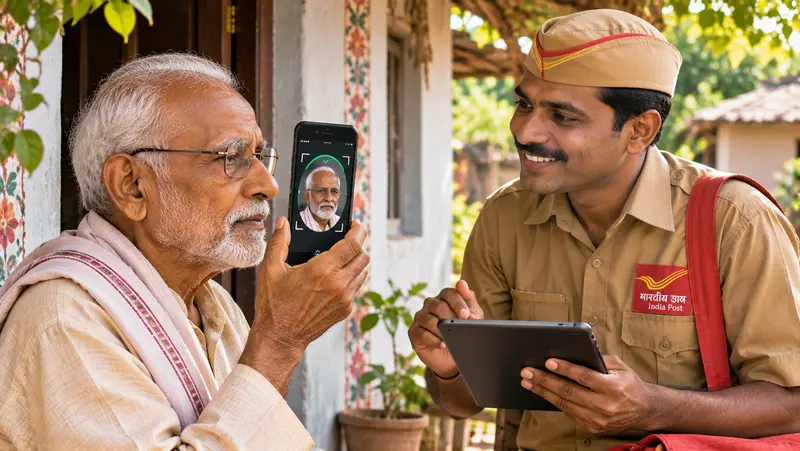
Early versions needed a fingerprint or iris reader. The focus now is on face authentication through the Jeevan Pramaan app, which works on both Android and iOS phones and needs no extra device. That matters because fingerprints can wear with age, and that has long been a known difficulty for older people.
Three ways to submit
By yourself, on a phone. Install the Jeevan Pramaan app from the official portal or store, enter the Aadhaar and pension details, and complete the face scan. A family member can help with the phone, but the pensioner must be present for the scan.
At a bank, post office or service centre. A pensioner can go to a bank branch, a designated government office or a Citizen Service Centre. The portal has a locator for centres, and it warns that a nominal fee may apply at some of them.
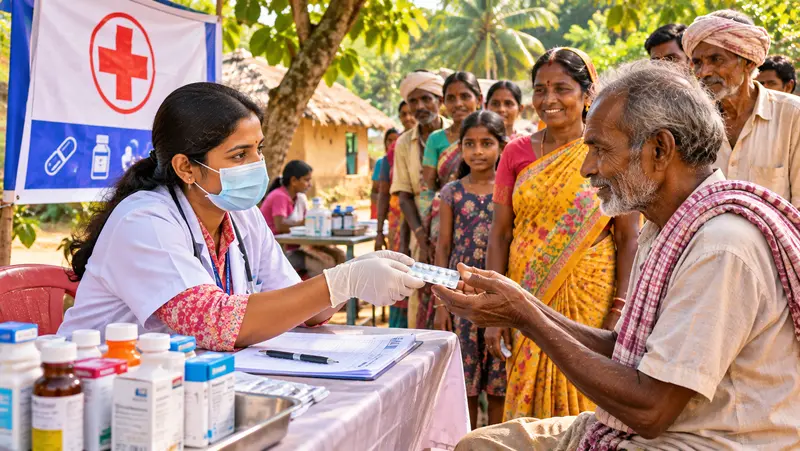
At home. The campaign offers doorstep service where required. India Post Payments Bank, with its network of postal staff, is a major partner, and priority goes to people over 80, women and those with health difficulties. Camps are also being held by banks and pensioners' associations, with mega camps in areas with many pensioners.
The department describes a whole-of-government effort. It involves 19 banks, 785 district post offices and 56 pensioners' welfare associations, along with the Ministry of Electronics and Information Technology, UIDAI, the Controller General of Defence Accounts, Railways, the Department of Telecommunications, the Employees' Provident Fund Organisation and state governments. The guidelines were issued through an Office Memorandum dated 13 August 2026.
Camps will also offer health check-ups and Aadhaar updates, and grievance officers are to handle complaints about certificates with immediate resolution. Senior officials will review progress on the ground in identified states.
Why it matters
The target shows how far digital proof has come. The department said in April that 1.91 crore certificates were generated in the last cycle, with more than 1.16 crore, or over 60%, by face authentication, and that over 14 lakh super senior pensioners used doorstep services. Last year's campaign held 75,000 camps across 2,000 cities and districts, with more than 1,400 nodal officers and 1.8 lakh postmen and Dak Sevaks deployed. The new target is about 20% higher overall and about 29% higher for face scans, in the same number of places, so more of the work must be done by each camp and by pensioners at home.
If the target is met, the change is practical. Fewer elderly people will queue in November, and there should be fewer cases where a missing certificate holds up a pension.
The limits are also real. A campaign built around a smartphone and a face scan assumes a phone, a signal and a working Aadhaar record. Many of the oldest and poorest pensioners have none of these to hand, and critics of digital-first services argue that such pensioners risk being left behind. However, the campaign's doorstep visits and the paper route, which remains open at the bank, are meant to cover exactly that group. Whether they do will depend on how far the postal and bank staff reach in rural districts.
Practical advice for pensioners and families
Do the certificate early in the month, since camps and servers get busier towards the end. Check beforehand that the Aadhaar details match those with the bank, since the portal requires Aadhaar to be registered with the paying agency, and use the Aadhaar updates at camps if needed. Keep the Pension Payment Order number to hand. Scan in good light with the face uncovered and spectacles removed if the app asks.
After submission, keep the certificate ID sent on the phone, and check with the bank or post office that it has been received. If there is a problem, approach the campaign's grievance officers.
Use only the official Jeevan Pramaan portal or app store listing. No genuine official needs a one-time password or bank login over a phone call, so pensioners should not share these with callers offering to complete the certificate. Those who cannot use a phone should ask for a doorstep visit or go to a camp. Updates are being shared under the hashtag #DLCCampaign5.
Sources
About the Author
S
Subhash Gupta
Desk Editor
Subhash Gupta is a writer at Wirony, contributing articles that are reviewed and verified by the editorial team before publication. The publication prioritises accuracy, editorial…
S
5 min
What did you think?