/
RBI draft priority sector lending rules: 40% target, Rs 100 crore agri cap
The RBI has issued draft priority sector lending directions for five categories of bank, keeping a 40% target for commercial banks, capping agri-infrastructure loans at Rs 100 crore per borrower and covering education loans up to Rs 25 lakh. Comments are due by 26 November.
R
4 min
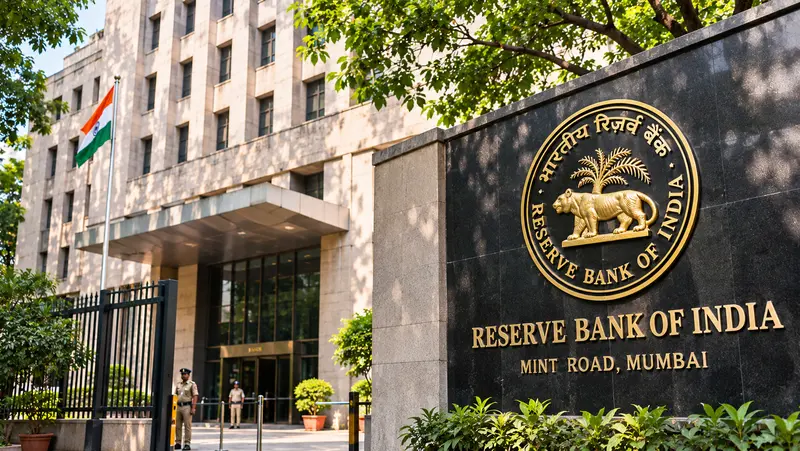
The Reserve Bank of India has published draft Priority Sector Lending Directions, 2026 for public comment, gathering its scattered instructions on the subject into one set of rules for each type of bank. The drafts, released around 5 November, cover commercial banks, small finance banks, local area banks, regional rural banks and urban co-operative banks. Comments are due on or before 26 November 2026. The central bank says that instructions left out of the consolidated drafts will be repealed when the directions are issued. This article is for information and is not financial advice.
Priority sector lending is the requirement that banks put a set share of their loans into areas the government wants funded, such as farming, small business, housing and education. Because the drafts are not final, the numbers below are proposals, and the commercial bank draft is the one detailed here. For a borrower, the targets matter because a bank that is short of a target has a reason to lend to eligible farmers, small businesses, students and home buyers, and the limits decide which of their loans count towards it. Banks, for their part, use the definitions to decide how to classify what they already lend.
The numbers in the commercial bank draft
The headline target stays at 40% of adjusted net bank credit or the credit equivalent of off-balance-sheet exposures, whichever is higher, for domestic banks, the wholly owned subsidiaries of foreign banks and foreign banks with 20 or more branches. Foreign banks with fewer than 20 branches also face 40%, but up to 32 percentage points of it can be export credit and at least 8 must go to other priority sectors.
The sub-targets sit inside that.
| Segment | Draft target |
|---|---|
| Total priority sector | 40% |
| Agriculture | 18% |
| Of which non-corporate farmers | 14% |
| Of which small and marginal farmers | 10% |
| Micro enterprises | 7.5% |
| Weaker sections | 12% |
The draft also keeps district weights, which are meant to steer credit to places that get little of it. Loans in districts where per capita priority sector lending is below Rs 9,000 carry a weight of 125%, and loans in districts above Rs 42,000 carry 90%. The weights are stated as valid through the 2026-27 financial year.

Limits on individual loans
Several limits matter more to borrowers than the targets do.
- Agricultural infrastructure: the aggregate sanctioned limit is Rs 100 crore per borrower from the banking system.
- Education: loans to individuals, including for vocational courses, qualify up to Rs 25 lakh.
- Housing: individual loan limits depend on the population of the centre, at Rs 50 lakh for centres with 50 lakh or more people, Rs 45 lakh for those with 10 to 50 lakh and Rs 35 lakh for smaller ones, each with a cap on the cost of the dwelling of Rs 63 lakh, Rs 57 lakh and Rs 44 lakh. Affordable housing is defined by dwelling units of up to 60 square metres of carpet area.
- Renewable energy: up to Rs 35 crore per borrower for generators and public utilities, and Rs 10 lakh per household.
- MSMEs: classification follows the Udyam Registration Certificate, and all bank loans to MSMEs qualify. Retail and wholesale trade count as MSMEs for this purpose only. Factoring through the TReDS platform is eligible.
When banks lend through finance companies, the draft sets per-borrower ceilings: Rs 10 lakh for agriculture term lending by non-banking finance companies, Rs 20 lakh for micro and small enterprises, and Rs 20 lakh in aggregate for housing finance companies. On-lending to such companies and to the National Co-operative Development Corporation is capped at 5% of the bank's average priority sector achievement over the four quarters of the previous year, though the cap does not apply to microfinance institutions that belong to an RBI-recognised self-regulatory organisation.
Certificates, repeal and how to respond
Banks that fall short of the target, or that are over it, can trade priority sector lending certificates, in four types: agriculture, small and marginal farmers, micro enterprises and general. They are valid until 31 March, expire on 1 April, trade in lots of Rs 25 lakh and multiples, and are settled through the RBI's e-Kuber portal, with registration on PRAVAAH. A bank can issue certificates against up to 50% of its previous year's achievement without holding the underlying assets on its books.
The draft says the existing commercial bank instructions will stand repealed when the new directions are issued, and it says they will come into force with immediate effect, though no date is fixed. Until then the current rules continue to apply.
The Reserve Bank asks for comments through the Connect 2 Regulate section of its website, using the link beside each draft, or by email with a subject line that names the draft and the type of regulated entity. The deadline is 26 November. The details of the other four drafts were not available when this was written, so differences for small finance banks, local area banks, regional rural banks and urban co-operative banks should be checked on the RBI's website.
Sources
- Draft Reserve Bank of India (Commercial Banks - Priority Sector Lending - Targets and Classification) Directions, 2026 (Reserve Bank of India)2026-11-05
- Press release 2026-2027/1447: Consolidation of instructions related to priority sector lending, draft directions for comments (Reserve Bank of India)2026-11-05
About the Author
R
Reyaansh Agarawal
Staff Writer
Reyaansh Agarawal contributes to Wirony, covering stories that are carefully reviewed and approved by the editorial team before publication. Wirony is committed to maintaining tran…
R
4 min
What did you think?