/
Paytm gets RBI's in-principle nod to issue wallets again; final approval needs an audit
The RBI has given Paytm Payments Services, a subsidiary of One 97 Communications, in-principle authorisation to issue prepaid payment instruments including wallets. A final certificate needs a cybersecurity audit report within six months. Parent shares rose to a record Rs 1,960 on 13 November.
A
4 min
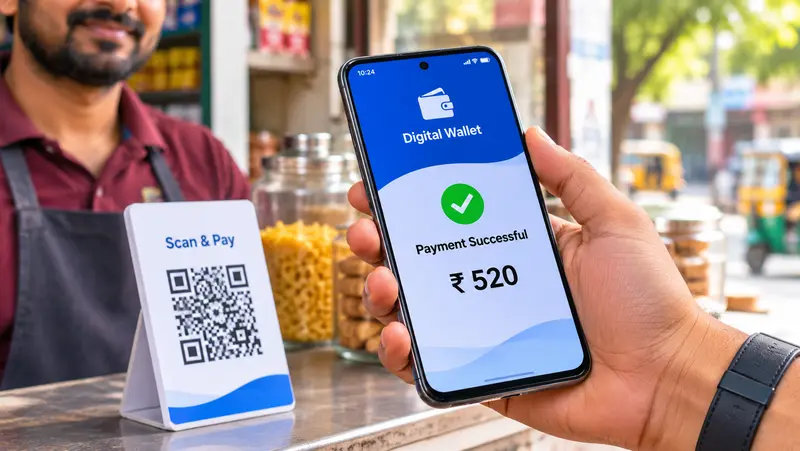
The Reserve Bank of India has given Paytm Payments Services Limited, a wholly owned subsidiary of One 97 Communications, in-principle authorisation to issue prepaid payment instruments, which include digital wallets. The approval, under the Payment and Settlement Systems Act of 2007, was disclosed in an exchange filing on Friday, 13 November 2026. It is not a final licence. Paytm must still pass a system and cybersecurity audit and obtain a certificate of authorisation before it can issue wallets. Shares of the parent company rose to a record Rs 1,960 on the news. This report is for information and is not investment advice.
What the approval allows
A prepaid payment instrument is a way to pay from money loaded in advance, and a wallet is the best known kind. The RBI's rules distinguish two types. A small prepaid instrument needs only minimum customer details and can be used to buy goods and services, but not to transfer funds or withdraw cash. A full-KYC instrument needs the prescribed know-your-customer process and allows purchases, fund transfers and cash withdrawals within RBI limits, and it can be linked to the Unified Payments Interface. The limits are set in the RBI's master directions, which have been revised over time, and the filing does not give new figures.
The in-principle letter does not say which of the two types Paytm will launch, and Paytm has not announced a launch date, transaction limits or features for a revived wallet. The approval is for the subsidiary, Paytm Payments Services, which was separately authorised as an online payment aggregator in August 2025. That is a different licence, and it lets the company handle merchant payments but not issue wallets.
The RBI has attached two conditions. The first is an audit of the company's systems and cybersecurity by an eligible auditor, who must be empanelled with the government's Indian Computer Emergency Response Team, be a Certified Information Systems Auditor registered with ISACA, or hold the Institute of Chartered Accountants of India's diploma in information systems audit. The second is a final authorisation, the certificate of authorisation, which has to be issued before any wallet is offered.
| Step | Status on 13 November |
|---|---|
| In-principle authorisation | Granted to Paytm Payments Services |
| System and cybersecurity audit | To be done by an eligible auditor |
| Audit report to the RBI | Due within six months, by about 13 May 2027 |
| Certificate of authorisation | Not yet issued; needed before issuing wallets |
| Wallet launch | No date announced |
The deadline is strict. If the audit report is not filed within six months, the in-principle authorisation lapses automatically and a request for final authorisation will not be considered, according to the terms described in the filing. A company that misses it would have to apply again from the start.

Why Paytm's history matters
The approval matters because of what happened to the group's earlier payments business. In January 2024 the RBI barred Paytm Payments Bank from accepting fresh deposits, credit transactions and top-ups into customer accounts, prepaid instruments and wallets, citing persistent non-compliance and supervisory concerns. On 24 April 2026 the RBI cancelled the bank's licence and prohibited banking business with immediate effect. The Paytm wallet, which had been held through the bank, was effectively closed to new money after the 2024 order.
The subsidiary that has now been approved is a separate company, and the filing treats the decision as an in-principle step towards reviving the wallet on a clean footing. The RBI has not described the approval as a change in its view of the earlier case, and the bank's cancelled licence is not affected by it.
What to watch
The share price reaction shows how closely investors follow the company's regulatory standing. The parent's stock rose to Rs 1,960, a record, on the day. A record price reflects the market's view that the company can rebuild a product that earned it a large user base, and it is not a statement about profits. The approval does not tell us how many users would return, how the wallet would be funded, or how it would compete with the many payment apps and bank-led wallets that grew in Paytm's absence.
The next milestones are clear. The audit has to be commissioned and completed within six months, the report has to be filed with the RBI, and the central bank has to issue the final certificate. Until then, Paytm cannot issue a wallet, and customers should not treat the in-principle letter as a launch. The company's own announcements and the RBI's list of authorised payment system operators are the places to check for the final step.
The in-principle step is a recognised stage in the RBI's authorisation process. It tells a company that the central bank is satisfied, subject to conditions, that it meets the broad requirements, and it gives the company a fixed time to complete the work. It does not allow the company to issue a single wallet. The group's payment app continued to run on the Unified Payments Interface through partner banks after the 2024 order, which is a separate arrangement from a wallet, so a user of the app should not expect any change on the day of the announcement.
Sources
About the Author
A
Amita Sahani
Staff Writer
Amita Sahani writes for Wirony. Every story under this byline is reviewed and approved by an editor before it is published, and corrections are made openly.
A
4 min
What did you think?