/
India is third-largest arms exporter to Europe, says Defence Secretary; Rs 38,424 crore
Defence Secretary Rajesh Kumar Singh says India has become the third-largest arms exporter to Europe, helped by demand linked to the EU's ReArm Europe plan. Defence exports reached a record Rs 38,424 crore, with growth led by ammunition and artillery shells. The date of the remarks is unclear.
S
4 min
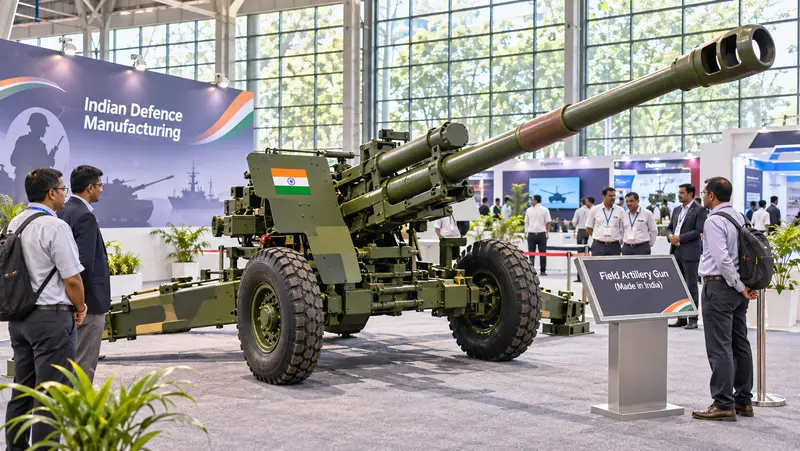
India has become the third-largest arms exporter to Europe, Defence Secretary Rajesh Kumar Singh has said, driven by demand linked to the European Union's ReArm Europe plan and by growth in India's own manufacturing. His remarks, carried by the public broadcaster's news service and circulated again on 13 November 2026, put India's defence exports at an all-time high of Rs 38,424 crore, or about 3.6 billion euros. The broadcaster's own page for the item is dated 24 October, which means the Defence Secretary's comments were made around 23 October, so readers should treat the figures as those given in that statement and not as new data released this week. This report is for information only.
What was said and what is being exported
According to the Defence Secretary, the growth in sales to Europe has come mainly from standard ammunition, artillery shells, and large and small calibre ammunition. India also exports artillery, small arms, helmets and bulletproof jackets and other tactical equipment. He said Indian defence equipment now goes to more than 80 countries, and that buyers, especially in Southeast Asia, have shown interest in small arms, components and artillery gun systems.
The European demand has a specific cause. After the war in Ukraine, European governments have been replenishing and expanding their stocks of ammunition and shells, and the EU's ReArm Europe initiative encourages defence spending and joint procurement. Indian manufacturers, whose shells are produced in large numbers and sold at competitive prices, have been among the beneficiaries, according to the Defence Secretary's account. The statement does not name the European buyers or the contract values, and none is given here.
| Item | Figure or statement |
|---|---|
| Defence exports | Record Rs 38,424 crore (about 3.6 billion euros) |
| Rank among arms exporters to Europe | Third-largest |
| Growth driver | Standard and large and small calibre ammunition, artillery shells |
| Countries served | More than 80 |
| Public sector companies | 16 major |
| Large and medium private firms | About 840 |
| Small enterprises, including startups | Nearly 17,000 |
The Defence Secretary described a production base made up of 16 major public sector companies, about 840 large and medium private enterprises and nearly 17,000 small enterprises, including startups. That is the supply chain on which the export growth rests, and it explains why the government presents the figures as evidence for its policy of making defence equipment in India. The ranking of third-largest exporter to Europe is the Defence Secretary's own claim, and the statement does not say which data or which period it rests on.
Targets and plans
The statement also set out the policy. India plans to spend 75% of its annual defence capital expenditure, which is estimated at 20 to 25 billion dollars, on domestic suppliers, and to give priority to products that are designed, developed and manufactured in India. The Defence Secretary said India wants to take part in European defence procurement through joint ventures with European partners, to encourage European companies to manufacture in India under the Make in India initiative, and to deepen the integration of Indian and European defence supply chains.

The ministry's wider case is that exports and domestic procurement reinforce each other, since higher volumes lower unit costs. A separate research note on the EU–India security and defence partnership has pointed to opportunities and limits for defence industrial cooperation, and the limits include differences in standards, certification and export-control rules. The accounts available do not describe any agreement with the EU on joint production.
What to watch
For readers, there are three questions. The first is whether the export figure continues to grow when the European restocking cycle slows. The second is how much of the growth is ammunition, which is a high-volume, lower-value product, and how much is complex equipment, which brings more profit and more lasting relationships. The third is whether the joint ventures the Defence Secretary describes are signed. The Ministry of Defence publishes yearly export figures and its press notes, and the broadcaster's report is the primary public source for this statement.
The ReArm Europe initiative, which the European Union presented in 2025, aims to raise defence spending across the bloc and to encourage joint buying of equipment and ammunition. For countries that have sent large stocks of shells to Ukraine, replacing and expanding them is a priority, and European producers have not been able to meet all of the demand, which has opened a gap for suppliers elsewhere.
India's defence exports have grown quickly from a low base. The ministry announced a record of Rs 23,622 crore for 2024-25, and the figure in this statement of Rs 38,424 crore would be a large step above it. The statement does not say which year the new figure covers, and the two numbers should be compared only after the ministry publishes the year-wise data. The defence ministry's annual report and press notes are the primary source for the figures, and the broadcaster's page is the source for the Defence Secretary's words.
Sources
About the Author
S
Subhash Gupta
Desk Editor
Subhash Gupta is a writer at Wirony, contributing articles that are reviewed and verified by the editorial team before publication. The publication prioritises accuracy, editorial…
S
4 min
What did you think?