/
Cabinet clears Rs 14,500 crore for 92 GWh of grid storage: what it buys, and how far India is from 411 GWh
The Union Cabinet on 4 November approved Rs 14,500 crore of viability gap funding for 92 GWh of storage: 60 GWh pumped hydro, 30 GWh batteries and 2 GWh new technologies, with Rs 97,600 crore of total investment. India needs 411 GWh by 2031-32, and had 8.66 GWh of grid batteries in June.
P
5 min
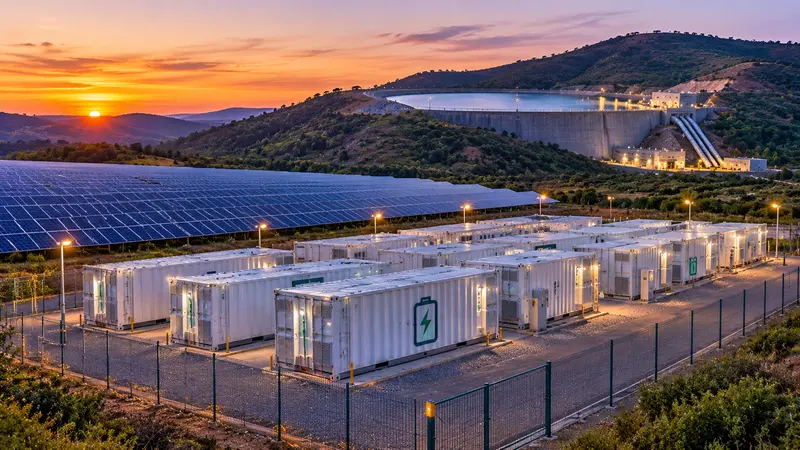
The Union Cabinet on 4 November 2026 approved a Viability Gap Funding scheme of Rs 14,500 crore to build 92 GWh of grid-scale energy storage between 2026-27 and 2030-31, the Press Information Bureau said. The scheme covers 60 GWh of hydro pumped storage, 30 GWh of battery energy storage and 2 GWh of alternative storage technologies, with total estimated investment of Rs 97,600 crore. Battery projects must meet a minimum domestic content requirement of 40%.
It is the largest storage support scheme India has approved, and it arrives because the country's renewable build-out has run ahead of its ability to use that power when the sun is not shining.
What the scheme does
Viability gap funding is a capital subsidy that closes the difference between what a project costs and what buyers can pay. Here the government would meet about 15% of the estimated investment. Capacity will be allocated through tariff-based competitive bidding. Public and private electricity distribution companies will be eligible for support on battery and pumped storage projects, while the alternative technology projects will be carried out by public and private entities.
The discom focus is worth noting. Power Ministry replies in Parliament describe the two earlier schemes as support for public and private developers. Tying the new money to distribution companies puts the subsidy with the buyers who actually need firm power in the evening peak.
The numbers also show how fast the cost has fallen, even allowing for a different technology mix.
| Scheme | Capacity | Support | Support per GWh |
|---|---|---|---|
| 2023 budgetary scheme (batteries) | 13.8 GWh | Rs 3,760 crore | about Rs 272 crore |
| 2025 PSDF scheme (batteries) | 30 GWh | Rs 5,400 crore | Rs 180 crore |
| 2026 scheme (mainly pumped hydro) | 92 GWh | Rs 14,500 crore | about Rs 158 crore |
The 2023 scheme began at 4 GWh, and the Power Ministry says falling battery prices let it stretch the same money to 13.8 GWh.
Why it matters
Storage is what turns cheap daytime solar into power that is available at night. The Cabinet note says the scheme will address the variability of renewable generation and reduce dependence on conventional plants for balancing, which is the central operating problem of a grid taking more wind and solar each year. For consumers, the effect is indirect. It should mean fewer evening shortages and less reliance on expensive peak purchases, but the release sets no tariff target, and discom tariffs are decided by state regulators.
The scale of the task is the real story. The Cabinet note says India needs 411 GWh of grid-scale storage by 2031-32, and that the 92 GWh equals 170% of today's capacity, which implies about 54 GWh now, including pumped hydro. The Central Electricity Authority's projection for 2031-32 includes 47.24 GW / 236 GWh of batteries alone, against a projected peak demand of 388 GW by 2032 in the national transmission plan. Against that, the Power Ministry told Parliament that installed battery capacity above 1 MWh stood at 2,927.85 MW / 8,660.20 MWh on 30 June 2026.

The pipeline is larger than the installed base. As on 30 June, a Rajya Sabha reply listed 42,530 MWh of batteries under construction, 38,425 MWh awarded and 67,574 MWh under tendering, along with 95,220 MWh of pumped storage under construction. If everything in that list and the new scheme were built, India would come close to the requirement, but not all of it will arrive on time.
The risks
Execution is the weak point on the record so far. The same Rajya Sabha reply says only 0.5 GWh had been commissioned under the 13.8 GWh budgetary scheme, with Rs 168.04 crore of support paid out. Under the 30 GWh PSDF scheme, a Lok Sabha reply in July reported storage purchase agreements signed for 19.65 GWh and financial closure for only 5 GWh. Awarding capacity is not the same as connecting it. Battery projects have usually taken much less time than pumped hydro, and the scheme's largest part, 60 GWh, sits in the slower technology, which needs land, water, environmental clearances and long construction periods. The scheme runs only to 2030-31.
The 40% domestic content rule is a second test. It is designed to support Indian manufacturing and reduce import dependence, and it complements production incentives for battery makers. A local content floor can raise costs in the short term if domestic cell supply is thin, so bids will show whether Indian supply is ready. On the same day, the Cabinet approved a separate Rs 2,814 crore scheme for lithium and nickel processing, which addresses the raw material end of the same chain.
Third, the scheme relies on discoms, many of which are financially stretched. Bids are only as good as the buyer behind the contract. The 2 GWh for alternative technologies is small, but it is the one part of the scheme that public and private entities can take up directly, so it will show what other technologies can offer.
The next steps are the scheme guidelines, the first bids and the tariffs they discover. Those results will show whether support of about Rs 158 crore per GWh is enough for pumped hydro and whether developers can meet the content rule. The official scorecard to follow is simple: commissioned megawatt-hours, not awards, in the Central Electricity Authority's monthly data and the Power Ministry's replies to Parliament. This article is for information and is not investment advice.
Sources
About the Author
P
Prateek Rawat
Staff Writer
Prateek Rawat is a contributor to Wirony. All articles published under this byline undergo editorial review and approval before publication, with any necessary corrections handled…
P
5 min
What did you think?