/
COP31 climate talks collapse in Antalya over a draft that never mentions fossil fuels
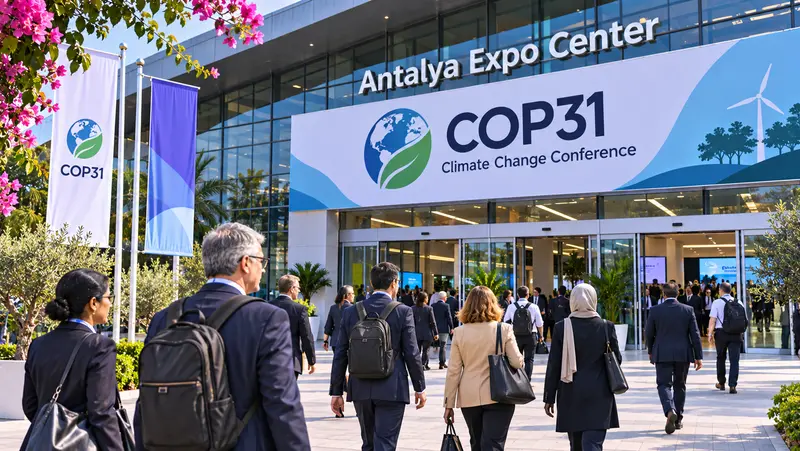
The COP31 climate summit in Antalya ended on 22 November without an overall deal, after two days of overtime, when the EU, island states and others rejected a draft that left out fossil fuels. Saudi Arabia and Russia opposed any such wording. The next summit is in Addis Ababa.
P
4 min
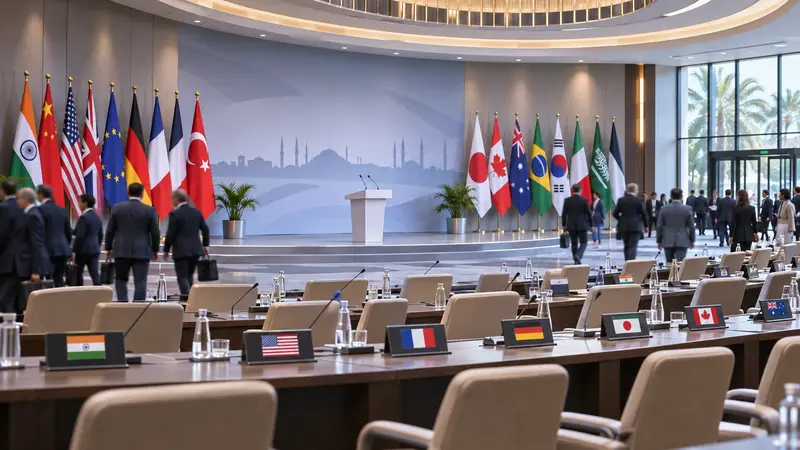
The COP31 climate summit in Antalya, Turkey, ended on Sunday, 22 November 2026, without an overall agreement, after the European Union, island nations and others rejected a draft text because it made no mention of fossil fuels. The conference opened on 9 November and overran by almost two days. Several outlets describe it as the longest UN climate summit on record, and the last time annual talks failed to end in a deal was Copenhagen in 2009.
The text that failed was the cover decision drawn up by the two presidencies: COP31 president Murat Kurum of Turkey and Chris Bowen of Australia, who led the negotiations. Their compromise drafts acknowledged for the first time that the world is on course to overshoot 1.5 degrees Celsius and called for more carbon removal. The final draft dropped a target of $120 billion in funds to help poorer countries adapt.
The European Union formally objected, saying it could not accept a text with no reference to fossil fuels or a transition away from them, and called the omission "unconscionable". Its position was that it "will not accept a COP that greenwashes fossil fuels". Panama rejected the text and the Marshall Islands withheld support. Pakistan urged that talks continue by consensus, and Ghana, for the African Group, said it would not stand in the way but noted that finance, loss and damage and a just transition got only a single generic sentence. Kurum told delegates: "I understand that there is no agreement on this text," and added that there would be no new text.
The fight over fossil fuels
Saudi Arabia, speaking for the League of Arab States, defended references to carbon capture and said that "climate change requires all solutions on the table". Russia's negotiator, Sergei Kononuchenko, said: "we cannot agree to any formulation on fossil fuel." Bowen said some parties insisted that fossil fuels be mentioned while others would veto the text if they were.
Fossil fuels have been named in a final UN climate decision only once in three decades, at COP28 in Dubai, which encouraged a transition away from them. They were not mentioned at the next two conferences. Ireland's climate minister Darragh O'Brien, speaking for the EU, said the conference had been "hijacked by some oil states".
| Item | Detail |
|---|---|
| Dates | Opened 9 November 2026; collapsed Sunday 22 November |
| Presidency | Murat Kurum (Turkey); Chris Bowen (Australia) led negotiations |
| Rejected | Cover decision with no mention of fossil fuels |
| Dropped | $120 billion adaptation finance target |
| Blocked wording | Saudi Arabia, Russia and other oil producers |
| Next summit | COP32, Addis Ababa, Ethiopia |
Some parts of the conference went ahead. A pledge to raise the share of electricity in energy use from about 23 per cent today to 35 per cent by 2035 was signed by more than 90 countries, and a former UN climate chief put the number joining the wider electrification package at more than 150 countries plus the EU. UNFCCC executive secretary Simon Stiell said a just transition decision was reached and that the world "cannot afford a repeat of this moment". Campaigners disagreed: one said rich countries blocked a just transition mechanism.
The reactions
UN Secretary-General Antonio Guterres said he was deeply disappointed that COP31 ended without consensus. "There may be no consensus in the negotiating room. There is no ambiguity in the science," he said, and added: "We can't put out the fire while pouring fuel on it."
European Commissioner Wopke Hoekstra said the text was a step backwards on science and ambition. The UK negotiator Kate Hughes said it "moves us backwards on the science". The Bahamas prime minister Philip Davis said that "Antalya exhausted that patience", and the least developed countries said they could not afford to see backsliding. China's vice minister Li Gao said he was disappointed but "cannot see this as a failure of this multilateral process". Kenya said Africa was not named in the text and that COP32 should be Africa's COP. Mohamed Adow of Power Shift Africa called it "the worst COP ever". No official Indian government statement was found, and an analyst at a Delhi research body criticised the EU as a blocker.
The United States, under the Trump administration, withdrew from the climate talks and did not take part for the second year. The world is on course to exceed 1.5 degrees, and many scientists expect 2026 to be the hottest year on record. Carbon removal captures well under 1 per cent of the roughly 60 billion tonnes of greenhouse gases emitted each year, which is why the reliance on it was a sticking point.
The road to COP32
The next round, COP32, is due in Addis Ababa, Ethiopia, next year, and no date has been given. Reforms to shorten the conference and limit it to delegates have been floated. The argument over fossil fuels will carry over to that meeting.
The UNFCCC secretariat and the United Nations are the official sources for the outcome of the conference and the Secretary-General's statement.
About the Author
P
Prateek Rawat
Staff Writer
Prateek Rawat is a contributor to Wirony. All articles published under this byline undergo editorial review and approval before publication, with any necessary corrections handled…
P
4 min
What did you think?