/
US clears SpaceX plan for up to a million data-centre satellites in orbit
The US Federal Communications Commission on 25 November approved SpaceX's plan for up to one million satellites that would act as data centres in orbit, with deadlines running to 2040. Amazon, Viasat and astronomers had asked it to refuse. Satellites above 600 km need further approval.
S
4 min
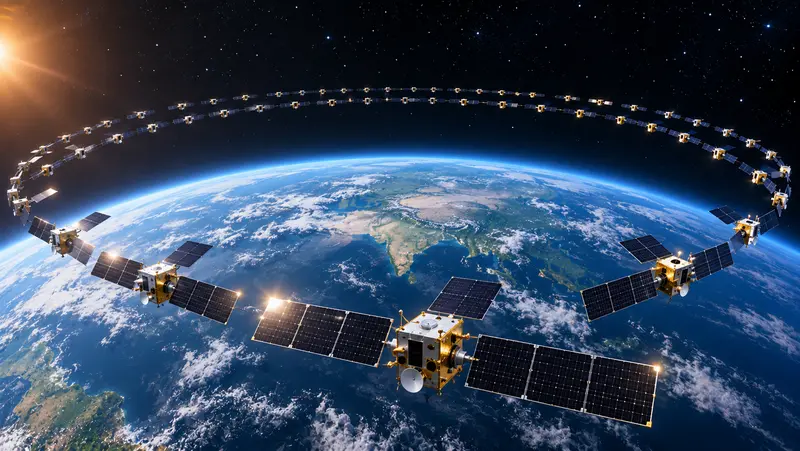
The US Federal Communications Commission (FCC) on Wednesday, 25 November 2026, approved SpaceX's plan for a constellation of up to one million satellites that would work as data centres in orbit. FCC Chairman Brendan Carr announced the decision and said it "opens a bold new frontier for the computing infrastructure". The commission described the approval as a first in US history, and the constellation, called Starmind, is licensed with conditions.
The satellites would carry computing hardware, powered by solar panels and cooled by radiating heat into space. They would fly in orbits between about 500 and 2,000 kilometres above the Earth and talk to each other by laser links, with radio links as a backup. The downlink band is 18.8 to 19.3 GHz and the uplink band 28.6 to 29.1 GHz. Satellites meant to operate above 600 kilometres need a further modification request with a full plan for limiting space debris.
The deadlines
The approval sets staged milestones that the company has to meet to keep its rights, according to the conditions as described.
| Deadline | Milestone |
|---|---|
| November 2033 | First satellite operating in its assigned orbit |
| November 2035 | 100,000 satellites |
| November 2038 | Half the constellation |
| November 2040 | All one million satellites |
Operators often apply for far more satellites than they finally launch, so the figure of one million is a ceiling and not a promise.
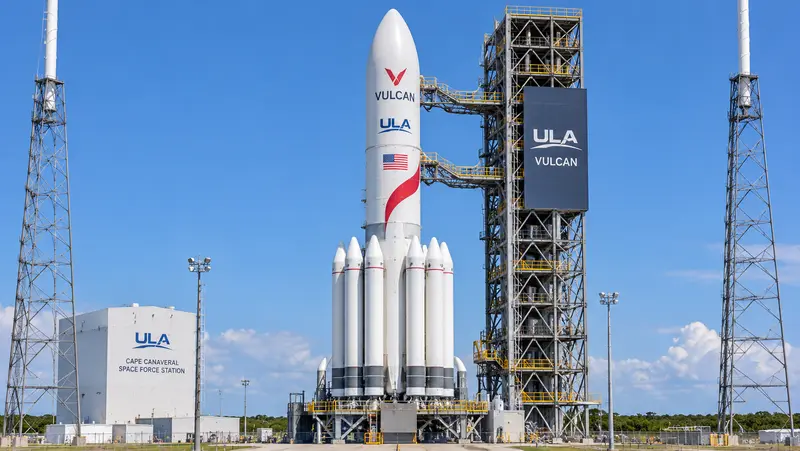
Counts of satellites now in orbit differ, from about 15,000 to about 17,000. SpaceX's own Starlink network accounts for a large share, with a little over 11,000 in orbit. A million satellites would therefore be dozens of times the current total. Deployment depends on Starship, SpaceX's next-generation reusable rocket, and two atmospheric scientists have estimated that about 5,000 Starship launches a year would be needed.
Amazon's satellite unit, Kuiper Systems, the satellite company Viasat and the American Astronomical Society asked the FCC to deny the application, and more than 1,500 public comments were filed. Amazon had argued in March that the plan was a lofty ambition rather than a real plan, and it declined to comment on the approval. The environmental group Earthjustice, with DarkSky International and Public Employees for Environmental Responsibility, said the commission should have reviewed the environmental effects first and had made no review under the National Environmental Policy Act.
The FCC said that comments on the environment and on optical astronomy were outside its authority. It found that the system complies with its rules on orbital debris. Astronomers have long worried that large constellations brighten the night sky and interfere with telescope observations.
Elon Musk welcomed the decision, saying in a post, "Much appreciated. This will be a great asset to America and the world." SpaceX filed for the constellation earlier this year. Blue Origin, the space company founded by Jeff Bezos, has a separate plan, Project Sunrise, for up to 51,600 satellites, which was filed in March and is still under review.
Why companies want data centres in space
Data centres on the ground need large amounts of electricity and water for cooling, and local opposition to new sites has grown in several countries. In orbit, sunlight is available much of the time and waste heat can be radiated away, which is the argument for putting computing there. The counter-arguments are the cost of launches, the difficulty of repairing hardware, delays in data transfer for some uses and the risk of crowding low orbit with debris. Whether the economics work is untested at this scale.
Satellites cross every country, so a US licence does not settle spectrum and landing rights elsewhere. National regulators, including India's, decide whether a service may operate in their territory, and international coordination of radio frequencies goes through the International Telecommunication Union. Space debris is also a shared problem, since a collision can scatter fragments across orbits used by many nations.
Objects in low orbit travel at several kilometres a second, so even a small fragment can destroy a satellite. The FCC requires satellites in low orbit to be removed within five years of the end of their mission, a rule it adopted in 2022. With a constellation this large, the share of satellites that fail and cannot be steered would matter as much as the number launched. This is why the commission asks for a debris plan before the higher orbits are used.
What changes for users
Nothing changes for consumers now. No service has been launched, the first satellite is not due until 2033, and the company has not said what it will charge or which customers will use the computing capacity first.
Opponents can ask the commission to reconsider or challenge the decision in court. SpaceX has to meet the milestones and file the debris plan before using higher orbits. The first deadline is seven years away. The FCC publishes its orders and filings on its website, which is the official source for the conditions.
About the Author
S
Subhash Gupta
Desk Editor
Subhash Gupta is a writer at Wirony, contributing articles that are reviewed and verified by the editorial team before publication. The publication prioritises accuracy, editorial…
S
4 min
What did you think?