/
Israeli judges suggest dropping the bribery charge against Netanyahu
Judges hearing Prime Minister Benjamin Netanyahu's trial proposed on 25 November dropping the bribery charge in Case 4000, reconsidering Case 2000 and settling Case 1000. Netanyahu said the trial must end. The Attorney General said she would examine every proposal.
P
4 min
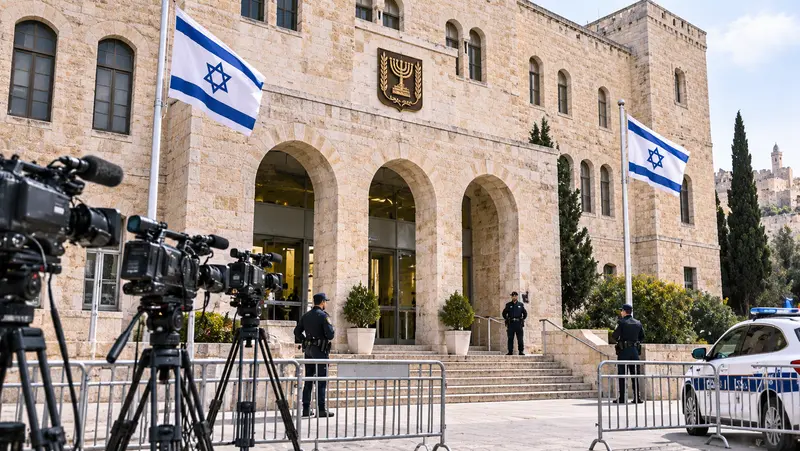
The judges hearing Prime Minister Benjamin Netanyahu's corruption trial proposed on Wednesday, 25 November 2026, that the bribery charge against him be dropped. At a short hearing in the Jerusalem District Court, presiding judge Rivka Friedman-Feldman suggested dropping the charge in Case 4000, reconsidering Case 2000 and pursuing a settlement in Case 1000. No charge has been formally dismissed, and the judges said their comments were impressions rather than a verdict.
The panel, made up of Friedman-Feldman and Judges Moshe Bar-Am and Oded Shaham, had summoned Attorney General Gali Baharav-Miara, whose predecessor filed the indictment. The judges said this did not reflect a lack of confidence in the prosecutors. The hearing lasted about ten minutes.
| Case | Allegation | Judges' view |
|---|---|---|
| 4000 | Regulatory favours to Bezeq for friendly coverage on the Walla news site | Bribery charge has difficulties; propose dropping it |
| 2000 | Talks with a newspaper publisher over coverage in return for curbing a rival | Doubt whether it is an offence at all; reconsider |
| 1000 | Gifts such as champagne, cigars and jewellery from wealthy businessmen | Seek a way to settle it |
Case 4000
This was the most serious of the three, alleging bribery, fraud and breach of trust. The prosecution says Netanyahu gave regulatory benefits to Bezeq and its then controlling shareholder, Shaul Elovitch, in return for favourable coverage. Friedman-Feldman said it seemed that the bribery charge "involves difficulties". The judges pointed to changes in the testimony of a key witness, Shlomo Filber, and to objective information that did not fit it, and questioned whether Netanyahu knew of the treatment. They also said the prospects of conviction on the breach of trust count were low. Elovitch's own position would need separate consideration.
On Case 2000, the judge said it was questionable whether the indictment even described a criminal offence. On Case 1000, most of the evidence has already been heard, apart from a request to take testimony abroad from the businessman James Packer.
Netanyahu, 77, said the trial "must end immediately" and that it had collapsed. He called the cases fabricated and said associates had been pressed to give false testimony, and he spoke of extending a hand in reconciliation. His lawyer called for criminal mediation and a closed meeting with the Attorney General. His allies cheered the proposal, and Defence Minister Israel Katz welcomed it.
Baharav-Miara said the office would examine every proposal put forward by the court. She said there were two routes, a ruling or a plea agreement, and that the latter would be quickest, adding that her office had already proposed one but that its hand had remained outstretched. She expressed full confidence in the prosecution team. The prosecution had also responded positively to a presidential initiative for talks.
The pardon question
A plea agreement would require Netanyahu to accept some wrongdoing, and one version discussed in Israel links an admission to a presidential pardon and withdrawal from politics, which he has rejected so far. A plea would not necessarily settle his political future, since an admission could raise questions about moral turpitude and eligibility.
Netanyahu was indicted in November 2019 and the trial opened in May 2020. He is the first sitting Israeli prime minister to stand trial, and he has finished testifying while the defence case continues. The presiding judge is due to retire in March 2028. The proposal landed while coalition talks follow the inconclusive 27 October election: opposition leader Gadi Eisenkot holds the mandate to form a government, with a bloc of 48 seats out of 120, short of the 61 needed, and a deadline of 6 December that can be extended. Parliament has also advanced bills that Netanyahu opposes, including one on term limits and on barring prime ministers under indictment.
Bribery under Israeli law requires that a benefit was given in return for an official act, which is why the judges' doubts about the link between regulatory decisions and news coverage matter so much for Case 4000. Fraud and breach of trust cover conduct by a public official that harms the public interest, even without a bribe, and carry lower penalties. Case 2000 turns on whether talking about favourable coverage with a publisher can be an offence at all, and Case 1000 concerns the value and nature of gifts.
Israeli judges sometimes give an early view of the strength of parts of a case to encourage the parties to settle or narrow the issues. Such a view is not binding on either side and does not end the proceedings. The prosecution can decline it and ask for a ruling on the evidence, and the court can reach a different conclusion after hearing everything.
Why it matters beyond the courtroom
The trial has shaped Israeli politics for years, with supporters of Netanyahu calling it political and opponents saying a leader under indictment should not govern. A change to the most serious charge would alter that argument while coalition talks are still open.
The prosecution must answer the court's suggestion, and the defence will respond. The judges can reject a negotiated outcome or rule on the evidence if no agreement is reached. The Israeli courts publish their decisions, and the Justice Ministry issues the Attorney General's statements. This report is for information only and is not legal advice.
About the Author
P
Prateek Rawat
Staff Writer
Prateek Rawat is a contributor to Wirony. All articles published under this byline undergo editorial review and approval before publication, with any necessary corrections handled…
P
4 min
What did you think?