/
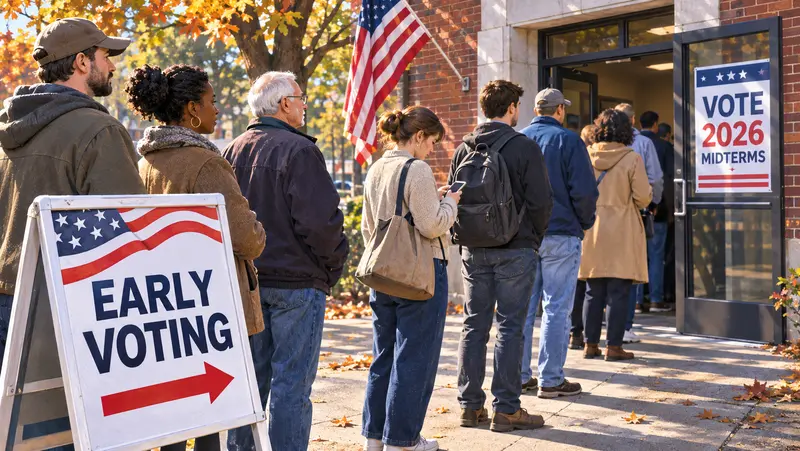
Democrats win both chambers: seven Senate flips including Texas and Ohio, House majority of at least 258
Democrats won control of the US Senate and House in Tuesday's midterms. They flipped seven Senate seats, led 54–44 with Alaska and Mississippi uncalled, and are projected to hold at least 258 House seats, the most since 1993. The president said he was surprised and will veto their bills.
S
5 min
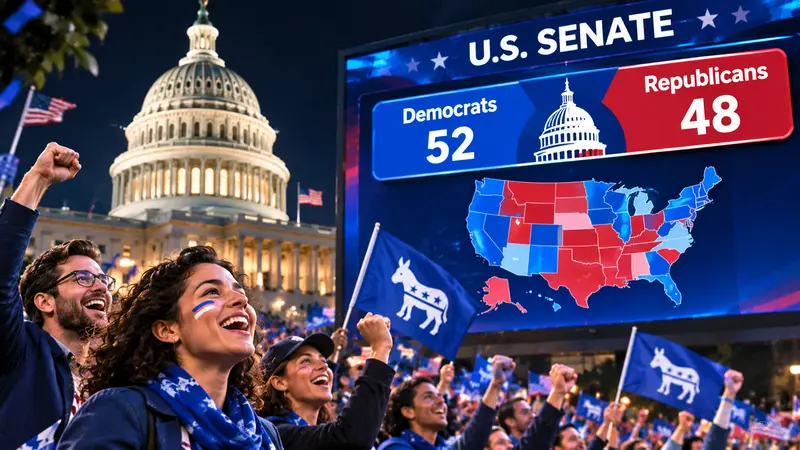
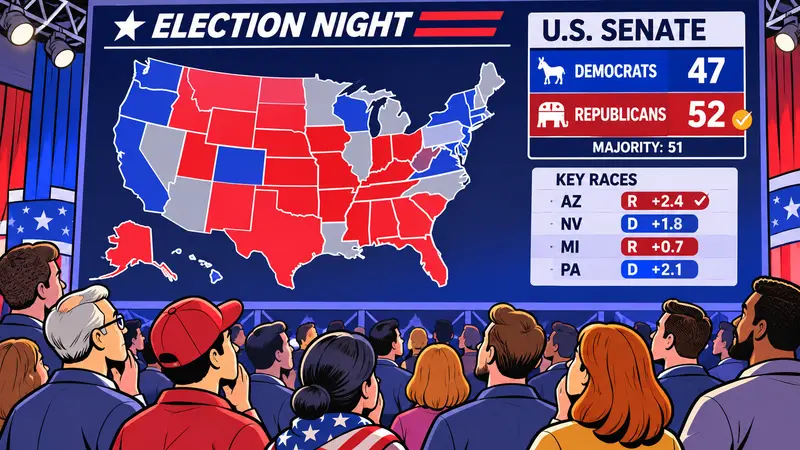
Democrats won control of both the US Senate and the House of Representatives in Tuesday's midterm elections on 3 November, ending Republican control of Congress. They flipped seven Republican-held Senate seats and led the chamber 54 to 44 with two races still uncalled, Alaska and Mississippi. In the House they are projected to hold at least 258 of the 435 seats, well above the 218 needed for a majority and the party's highest total since 1993. The results are unofficial until the states certify them, and the new Congress will be sworn in in January.
Before the vote Republicans held the Senate 53 to 47, counting two independents who sit with the Democrats among the 47, so Democrats needed a net gain of four seats. They gained seven and held the seats they were defending in Michigan, Georgia, New Hampshire and Minnesota. The largest margin came in Texas, where state Attorney General Ken Paxton lost to Democrat James Talarico, about 55% to 43%, giving the party its first Senate win in the state in more than three decades.
The Senate: seven flips and four holds
| State | Democrat | Defeated Republican |
|---|---|---|
| Texas | James Talarico | Ken Paxton |
| Ohio | Sherrod Brown | Sen. Jon Husted |
| Iowa | Josh Turek | Rep. Ashley Hinson |
| South Carolina | Annie Andrews | Sen. Graham |
| Kansas | Adam Hamilton | Sen. Roger Marshall |
| Maine | Troy Jackson | Sen. Susan Collins |
| North Carolina | Roy Cooper | Michael Whatley |
In North Carolina, Mr Cooper, a former governor, won by about 58.7% to 39.2% for the seat of the retiring Senator Thom Tillis. Mr Hamilton became the first Democrat to win a Kansas Senate seat since 1932, and Senator Collins conceded in Maine. In Michigan, Abdul El-Sayed won the open seat that Democrats already held, and becomes the first Muslim elected to the Senate. Jon Ossoff won a second term in Georgia, Chris Pappas won New Hampshire's open seat and Peggy Flanagan held Minnesota. Republicans held Nebraska, Montana, Louisiana, Idaho and Florida.
In Alaska, Republican Senator Dan Sullivan and Democrat Mary Peltola are in a tight race that may take weeks to count, and in Mississippi, Senator Cindy Hyde-Smith and Democrat Scott Colom were separated by about 28 votes at one count. Those two will decide the final margin, not control.
The House, governors and the states
In the House, Democrats flipped Republican seats from Ohio's 7th District, where Brian Poindexter defeated Rep. Max Miller, to Pennsylvania's 1st, where Bob Harvie beat Rep. Brian Fitzpatrick, and New York's 17th, which Cait Conley won after Rep. Mike Lawler conceded. In North Carolina's 11th, a seat Donald Trump carried by about 9.5 points in 2024, Jamie Ager won. Democrats also flipped the governorships of Texas, Georgia, Nevada, Ohio and Iowa, and held Michigan, Minnesota, Oregon and Arizona. In Minnesota, Amy Klobuchar will be the first woman to lead the state. Voters in Nevada approved a voter identification requirement and abortion rights on the same ballot, and in Idaho a proposition on abortion rights was rejected.
Why voters chose this
The exit polls point to prices and the president. Trump's disapproval rating was 62%, more than three quarters of voters disapproved of Congress, and nearly half said the election was a chance to rebuke the president. A separate voter poll found that 79% said the cost of living caused them severe or moderate hardship, 87% were concerned about gasoline prices, 65% said tariffs hurt the national economy, and 74% said the war with Iran was a crucial or major factor in their vote, with 62% saying the United States made the wrong decision in taking military action.
Mr Trump said he was "a little bit surprised" and "thought we'd do better". He acknowledged that the Iran war had hurt Republicans, mainly through gasoline prices, said he would work with Democrats on good ideas but would veto what they pass. Democrats do not have the two-thirds majority needed to override a veto. Senate Majority Leader John Thune said Senate Republicans will work with the president to stop the Democratic agenda.
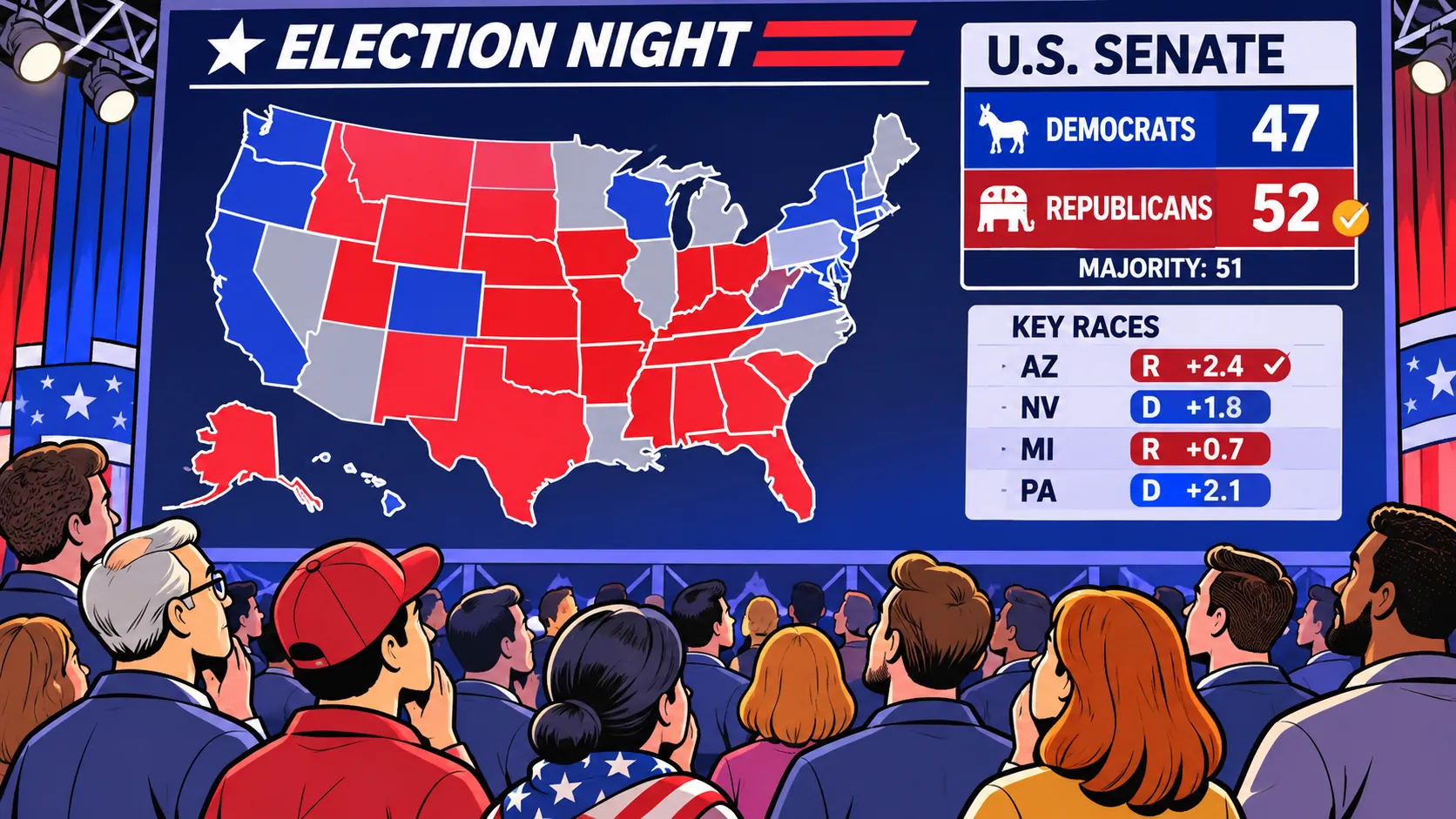
Nothing changes until January, when the new Congress takes office. The present Congress, with its Republican leadership, remains in place until then. After that, the Democratic House can set the agenda for spending bills and open investigations. House Democratic Caucus Chair Pete Aguilar said the party will pass bills to lower costs for housing, healthcare, gasoline, groceries and utilities, and restore funding for Medicaid and food assistance. Representative Robert Garcia is expected to chair the Oversight Committee and Senator Ron Wyden has previewed subpoenas. A Democratic Senate will control confirmations of judges and officials, which the president will notice at once.
The limit is the veto. A Democratic Congress can pass bills and hold hearings, but the president can block them, and many of the current tariffs were imposed through executive action, which Congress can challenge but cannot easily reverse without a veto-proof majority. For countries such as India that sell goods to the American market, the practical effect on tariffs in the next two years is therefore more likely to come through oversight and budget pressure than through new law.
Three things to watch in the next days: the count in Alaska and Mississippi, which will fix the final Senate margin, the certification of results by the states, and the early signals from the president and the Republican leaders on whether they will work with the new majority or fight it.
Sources
About the Author
S
Subhash Gupta
Desk Editor
Subhash Gupta is a writer at Wirony, contributing articles that are reviewed and verified by the editorial team before publication. The publication prioritises accuracy, editorial…
S
5 min
What did you think?