/
Aadhaar offline verification reaches 300 firms: how it replaces the photocopy, and what users can refuse
UIDAI said on 5 November it has onboarded 300 Offline Verification Seeking Entities since January, across hotels, healthcare, education and gig work, up from 100 in April. The Aadhaar App nears 7.5 crore downloads, with 4.6 crore biometric lock actions. What it shares and how to use it safely.
A
5 min
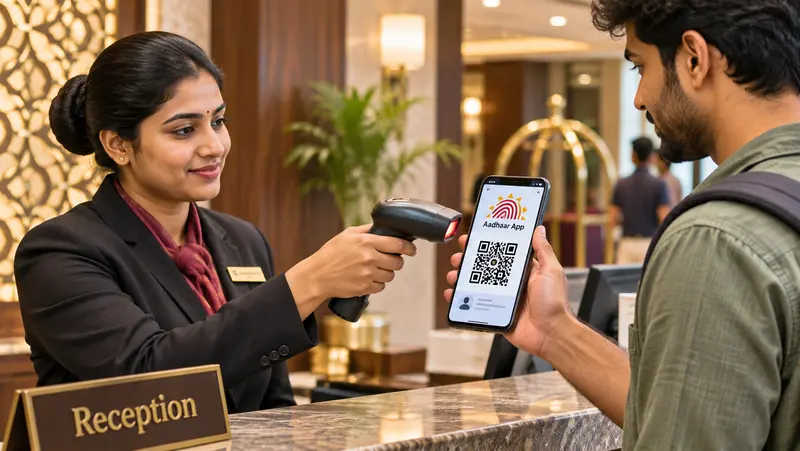
The Unique Identification Authority of India said on 5 November 2026 that it has onboarded 300 Offline Verification Seeking Entities, or OVSEs, since the facility was rolled out in January. The number stood at about 100 in April, so it has tripled in roughly six months. The Ministry of Electronics and IT said the entities span hotels, hospitality, healthcare, education, events, the gig economy and consumer-facing businesses.
The same release gave figures for the Aadhaar App, which has nearly 7.5 crore downloads. A notice on UIDAI's site in late July put the figure at 4 crore, so adoption has moved quickly.
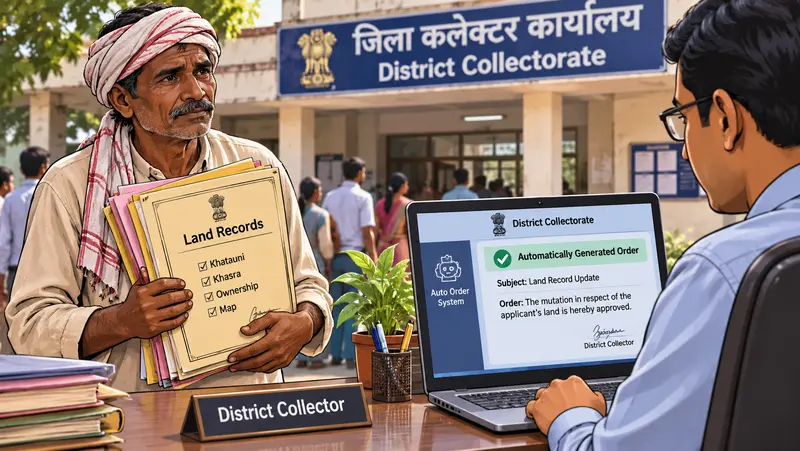
For ordinary users, the question is practical. The hotel clerk, the exam centre and the delivery platform have long asked for a photocopy of Aadhaar. This system is meant to end that habit.
What offline verification means
Online Aadhaar authentication works by sending a query to UIDAI's central database, which replies yes or no, or returns details. Offline verification works differently. An Aadhaar holder presents a QR code or a digitally signed document, and the verifying entity checks that UIDAI's signature is genuine. No real-time connection to the central database is needed. UIDAI's phrase for this is "Show, Share and Verify".
The QR code appears on all forms of Aadhaar, including the e-Aadhaar, the letter, the PVC card and the app. UIDAI's paperless offline e-KYC files can hold the name, address, photo, gender, date of birth and hashed versions of a registered mobile number and email.
An OVSE is an organisation formally onboarded to do this checking. The early group described in April included central and state government departments, fintech firms, event and hospitality companies, education and exam bodies, background verification firms and workforce validation companies.
The stated benefits are faster service and lower cost for businesses, along with less handling of paper. For the person being checked, the key claim is control. The ministry says the holder can share only the minimum data needed, and that the framework follows data minimisation in line with the Digital Personal Data Protection Act.
Why it matters
The real gain is the end of the loose photocopy. A paper copy carries a full Aadhaar number, name, address and photo, and it can be left in a hotel file or a shop drawer for years. It can also be misused by anyone who picks it up. A signed digital check, in which the verifier gets only what the task requires, is a much cleaner model.
Consider a hotel. It may only need to confirm that the guest's name and photo match. An exam centre needs to know that the candidate is the person who registered. A gig platform needs to verify a worker before activation. None of them needs to hold the full number forever.
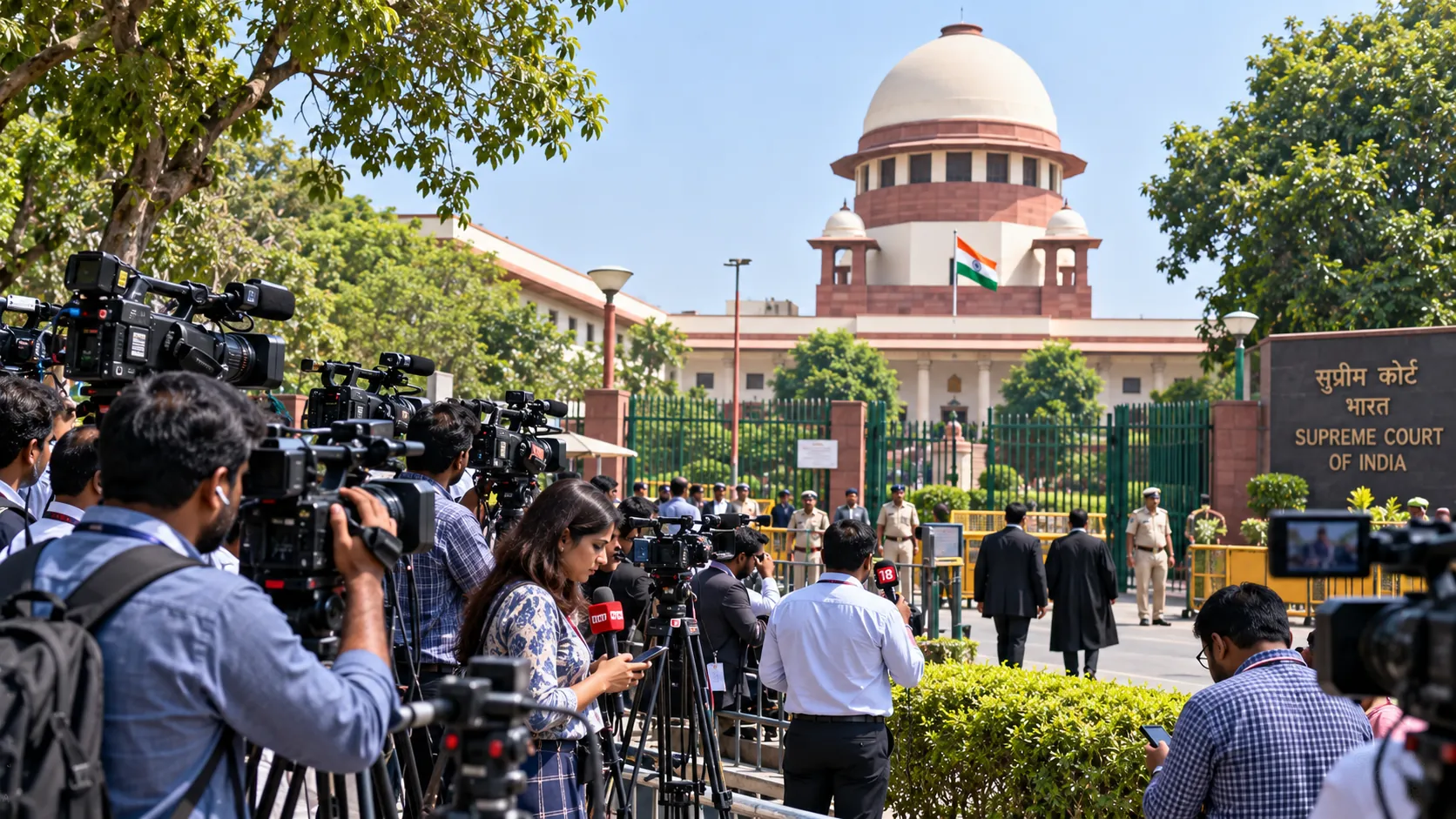
The limits are worth stating. Three hundred entities is a small number against the size of India's economy, and thousands of hotels and clinics will go on asking for paper copies for some time. The release does not say how many verifications have taken place, how many of the 300 are live or what audits apply. Privacy advocates also argue that wider Aadhaar checks in private life, even if offline, can normalise identity demands in places where none is needed. However, UIDAI's position is that consent-based sharing is safer than the photocopy it replaces, and on that narrow comparison the case is strong.
The release gives a useful view of how people are using the app.
| Aadhaar App service | Use so far |
|---|---|
| Downloads | Nearly 7.5 crore |
| Biometric lock or unlock actions | 4.6 crore |
| Mobile number updates | Over 86 lakh |
| Email updates | 40.25 lakh |
| Address updates | 22.16 lakh |
| Aadhaar lock or unlock actions | 3.61 lakh |
The biometric lock figure is striking. It suggests that people are turning to a simple security tool in large numbers, perhaps because of concerns about fingerprint misuse in payment fraud. Locking biometrics means that fingerprint or iris authentication cannot take place until the holder unlocks it. Aadhaar lock goes further, and far fewer people use it, since it can get in the way of routine services.
Being able to update a mobile number through the app, without a trip to an enrolment centre, also matters, because that number is what receives one-time passwords. The 22.16 lakh address updates tell a similar story: people who once needed a visit and a form can now finish the job at home, and each one is a small saving of time and travel for a family, and one fewer visitor at a crowded centre.
What users should do
Install the app only from the official Play Store or App Store listing. Share through the app or QR code in place of handing over a paper copy where the organisation can accept it. Ask what is being collected and why. If someone insists on keeping a copy, consider using a masked Aadhaar, which hides the first eight digits. Turn on the biometric lock if you do not need it often, and unlock it only when required.
Do not share a one-time password with anyone who calls to offer verification. Report misuse to UIDAI on its helpline 1947.
The next useful figures would be actual verification volumes and which sectors lead them. Those numbers, more than a count of firms, will show whether the photocopy is really on its way out. A government that wants people to stop handing over paper will also need the hotel desk, the exam centre and the housing society to stop asking for it.
Sources
About the Author
A
Amita Sahani
Staff Writer
Amita Sahani writes for Wirony. Every story under this byline is reviewed and approved by an editor before it is published, and corrections are made openly.
A
5 min
What did you think?