/
Jharkhand High Court quashes cancellation of JSSC CGL exam, a relief for appointees, but lets probe go on
The Jharkhand High Court on 6 November quashed the state's cancellation of the JSSC CGL examination and its advertisement, giving relief to appointed candidates, while allowing the irregularities probe to continue. In August, after a 24-day protest, the government had scrapped dozens of exams.
S
4 min
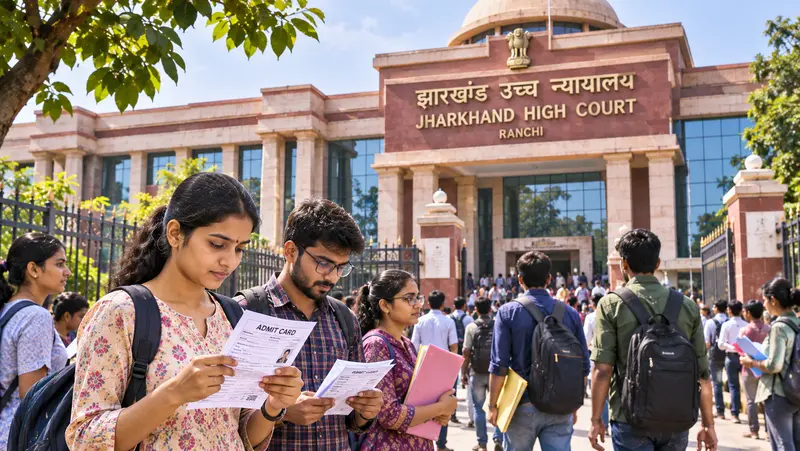
The Jharkhand High Court on 6 November 2026 quashed the state government's decision to cancel the Jharkhand Staff Selection Commission Combined Graduate Level examination, the JSSC CGL. It also set aside the cancellation of the recruitment advertisement for the appointments. The decision is a major relief for candidates who had been selected and appointed through the process. The court, however, allowed the probe into irregularities in the examination to continue.
The order is a serious setback for the government of Chief Minister Hemant Soren, which had made the cancellation the centrepiece of its response to a student protest that lasted 24 days. It also leaves an unusual position: an examination that stands while the investigation into it goes on.
How the dispute reached this point
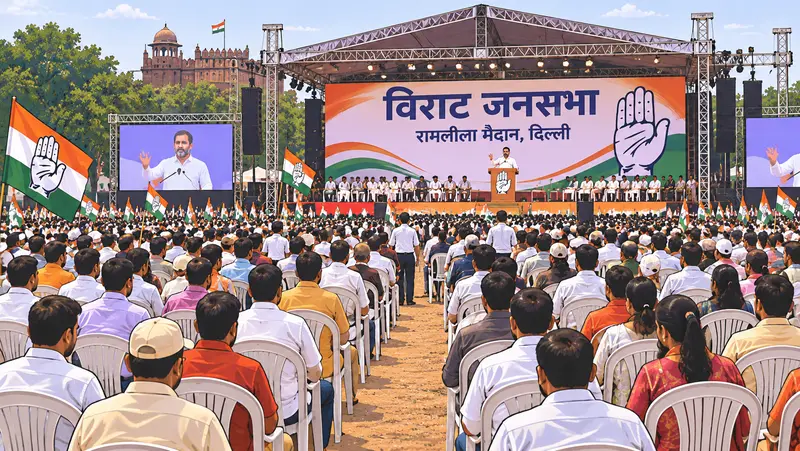
The crisis built up through the summer. Students protested for 24 days in Ranchi over alleged irregularities in recruitment by the Jharkhand Public Service Commission and the Jharkhand Staff Selection Commission, with some going on hunger strike.
In mid-August a special Cabinet meeting chaired by Mr Soren decided to cancel the JSSC CGL and all competitive examinations conducted by a private agency, TSR Data Processing Private Limited, known as TDPL. It also ordered a probe into recruitment by the two commissions since 2014, and set up a committee under senior IAS officer Amitabh Kaushal to recommend reforms. Protesters celebrated at the Jaipal Singh Munda Stadium, although their demand for a CBI inquiry stayed unresolved.
Official accounts of the scale differ. A notification on 18 August was reported as cancelling 22 examinations, holding six and sending 17 for investigation. The list released the same night named 44 cancelled recruitment examinations by the JPSC, the JSSC and outsourced agencies, including the 11th to 13th JPSC Civil Services examinations, Civil Judge, Drug Inspector, Assistant Conservator of Forest and Assistant Professor posts. The notifications said the JSSC CGL was cancelled on findings emerging from a Special Investigation Team probe and a CID investigation.
Then the cases reached the High Court. On 20 August, Justice Deepak Roshan stayed the cancellation of appointments made through the 11th to 13th JPSC examinations and the Food Safety Officer recruitment. He ordered that selected candidates be reinstated, observing that they could not be removed without due process and the principles of natural justice. The petitioners said that 342 candidates from the JPSC examinations were then in service.
Friday's ruling goes further. It does not pause the CGL cancellation: it quashes it.
Why it matters
The ruling touches a difficult principle. When an examination is suspected of being tainted, should the whole process be thrown out, or only those shown to have cheated? Candidates who passed honestly, and who may already have started work, have a strong claim that they should not lose their jobs on the basis of an unproved suspicion. Aspirants who believe the process was rigged argue that a compromised examination cannot be repaired by punishing a few individuals, and that its results cannot be trusted at all.
Indian courts have generally tried to separate the tainted from the untainted where that is possible, and to uphold wholesale cancellation where it is not. The written order, which was not available at the time of writing, will show which way the court's reasoning ran here, and whether it found that the government's material was insufficient or that its procedure was at fault. Both possibilities have consequences.
For the appointed candidates, the immediate meaning is clear. For the students who protested, this will feel like a reversal of what they thought they had won. The government, for its part, now faces a choice between accepting the order and appealing, and an appeal to the Supreme Court would prolong the uncertainty for all sides.
The continuing probe is the other half of the story. If investigators establish that specific persons obtained posts by fraud, those individuals could still face action, and the ruling does not protect them from that. A criminal investigation and a decision on the validity of an examination are separate matters.
What happens next
Three questions now matter most.
The first is what the government does. It has not yet said whether it will appeal, and the other cancelled examinations and the JPSC appointments remain in dispute. An order on the CGL may be cited in those related cases.
The second is what the CID and the Special Investigation Team find. So far, the public has seen allegations and conclusions drawn by the government, but not tested evidence. A chargesheet would make the facts clearer.
The third is reform. The Kaushal committee, the internal vigilance cells promised for both commissions and the fast-track court the state said it would seek were meant to rebuild trust in recruitment. A state with very large numbers of young job seekers cannot afford a system in which every major examination ends up in court. Whatever the result of this case, candidates who spend years preparing need an examination that is credible on the day it is held and does not have to wait for a judge to say so.
Sources
- Jharkhand HC quashes state govt's decision to cancel JSSC CGL examination (All India Radio)2026-11-06
- Jharkhand government cancels 44 recruitment exams over alleged irregularities (All India Radio)2026-08-19
- Jharkhand HC stays state govt's decision to cancel 11th to 13th JPSC and Food Safety Officer examinations (All India Radio)2026-08-20
About the Author
S
Subhash Gupta
Desk Editor
Subhash Gupta is a writer at Wirony, contributing articles that are reviewed and verified by the editorial team before publication. The publication prioritises accuracy, editorial…
S
4 min
What did you think?